Capgemini research shows Canadians are confident in workplace coverage they don't understand, and the benefits industry shares the blame, says Samantha Chow

Although most Canadian employees believe their employer-sponsored life insurance has them covered, findings from recent research say otherwise.
According to Capgemini's research, released earlier this month for Life Insurance Awareness Month, 63 per cent of Canadian employees feel moderately confident about their employer-provided coverage yet have never formally assessed whether it meets their needs.
Confidence without comprehension
The gap between perception and reality is wide, and it raises questions about how group benefits are communicated, or not communicated, at the plan level, suggests Samantha Chow, global head of life insurance, annuities, and benefits at Capgemini. She believes the findings reinforced something the industry has been slow to address.
"If we're not able to personalize on someone's life stage, there’s a false sense of security," she said, adding the problem is structural because insurers don't have direct access to employees. Whereas employers own the relationship but often lack the tools or incentive to educate.
"There has to be some kind of education or partnership between the insurer, the provider, and the employer to educate the employees on the type of benefits they have access to, how it fits into their daily lives, why they're important to take up, and why they may not be important to take up in reality, given life stage," she said.
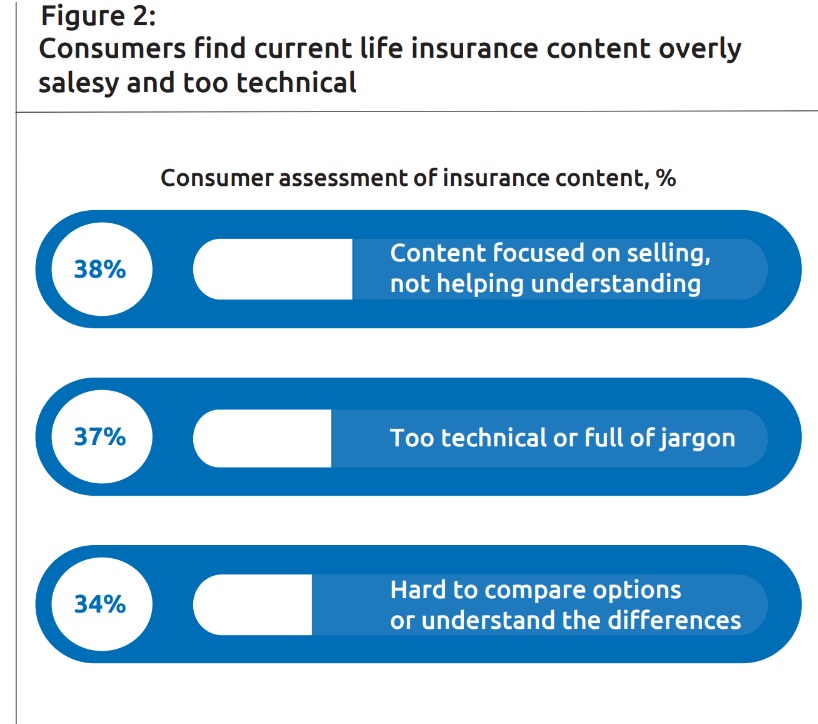
Additional findings from the report also suggest that technical language (37 per cent), affordability concerns (35 per cent) and lack of relevance to life stage (25 per cent) are among the top barriers to purchasing workplace life insurance.
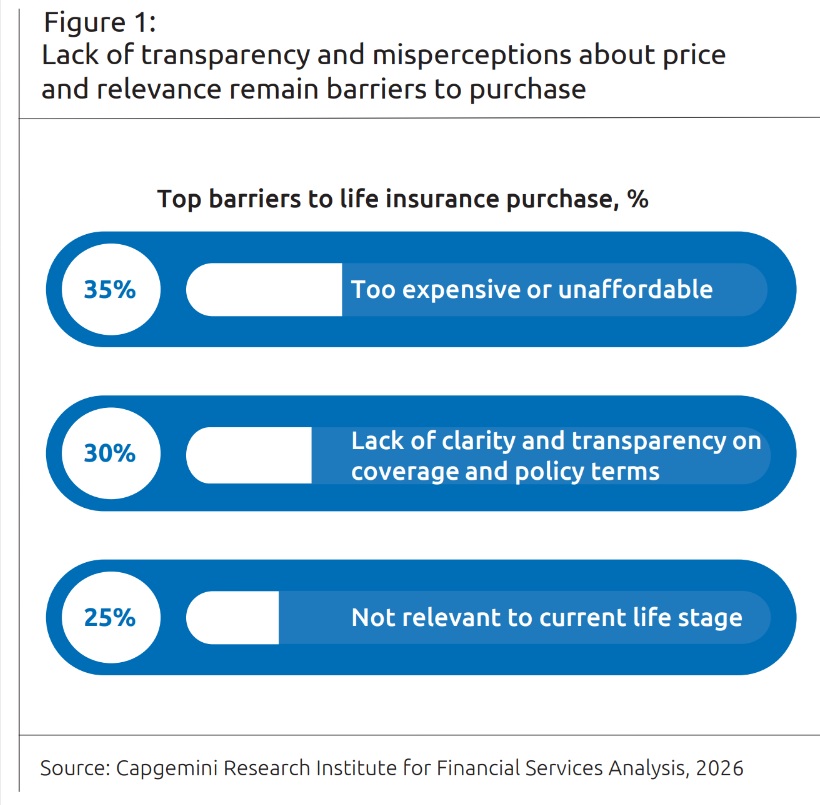
Meanwhile, only 21 per cent of Canadian consumers say they receive guidance on finding the right coverage, below the global average of 25 per cent. As for where Canada sits in these findings, she doesn’t believe this is distinctly a Canadian failure.
“This is a global problem,” said Chow, adding consumer perception of insurers is shaped almost entirely by negative experiences, ranging from slow claim payouts, partial settlements, and stories that circulate through word of mouth. She believes that erodes confidence before most employees even engage with their coverage.
The problem, she argued, is that many claimants and plan members don't understand what they purchased in the first place.
"Maybe it's because you didn't know any different. You didn't know any better or you didn't know your coverage well enough. They're not doing it just to spite you but that's what the consumers hear," she said.
Post-purchase silence widens the coverage gap
Additional data found approximately 40 per cent of policyholders never hear from their life insurer again after the point of purchase, leaving them in a transactional relationship. Moreover, half of all lapses occur in the first three years.
According to Chow, the post-purchase silence is even worse in the group benefits space, where the dispute over client ownership creates a communication dead zone. Most employees hear from their benefits providers once a year at best, and she admitted she has never worked with an employer that does a good job of connecting workers to their coverage providers.
Moreover, many employees don't even know where to look up basic information about their own policies, which she suggests raises a harder question about what happens when a spouse or beneficiary needs to access that information after a death.
The industry, she argued, needs to move past the turf war over who owns the policyholder relationship and start collaborating for the employee's benefit. That means regular touchpoints, accessible information through tools like mobile apps, and resources that can be shared with dependents and beneficiaries.
For Chow, consistent communication beyond the annual enrollment window is the only way to break that cycle. Without it, she believes friction only compounds even more between employees, plan sponsors, insurers, and employers.
"If people are taking a huge financial hit as a result of not being covered or having this false sense of security in their coverage, then it takes an impact on the overall community as well," she added.
What steps plan sponsors can take now
To that end, Chow outlined three areas where plan sponsors can take immediate action. The first is building interactive educational tools for open enrollment that account for individual circumstances rather than treating employees as a monolith, noting not everyone faces the same circumstances at the same age.
The second is shifting to ongoing communication, conducted through quarterly check-ins, automated through AI and triggered workflows, instead of relying on a single annual touchpoint while the third is following the lead of top-tier insurers already using data and AI to create more customer-centric plan designs and advising tools for their distribution channels.
“It has to be able to be personalized. That's the first thing we can do to help overcome this coverage gap that we have and improve the uptakes on some of these and improve that sense of security that plan members are covered the way they should be covered,” she said. “It's about breaking down some barriers and working together in an ecosystem as complex as group benefits and plan providers.”
Moving forward, Chow underscored employers need to push their plan sponsors harder to develop educational tools that can be embedded directly into enrollment platforms while plan sponsors, in turn, need to press insurers on how they plan to personalize the experience using shared data. According to Chow, the conversation has to go deep into the root problems, whether that’s debt or whether a surviving partner could manage on their own or explore what it would take to protect a family's financial future.
She also cautioned against making education a self-serve exercise. While employees will do their own research, when it comes to high-stakes decisions wrapped in jargon and technical language, they want access to a real person, she said.
"[Plan sponsors] need to give them open opportunities to talk to someone to answer questions rather than just forcing it to be a digital experience," she said.