Canada’s semaglutide patent lapse sparks looming 65% price cuts and plan design rethink
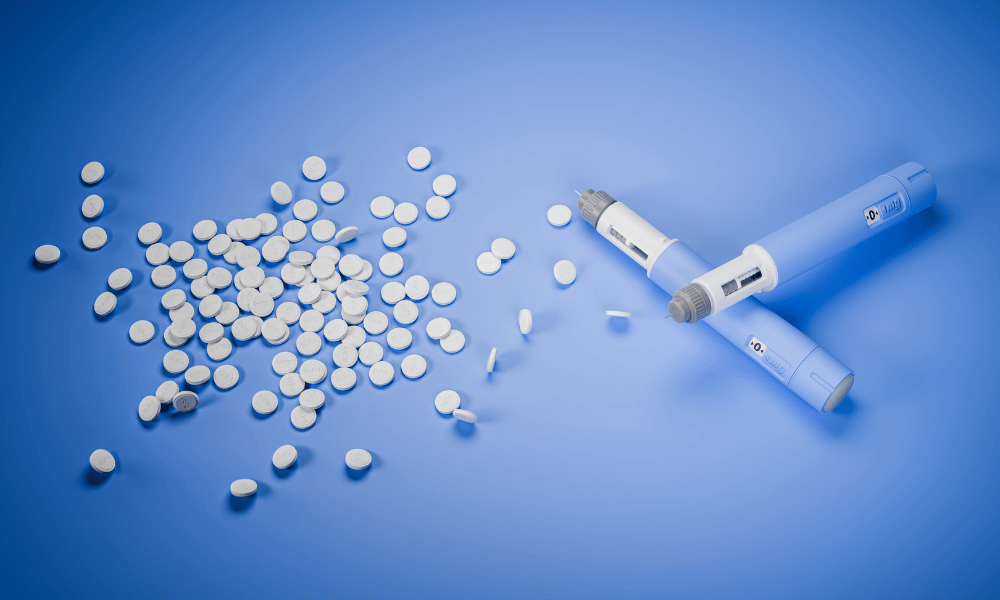
Ozempic is heading for a steep price drop in Canada just as plan sponsors grapple with how to manage GLP‑1s on drug lists.
According to Bloomberg's The Big Take, the core patent for semaglutide — the ingredient in Ozempic and Wegovy — has already lapsed in Canada after missed maintenance fee payments and the expiry of data exclusivity on January 4.
That opens the door to generics in the next few years, in a country that Sandoz describes as the world’s second‑largest semaglutide market.
Health Canada currently has nine generic semaglutide applications under review and is working through a broader backlog of drug files.
The regulator has not given a timeline and can only approve generics after Novo Nordisk’s remaining exclusivity ends, reported Bloomberg.
Sandoz, which had aimed to launch in the first half of 2026, now expects the Canadian generic market to take shape in the third quarter of 2026, CEO Richard Saynor said.
The delay came after both Sandoz and Reddy’s Laboratories were told they must provide more data to meet regulatory standards.
Once three generic competitors are on the market, Canadian policy will drive list‑price discounts of about 65 percent.
That kind of mandated reduction in a high‑volume, chronic therapy has direct implications for private plans that currently see GLP‑1 use largely paid out of pocket in many countries, according to analysts cited by Bloomberg.
Aspen Pharmacare plans to launch its generic semaglutide first in Canada and emerging markets before moving into Mexico, New Zealand, Europe and the US, which positions Canada as an early test of pricing, access and spillover into other systems.
This plays out against a much larger global shift.
Patents for semaglutide are expiring sooner in countries that did not grant extensions, including Canada, China, India and Brazil.
IQVIA estimates that about one‑third of the world’s adults with obesity live in markets affected by this patent cliff.
Analysts quoted by Bloomberg expect dozens of manufacturers to drive a price war that could push monthly costs to around $15 in some countries as volumes scale, while government procurement in China has historically cut prices of other drugs by as much as 90 percent once generics arrive.
Novo’s business model sits squarely in the cross‑hairs.
Semaglutide injections generate nearly two‑thirds of Novo Nordisk’s sales, and Ozempic and Wegovy often cost hundreds of dollars per month.
At the same time, Eli Lilly’s Mounjaro, sold as Zepbound for obesity in the US, still has about a decade of patent life and is expected to have overtaken Wegovy’s annual sales in 2025.
Lilly’s Zepbound beat Wegovy on weight loss in a late‑2024 study, and Lilly already has an even more potent injectable and an oral therapy in late‑stage trials.
Bloomberg reports that Novo has responded by changing its CEO, cutting prices, launching a Wegovy pill and advancing new products such as CagriSema and amycretin.
It has also partnered with local companies to sell semaglutide under a second brand in India and Brazil, and reduced Wegovy prices in India and China.
But those pipeline products are not an immediate solution, and competitive pressure is building both from cheaper generics and newer branded rivals.
Quality and safety remain another concern.
IQVIA warned that as more manufacturers enter, “the dangers of counterfeiting and substandard quality are likely to be multiplied,” as cited by Bloomberg.
Novo has long warned that unauthorized versions of its drugs carry safety risks and has pursued legal action against sellers in grey markets, with mixed results.
At the same time, Angie Jackson‑Morris of the World Obesity Federation told Bloomberg that “the affordability that will come with generics and biosimilars will be hugely game‑changing” and said people at high cardiometabolic risk “deserve access to treatment alongside prevention and support.”
Looking ahead, professor Howard Yu of IMD Business School said Novo may need to think more like a consumer‑goods company once patients have multiple options.
He argued Novo should treat its patent loss in Canada as a “pregame” for a future US generic market and focus on winning there first.