
The Top Financial Executives and Professionals in the Benefits, Pensions, and Institutional Investment Industries | Hot List 2025
Jump to winners | Jump to methodology
Blazing a trail
Benefits and Pensions Monitor’s 2025 Hot List honourees exemplify the diverse ways leadership is reshaping Canada’s benefits, pensions, and investment space.
They combine entrepreneurial drive, technical expertise, and people-focused strategies to deliver meaningful change across the sector by:
-
Expanding access to alternative investments and guiding organizations through rapid growth with disciplined financial leadership
-
Driving digital innovation in group insurance and building benefit strategies that integrate health and financial wellness
-
Leading on complex pension mandates while strengthening governance and mentoring the next generation of industry professionals
-
Extending their influence beyond client work through board service, policy leadership, and community engagement
BPM invited professionals across Canada to nominate their most exceptional leaders for the third annual Hot List. Nominees needed at least a decade in the industry, and from hundreds of entries, the outstanding individuals who have set the pace over the past year were recognized.
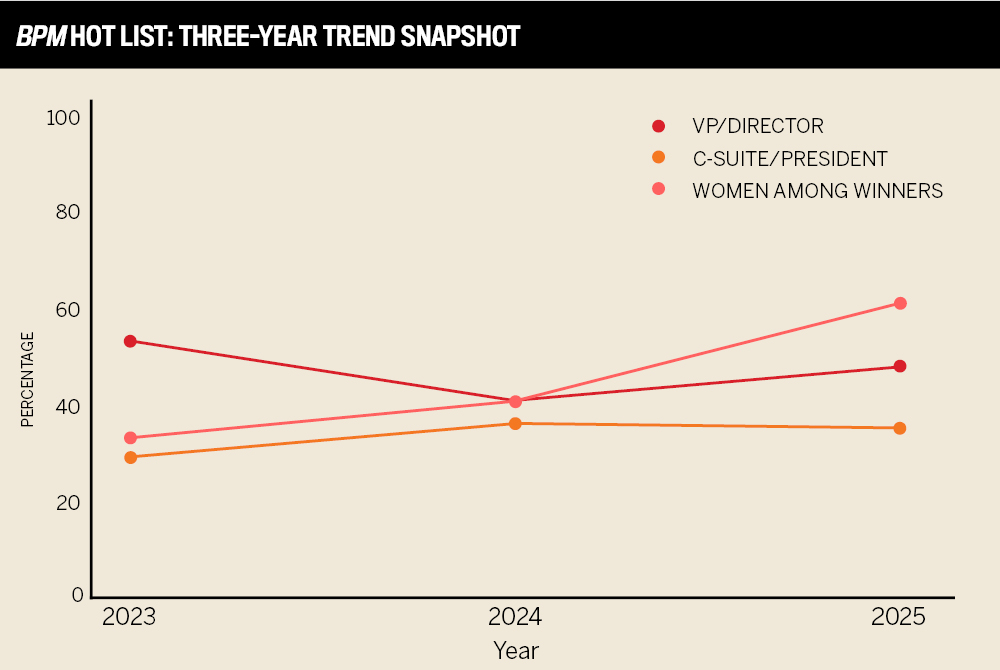
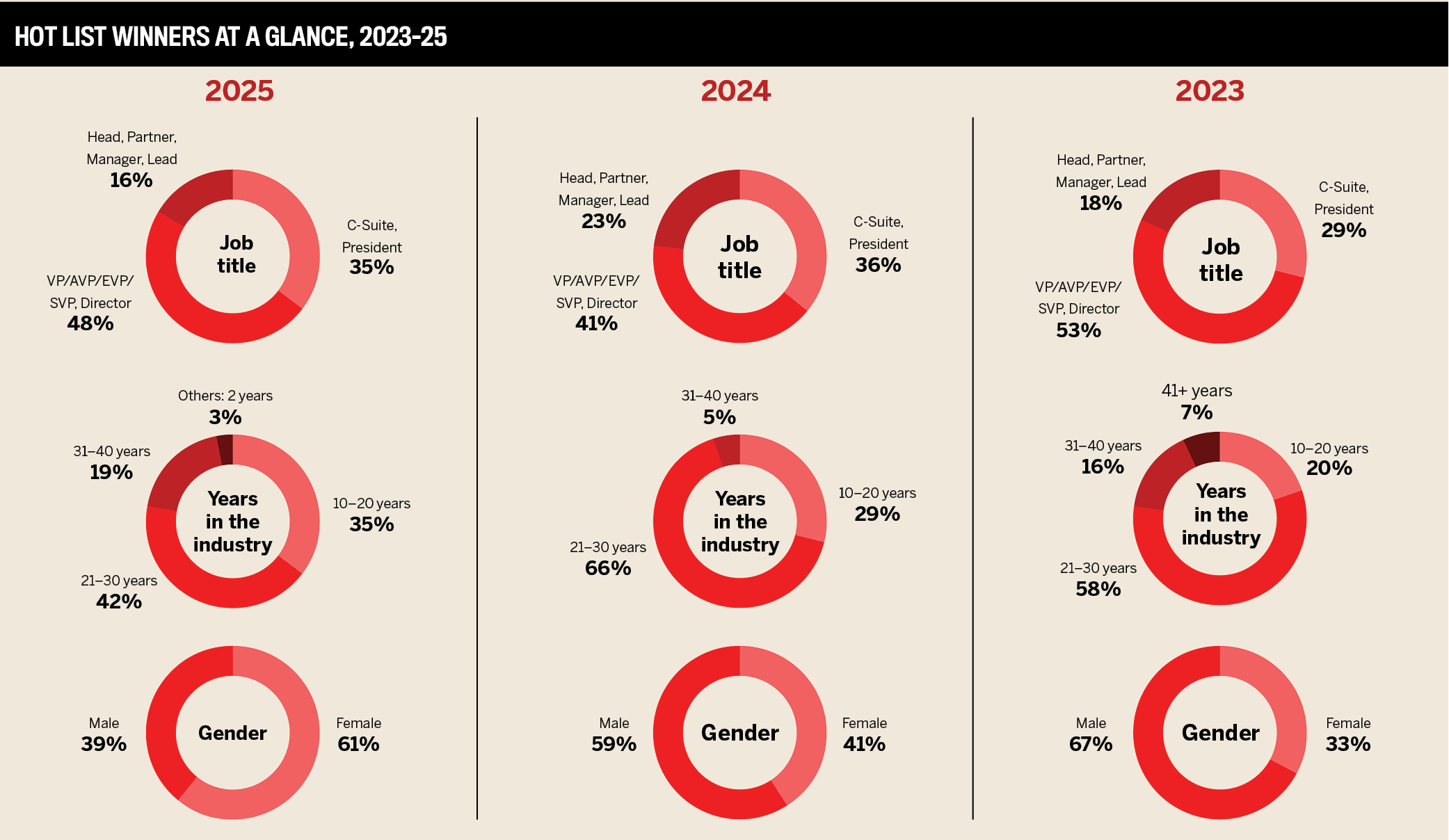
What emerges is a list that reflects continuity and change. Leadership recognition continues to span the C-suite, but the largest share sits just below, where VPs and directors carry much of the execution power. Experience is also more varied than in past years, with the list no longer dominated by a single tenure group. And for the first time, women form the majority of honourees, underscoring the sector’s progress in building pipelines and sponsorship for female leaders.
This year’s Hot List highlights how influence in benefits, pensions, and institutional investment is expanding across roles, career stages, and demographics – a sign that the sector’s future will be driven by a broader base of leadership talent.
BPM’s 2023–25 data shows:
-
Title seniority: The Hot List is anchored at the VP/director level, where most large-scale programs are executed. C-suite recognition remains steady, while representation from unit-level leaders declined in 2025.
-
Years in the industry: Experience is diversifying. The 21–30-year band no longer dominates, with growth in both 10–20 years and 31–40 years. The list now leans toward mid-career professionals, with few over 40 years in.
-
Gender: Representation has flipped. Women rose from one-third of winners in 2023 to a majority in 2025, showing stronger nomination pipelines and sponsorship across the sector.
Industry overview
Pension funding remains volatile
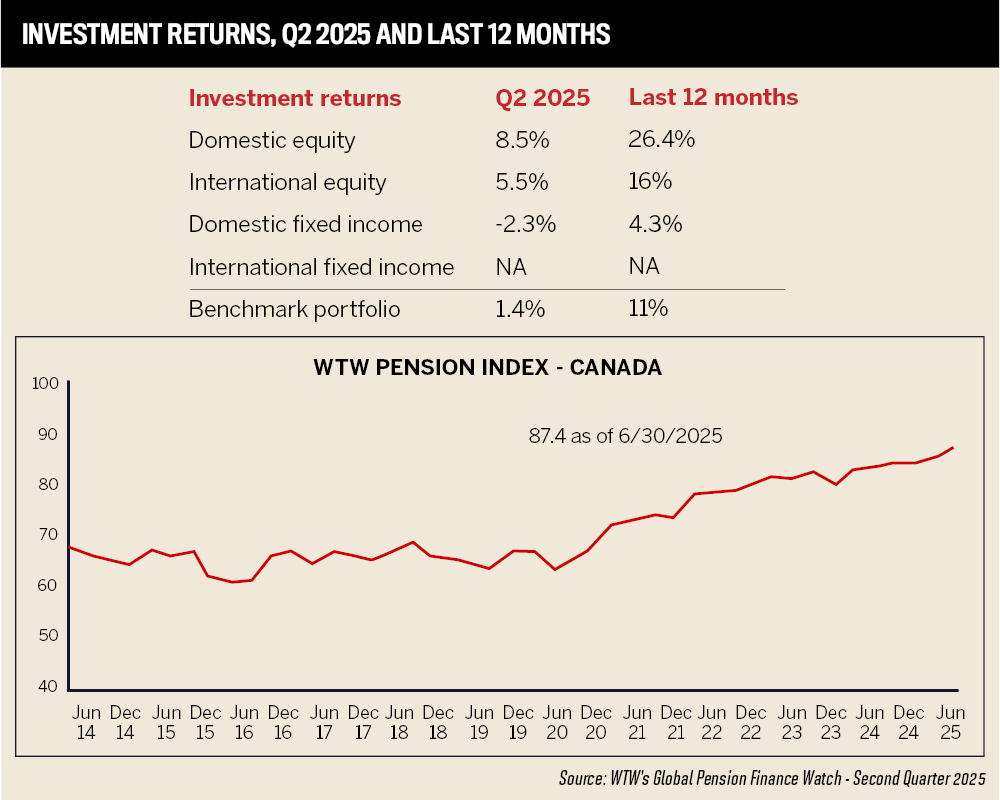
Canada’s pension sector posted a stronger quarter in 2025. According to the WTW Pension Index Canada, equities advanced while domestic bonds lagged, discount rates rose by 18 basis points, liabilities fell by 1.3 percent, and the index gained 2.7 percent in the second quarter. This points to a funding picture still highly sensitive to market movements and asset mix.
For BPM’s Hot List honourees, this volatility underscores the value of leaders who can manage funding risk, interpret market shifts, and keep pension plans resilient in unpredictable conditions.
Benefits investment driven by talent
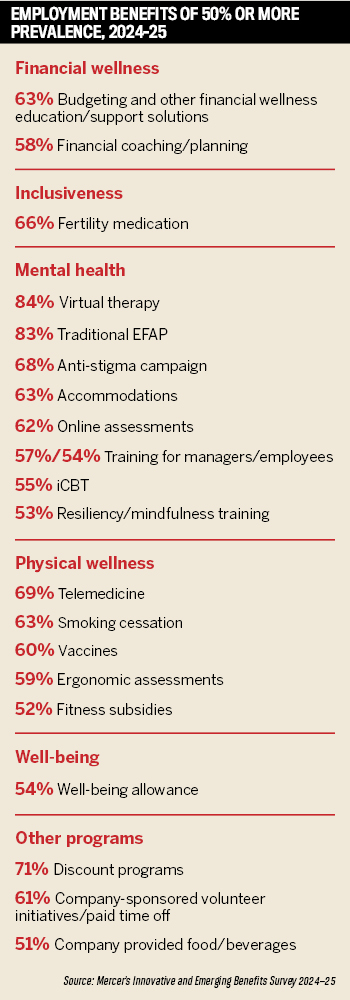
On the benefits side, investment is tied directly to talent. The Mercer Innovative and Emerging Benefits Survey 2024–2025 survey found that nearly all employers cite attraction and retention as the main reason to spend on benefit plans, showing that program design now functions as a frontline tool for hiring and loyalty. The same research shows multiple benefits have crossed into mainstream adoption at or above 50 percent prevalence, with many recording double-digit growth since 2023.
For BPM’s Hot List honourees, this shift highlights the impact of leaders who can design benefits strategies that not only keep pace with adoption trends but also give their organizations an edge in recruiting and retaining top talent.
Health access tops employee priorities
Employees continue to prize core health features. Mercer’s Health on Demand 2025 report reveals that prescription drug coverage, routine primary-care visits, and preventive cancer screening rank as the most valued benefits.
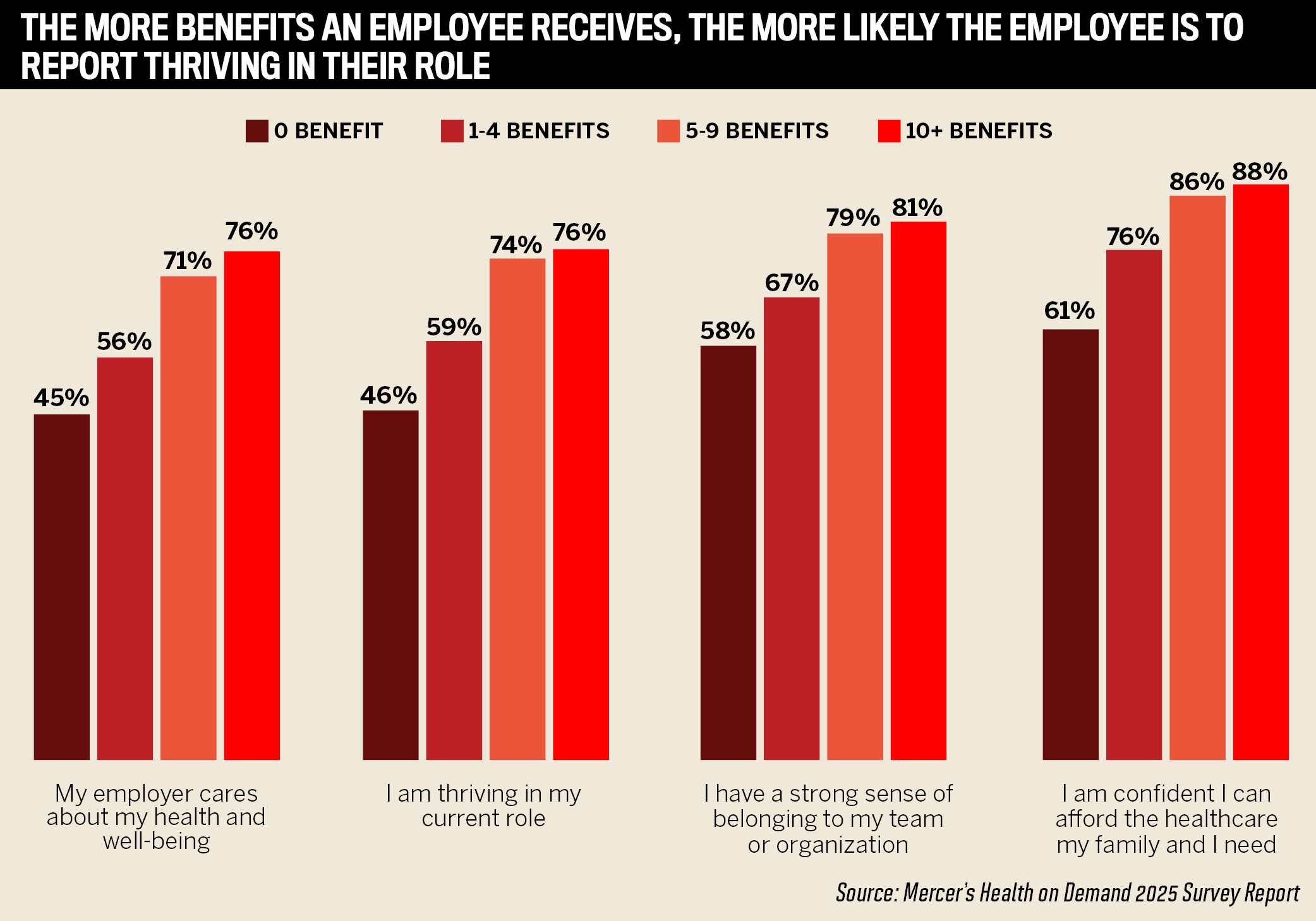
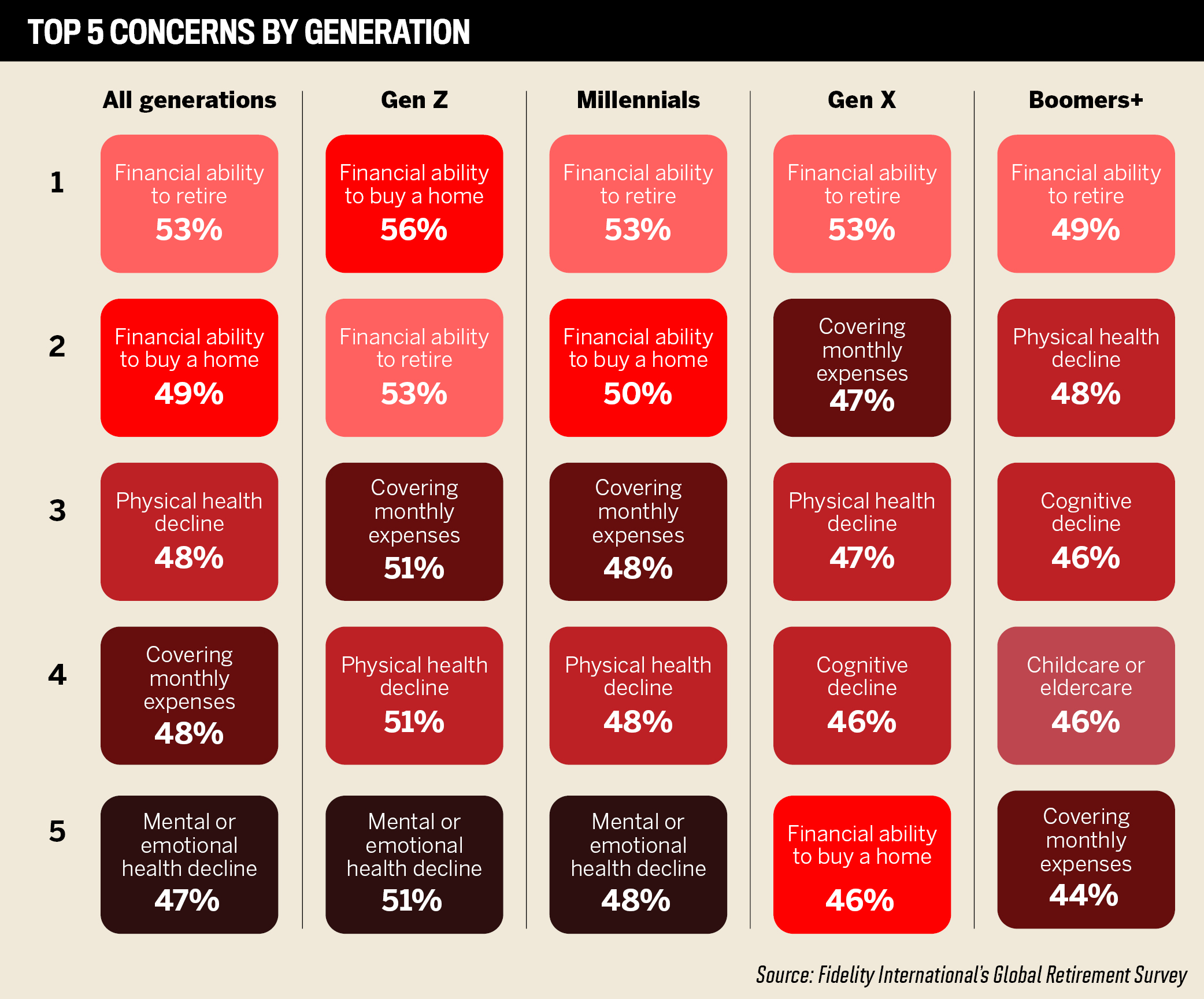
Meanwhile, financial strain is mounting. Roughly half of employees report high concern about paying monthly bills and their ability to retire, which elevates the importance of financial well-being supports inside total rewards, according to Fidelity’s global retirement research. The findings also highlighted the biggest gap between demand and availability lies in financial coaching, emergency savings, and loan programs.
For BPM’s Hot List honourees, this context underscores why their leadership is critical – translating employee priorities into programs that strengthen both health access and financial security at a time when demand is rising faster than supply.
Leadership lessons from the Hot List
Helen Hurlbut – Equiton
President, CFO, and Co-founder
Hurlbut, president and CFO, and CEO Jason Roque, launched Equiton in 2015 to make private equity real estate accessible to Canadians. Under her financial leadership, Equiton has grown into an emerging leader in the sector, surpassing $1.6 billion in AUM as at Aug. 31, 2025.


Helen HurlbutEquiton
BPM asked Hurlbut about Equiton’s rapid growth and the principles that continue to guide her leadership.
BPM: Equiton crossed the $1 billion AUM milestone in 2024 ahead of expectations. What leadership decisions or approaches do you think were most critical in reaching that point so quickly, especially given the market volatility along the way?
HH: “Equiton has continued to demonstrate resilience. We have grown to over $1.6 billion in assets under management and expanded our team to 250-plus employees.
Our conservative financial approach, strong governance, and commitment to transparency have helped us become successful. Beyond financial performance, our focus has been on helping address Canada’s housing challenges through strategic developments and operational improvements, while ensuring institutional-grade real estate is accessible to a broader range of Canadians.”
BPM: Your career reflects both entrepreneurship and discipline. What guiding principle or philosophy has carried you through those transitions and continues to influence your work today?
HH: “A key guiding principle throughout my career has been to lead with integrity and focus on creating long-term value for investors, employees, and the communities we serve. I also believe strongly in leading by example, which means mentoring future leaders, championing diversity, and setting a standard of excellence that others can build upon. That combination of vision, discipline, and responsibility continues to shape how I lead Equiton and how I contribute to the broader real estate industry."
Éric Trudel – Beneva
Executive vice-president and leader of group insurance
As both executive vice-president and leader of group insurance, he is driving change in the group benefits industry. He oversees strategy, product, and service delivery for the largest mutual insurance company in Canada and one of the country’s most influential insurers, championing digital innovation and integrated wellness solutions that support both health and financial security.
With more than 30 years in insurance, Trudel brings deep experience from senior leadership roles at SSQ Insurance, where he developed a cross-cutting view of operations, strategy, and product management. He is a Fellow of the Canadian Institute of Actuaries and holds a degree in actuarial sciences from Université Laval, complemented by executive studies at Queen’s University.
Winners of the 2024 Benefits Canada’s Workplace Benefits Awards in the industry leadership category, Trudel is recognized for advancing employee experience while positioning Beneva as a forward-thinking partner for advisors, employers, and plan members alike. He also contributes to the community as a board member at Diavie and as the honorary president of the 2025 edition of the Canadian Cancer Society Quebec City Daffodil dinner, raising more than $900,000 for cancer research.

Eric TrudelBeneva
BPM asked Trudel about the forces reshaping group benefits, the lessons learned over three decades in insurance, and the steps the industry must take to stay relevant.
BPM: Beneva has been pushing forward with digital innovation and integrated wellness solutions under your leadership. What changes in employer or employee expectations are driving this transformation, and how is Beneva adapting its strategy to meet them?
ET: “From the employee perspective, they are increasingly aware of their physical and mental health challenges. For example, stress, financial strain, and chronic conditions are on the rise. While many want to take control of their well-being, barriers such as time, cost, and motivation still exist.
Digital innovation and integrated wellness solutions make care more accessible and personalized. Beneva’s strategy uses virtual and holistic services to help employees improve their health at their own pace. With rising mental health needs, Beneva invests in digital platforms that offer quick access to professionals and self-management tools.
Beyond traditional coverage, employees seek personalized support. Beneva responds with services such as telemedicine, pharmacogenomics, and psychological care, reducing costs and improving access. Flexibility and personalization are now expected. Beneva meets this need through customizable plans and wellness accounts, made easy to manage via intuitive digital interfaces.
Navigating the healthcare system remains a challenge for nearly half of members. Beneva’s digital ecosystem simplifies this process by guiding users to the right resources at the right time, improving both their experience and health outcomes.
From the employer perspective, they face growing pressure to stay competitive, boost productivity, and manage rising benefit costs. These challenges are compounded by evolving employee expectations, chronic health issues, and the difficulty of fostering a health-focused culture, especially in hybrid or remote settings.
Attracting and retaining talent is now a strategic imperative. Employees expect more than basic coverage; they seek meaningful, flexible benefits that support their overall well-being and that of their families. Beneva’s tech-enabled plans are designed to meet these diverse needs while strengthening the employer’s value proposition.
Beneva supports employers with analytics and digital reporting tools to monitor usage, identify trends, and guide plan optimization. We also invest in pharmaceutical expertise to stay ahead of drug innovations, better understand their impact, and integrate them thoughtfully into benefit plans.
Mental health remains a strategic priority. Beneva collaborates with experts to deliver scalable, evidence-based solutions, recommends increased coverage, and offers accessible resources to support managers and employees with clarity and confidence.”
BPM: With more than three decades in insurance and leadership roles across strategy, product, and institutional services, how has your perspective on group benefits evolved, and what lessons from earlier in your career still guide your decisions today?
ET: “If I had to name the most important lesson I’ve learned in my career, it would be this: even when you think you understand what advisors, plan sponsors, and employees want, you need to ask and truly listen. Listening is not just a leadership skill; it’s a foundation for innovation.
That’s why Beneva has made listening a core part of its strategy. We’ve implemented the NPS system to stay closely connected to our members and partners and gather meaningful feedback. We also work continuously to measure and improve the experience of plan sponsors, administrators, and our market partners, including consultants and brokers. This ongoing dialogue allows us to adapt quickly to changing needs and remain aligned with what truly matters.”
BPM: As EVP and leader of group insurance at one of Canada’s largest insurers, what do you see as the most important step the industry must take in the next few years to stay relevant and deliver value to plan members?
ET: “To stay relevant and deliver real value to plan members, our industry must rethink how we approach health and benefits, because the pressure is mounting. We’re reaching the limits of our current healthcare system, just as demand is accelerating due to an aging population.
In 1965, Canada had eight working-age individuals for every person over 65. By 2030, that ratio will drop to 2 to 1. The demographic shift is undeniable, and it calls for bold action.
We now have the opportunity to build a model that is not only more productive, but also smarter and more human. A model where prevention is valued as much as treatment, and where collaboration between all players, including employers, individuals, and the healthcare system, is essential to deliver more seamless, patient-centred care. I’m optimistic that we’re seeing a cultural shift toward shared responsibility in health.
Technology, and especially artificial intelligence, will be a key enabler of this transformation. AI allows us to personalize health support, guide individuals through complex care options, and make services more accessible and affordable. It also helps insurers manage group plans more efficiently, reduce costs, and ease the administrative burden for employers.
At Beneva, we believe our new technological ecosystem positions us well to embrace this transformation. The years ahead promise to be innovative, collaborative, and full of potential for both employers and employees.”
Sean Maxwell – BMKP Law
Partner
As one of Western Canada’s leading pension lawyers, with a practice that spans pensions, benefits, and executive compensation, Sean Maxwell has advised on some of the sector’s most complex files. These include a landmark asset and liability transfer for a major public sector plan, governance reviews for quasi-public institutions, and strategic investment transactions for multi-employer plans.
In addition to his client work, Maxwell serves as professional partner at BMKP, responsible for lawyer recruitment and development. He is also deeply engaged with the Association of Canadian Pension Management, where he is vice chair of the national policy committee and a member of both the national conference planning committee and the Alberta regional council.
Maxwell’s contributions cut across the legal profession. He is the past chair of Clear Water Academy’s board, chair of Lumen Faith and Leadership Canada, and an active fundraiser and volunteer for initiatives supporting cancer research, the arts, and leadership development.

Sean MaxwellBMKP Law
His professional excellence is reflected in repeated recognition, including The Best Lawyers in Canada Lawyer of the Year in Employee Benefits Law (2021, 2023, 2025), Chambers Canada, The Legal 500, and the Canadian Legal Lexpert Directory, all of which list him among the country’s top pension and benefits lawyers.
BPM asked Maxwell about the themes shaping Canada’s pension mandates, the influence of his industry and community leadership, and the skills the next generation of pension lawyers will need.
BPM: You advised on some landmark mandates in the past year, from asset and liability transfers to governance reviews. What themes or challenges do you see emerging across these transactions that signal where Canada’s pension and benefits sector is headed?
SM: “A common thread I see across the larger files I worked on last year is the growing policy and regulatory expectations administrators face. One response is to sharpen governance processes and protocols to ensure they’re best in class and meet regulatory standards, often by bringing multiple disciplines together to assess and strengthen them. Another trend is consolidation.
There’s increasing recognition that scale matters in delivering on the pension promise. Larger plans have the infrastructure to access investments that smaller plans can’t, as well as stronger administrative and governance capacity. We’re seeing more expertise concentrated in these larger plans, not just among external advisors but also within in-house pension and benefit specialists. That trend will continue as smaller employers struggle to keep pace with regulatory demands.”
BPM: Alongside your legal practice, you’ve taken on leadership roles in professional bodies and community organizations. How have those experiences influenced the way you approach complex mandates and leadership within BMKP Law?
SM: “Technical knowledge is table stakes. Every competitor knows the law and the case precedents. What sets us apart is being trusted advisors. Experiences outside the boardroom help with that. They teach perspective, collaboration with people from different backgrounds, and humility.
You learn quickly you don’t have all the answers, but you can bring different insights together. My association work, for example, gives me a window into client priorities and successes. I can then share those learnings more broadly, acting as a kind of force multiplier.”
BPM: You’re recognized as one of the few pension lawyers in Western Canada with full-spectrum expertise. What do you see as the most important skills or perspectives the next generation of pension lawyers will need to serve clients effectively?
SM: “The real value comes from understanding client objectives as administrators of pension programs. That means asking: what are the pinch points, what keeps you up at night, and how can we help resolve those issues? Sometimes that’s practical legal advice, but sometimes it’s advocacy, helping smooth the way through regulatory roadblocks.
To do that effectively, lawyers need a broad understanding of the industry. You have to be able to put on a regulator’s hat and speak persuasively to different audiences. If your focus is too narrow, you miss opportunities to influence outcomes for your clients. That’s what we emphasize with younger lawyers: build technical expertise, but pair it with a deep understanding of what clients are trying to achieve with their programs. That’s how you grow into the role of a trusted advisor.”
Conclusion: Leadership at the core of Canada’s benefits, pensions, and institutional investment future
-
Hot List honourees show how leadership is diversifying across career stages, with mid-career executives now carrying much of the execution weight.
-
Women form the majority of honourees for the first time, pointing to stronger pipelines and sponsorship for female leaders.
-
Influence is extending past the C-suite, with VPs and directors emerging as the sector’s operational backbone.
-
Recognition reflects leaders who combine entrepreneurial drive, technical depth, and people-focused strategies in an environment still shaped by funding volatility and rising employee demands.
The Top Financial Executives and Professionals in the Benefits,
Pensions, and Institutional Investment Industries | Hot List 2025






- Alecia Henderson
SVP, Benefit Services
NFP Canada - Andrea Hansen
President and Benefits Advisor
Sutton Benefits & Pension - Bill Zolis
Senior Employee Benefits Consultant
Penmore Benefits - Chris Sanderson
Vice President, Operations
Maximus Rose Living Benefits - Doug Woloshyn
President and CEO
Alberta Pensions Services - Duncan Burrill
Managing Director and CEO
CBC Pension Plan - Fiona Tam
Assistant Vice President, Strategy, Data & Analytics, Group Retirement Services
Sun Life Canada - Gordon Hart
President and Chief Executive Officer
Selectpath - Graham Young
Director, Employee Benefits
CAPCORP Financial - Ibrahim Toor
Director, Pensions
Waterloo Regional Health Network - Janine Guenther
Portfolio Manager and Senior Wealth Advisor
Bellwether Investment Management - Jason Vary
President
Actuarial Solutions - Jennifer Katzsch
Regional Vice President, Western Canada
Desjardins - Jimmy Carbonneau
National Director, Group Retirement
AGA Benefit Solutions - Jonathan Flegg
Managing Director, Head of Canada
Pinnacle Investment Management - Korinne Collins
Chief Executive Officer
Association of Canadian Pension Management - Krista Tartaglia
Partner
BDO Canada - Marc-André Vinson
Senior Consultant and Director
SAI Actuarial Services - Mitch Frazer
Medavie Blue Cross
Mintz LLP - Rob Green
President and Chief Executive Officer
Green Benefits Group - Sarah Sissons
Secretary of the Board, Fredericton, NB Partner;
Atlantic Region Lead, Retirement Benefit Solutions,
TELUS Health, TELUS Health Corporate Canada - Satwik Misra
Director, Consultant Relations and Business Initiatives
Sun Life Global Investments - Stéphanie Mariamo
Vice President of Institutional Business Development,
Defined Contribution
Fidelity Canada Institutional - Winston Woo
Executive Director, Tax and Pensions
J2 Group - Yafa Sakkejha
Chief Executive Officer
Beneplan
Methodology
In June 2025, Benefits and Pensions Monitor invited industry professionals from across the country to nominate their most exceptional leaders for the third annual Hot List.
Nominees had to have been in the industry for at least 10 years. After receiving hundreds of nominations, BPM narrowed the list down to 31 movers and shakers whose contributions have helped shape the benefits, pensions, and institutional investment space over the past 12 months.
From innovators at the forefront of change to leaders who are transforming the way the industry does business, this year’s Hot List represents the best the industry has to offer.