Women Leaders in the Benefits, Pensions, and
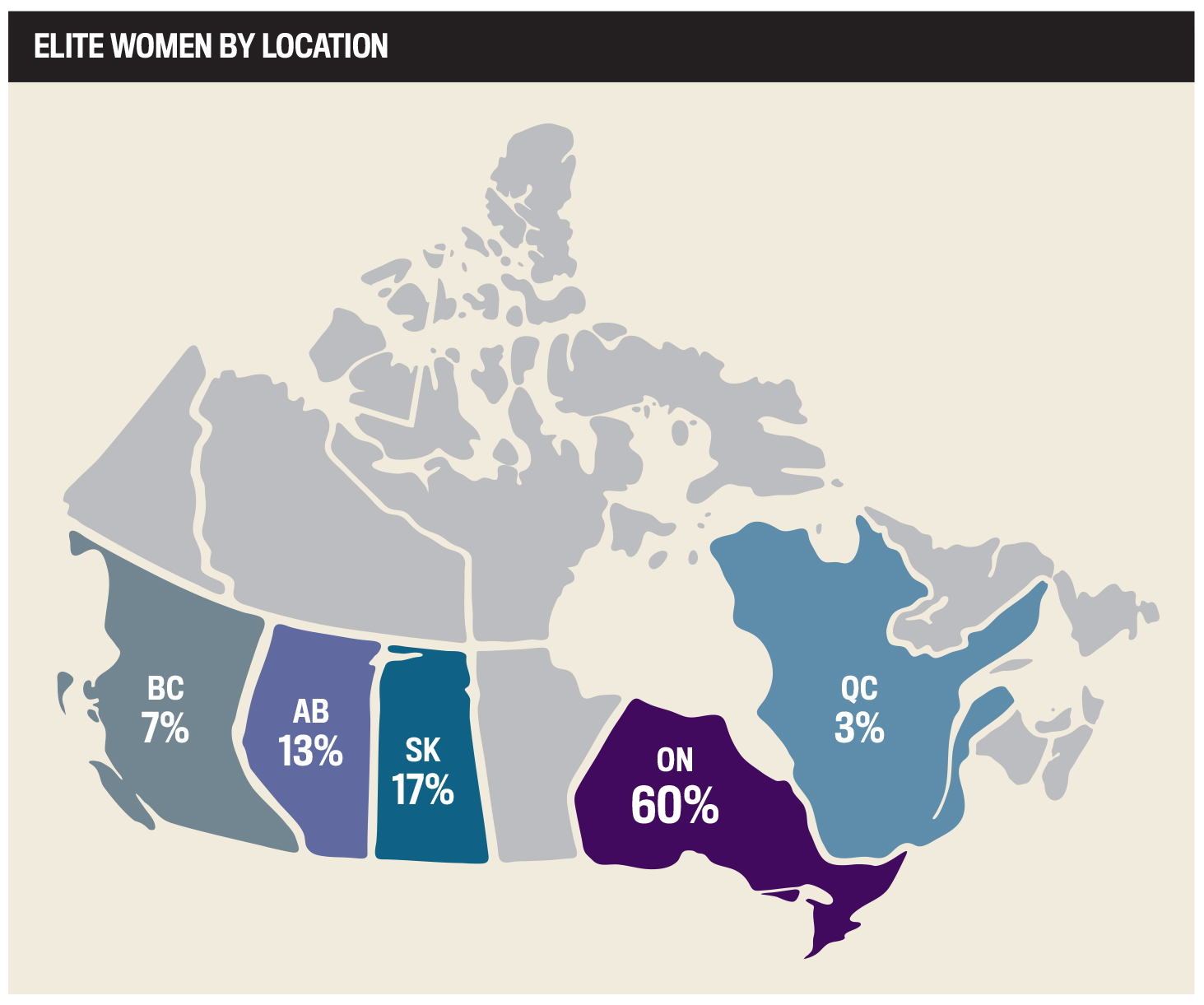
Institutional Investment Industries | Elite Women
Jump to winners | Jump to methodology | View PDF
Leading the charge
Leadership equity across the Canadian benefits, pensions, and institutional investment sectors remains unresolved. But it’s not due to a lack of talent, which is exemplified by the collection of outstanding industry leaders recognized in Benefits and Pensions Monitor’s third annual Elite Women report.
They stand apart due to:
-
Responsibility at scale: leading systems that affect large member populations, significant assets, and long-term outcomes, making decisions where accuracy and accountability matter every day
-
Credibility earned through expertise: deep knowledge built over years, whether in pensions, law, investments, governance, or operations, and from being relied on by boards, regulators, and senior leaders
-
Building what lasts: focusing on structures, policies, and ways of working that continue to function through growth, change, and complexity
-
Widening access: bringing people into secure arrangements, from expanding pension coverage and improving benefit design to addressing gaps that have left some groups behind
-
Impact beyond their own roles: impacting the wider sector through board work, mentoring, teaching, speaking, and advocacy that help move the industry forward
The equity challenge is structural, rooted in how advancement, authority, and opportunity are shaped. Progress depends on changing those foundations.
Nora Lamb, director of pension and savings at Suncor and one of the 2026 Elite Women, points to a quieter structural barrier. In many organizations, the technical and commercial complexity of pensions and benefits can be underestimated.
“People sometimes look at it and think, ‘It’s pensions. It’s benefits.’ Whereas, I often compare it to engineering. We’re dealing with people, with major corporate financial impact, and with real-life impacts across industries,” Lamb says. “When you think about health and well-being and the long-term outcomes for individuals, it’s much more than a line item."
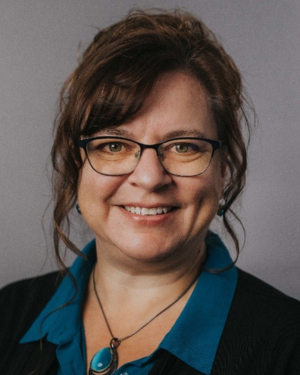
That structural tension is also visible in how leadership values are expressed inside organizations that have not always made space for it, says Shannan Corey, CEO of Corey HR Consulting.
“Being an Elite Woman, in my view, means staying true to your values and establishing your own principles and standards,” she says. “Don’t be afraid to be genuine and real, even if that means showing your emotions. And don’t be afraid to step back from or call out behaviours that don’t align with those values.”
The leaders recognized in the Elite Women 2026 report offer a clear counterpoint. They hold senior roles across Canada’s pensions, benefits, insurance, asset management, and corporate advisory ecosystem, working inside organizations where regulatory accountability, fiduciary responsibility, and long-term outcomes converge.
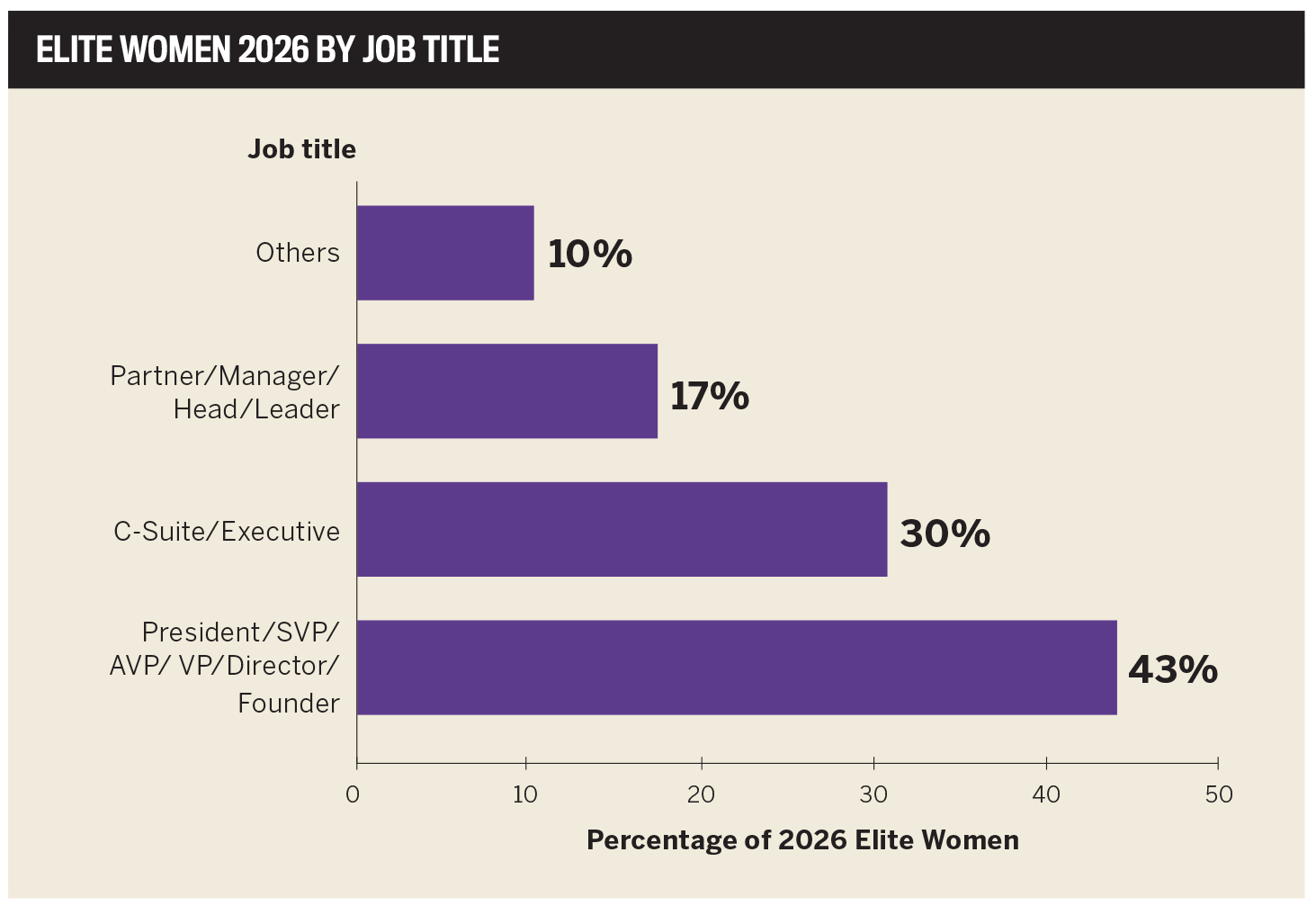
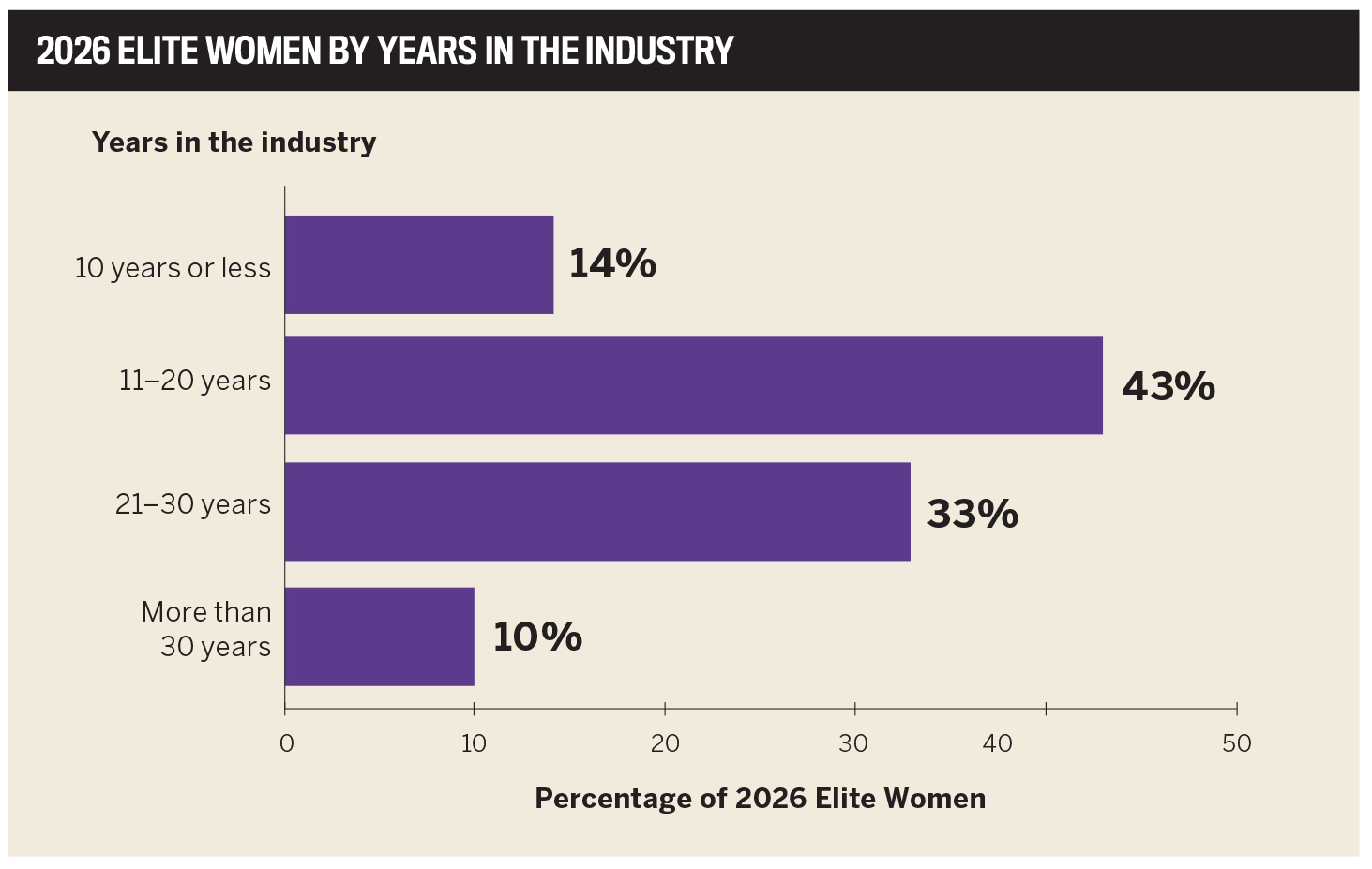
BPM’s data points to experienced leaders working at levels where judgment carries real consequences. With a median tenure of 15–16 years and most holding executive, founder, or VP-level roles, the 2026 winners reflect leadership built through sustained responsibility.
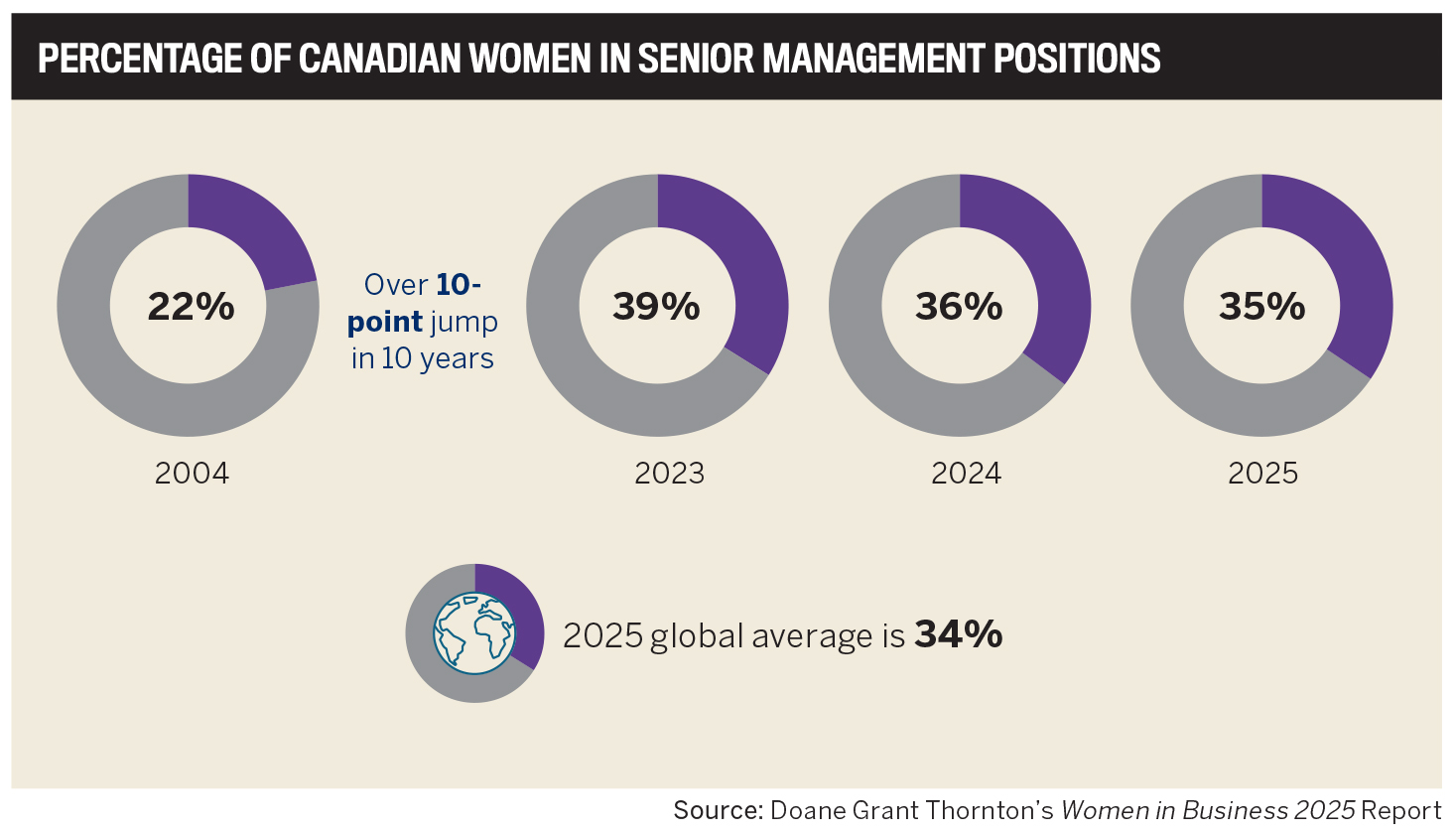
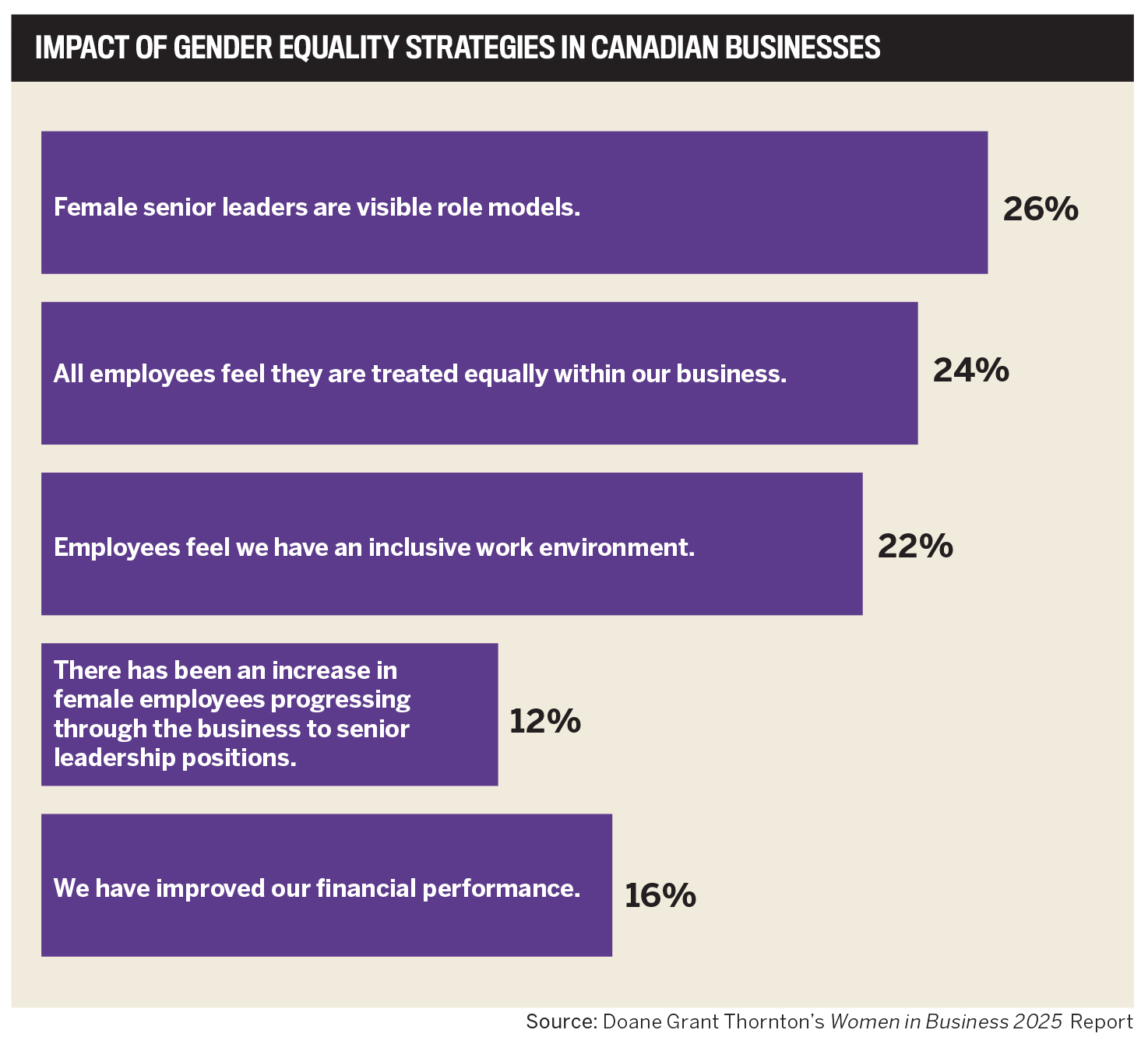
By comparison, Doane Grant Thornton’s Women in Business 2025 report shows women hold 34.7 percent of senior management roles in small and medium-sized Canadian businesses.
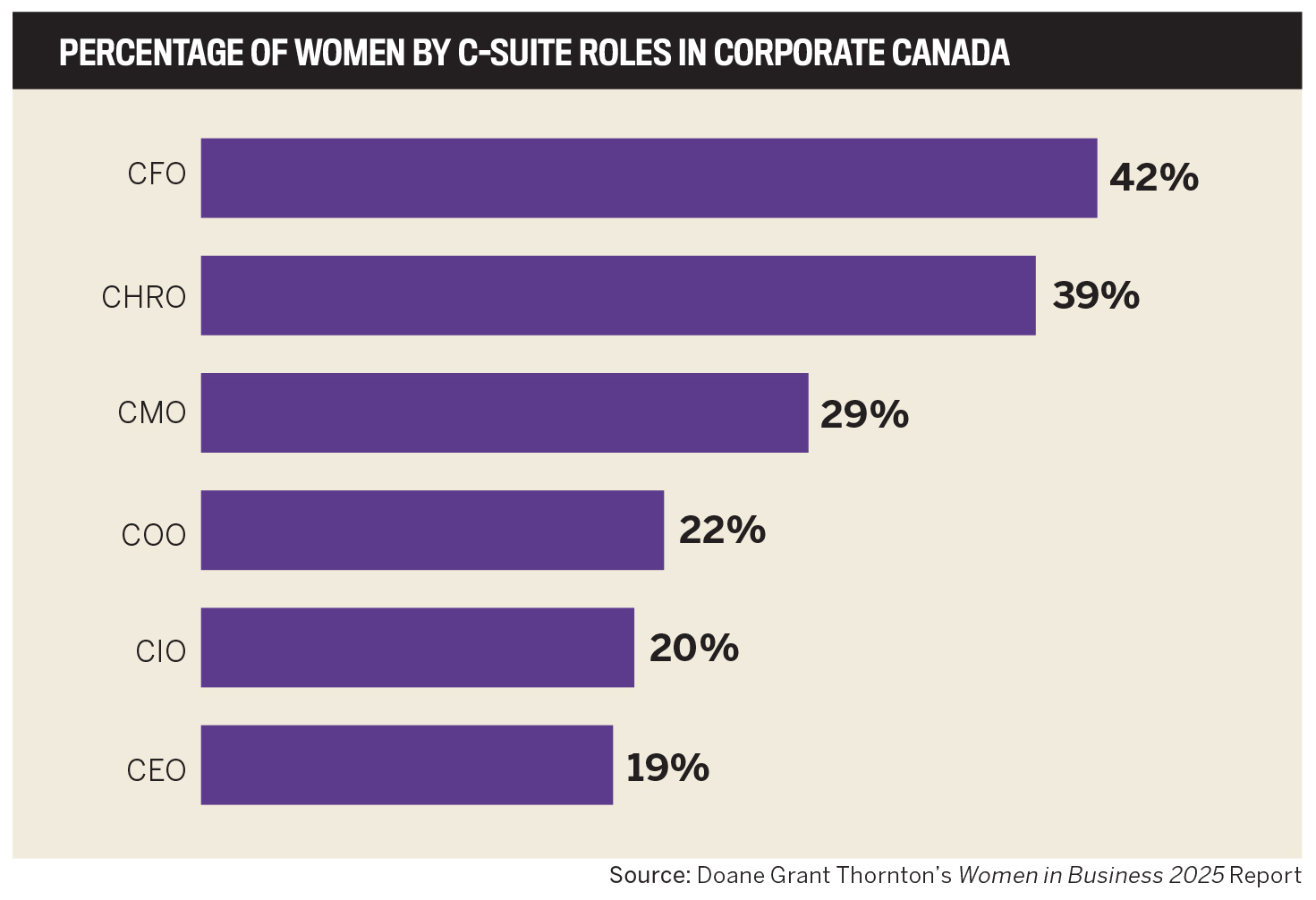
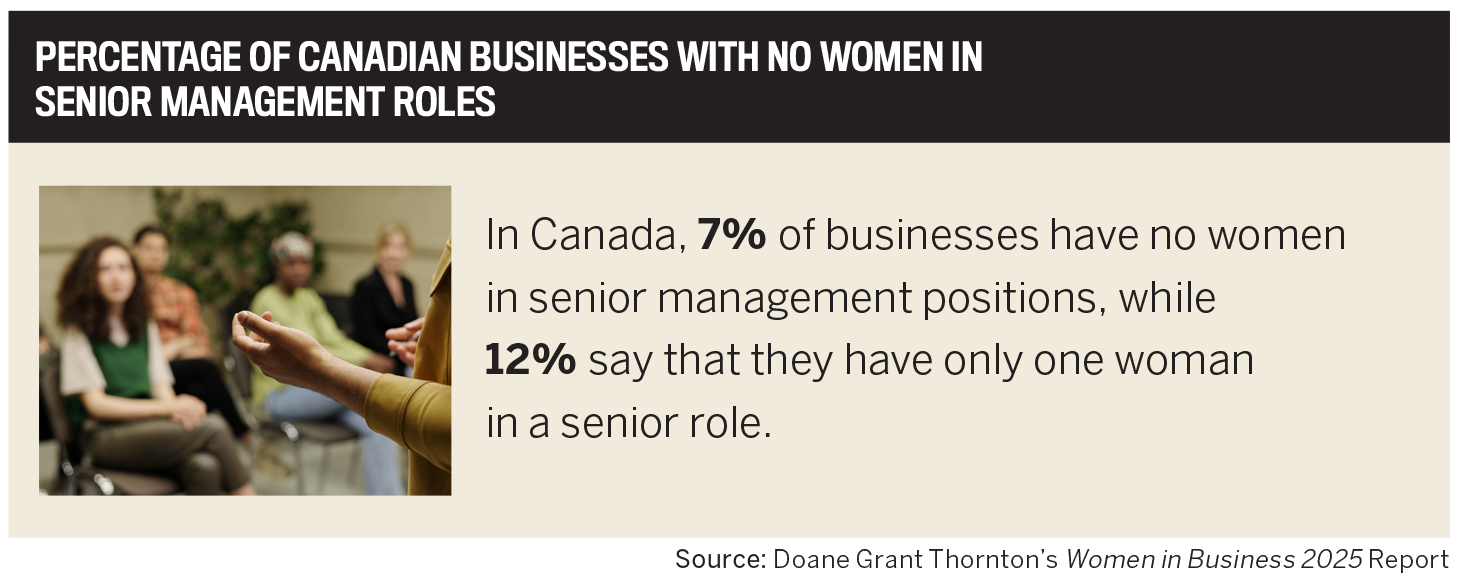
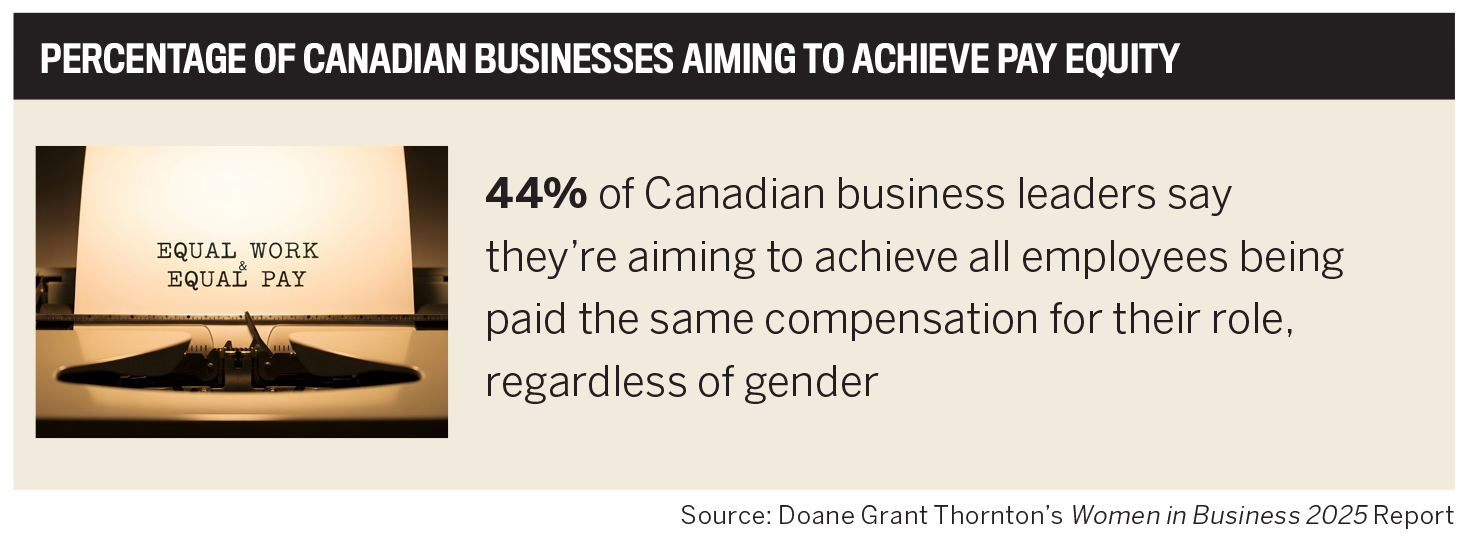
After tracking women’s representation in senior management for more than 20 years, the firm reports improvement in recent years. But the trajectory suggests meaningful parity remains decades away, with current trends pointing to 2051.
In financial services, specifically, the 2025 VersaFi Women in Wealth report found that men still hold approximately 80–85 percent of investment advisory roles in Canada. Sixty-one percent of women report a lack of female role models, and only 23 percent believe they have equal access to succession opportunities.
Corey notes that while women’s leadership has become more visible within organizations and on boards, the numbers still point to a wider diversity gap.
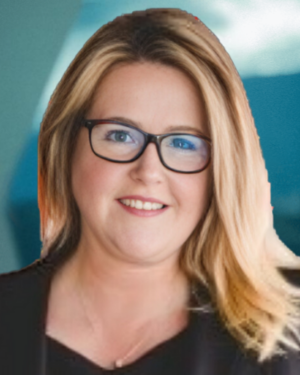
Summit Cover's head of group benefits and life, Kandy Cantwell, argues that equity in leadership will not be achieved through representation alone. It requires cultural and organizational changes that reshape how careers develop and how authority is exercised at senior levels.
“Progress depends on pay transparency, flexible career design, and treating empathy and collaboration as strengths in C-suite decision-making, not exceptions,” Cantwell says.
Women leaders shaping the sector’s future
Suncor’s Lamb has spent over two decades working across pensions and benefits. Her early interest was in employment and business law, but her first office role out of university redirected her path when she was asked to take on payroll, benefits, and pensions.
“I don’t think any of us woke up as kids and said, ‘I want to be a pension and benefits professional,’” she says. “What ended up happening was I had a great opportunity.”
Supported by strong finance mentors, her work quickly deepened into pensions, governance, and plan design across energy and diversified Alberta companies. She followed each opportunity, even pausing at times to question whether the field would define her career.
That question was settled when she joined Suncor to work with Pat Suzuki, a leader she admired.
“I didn’t choose the company because of a long-term plan. I chose it because of her,” Lamb says. “She really showed me what pensions and benefits mean. It’s not just a calculation or a job.”
In her current role, Lamb leads design, communications, and governance for the organization’s pensions and savings division, alongside responsibility for total rewards within mergers and acquisitions. She brings extensive experience as a pension trustee and committee member, and continues to contribute through industry advisory roles.
When reflecting on impact, Lamb doesn’t point to a single defining achievement. Instead, she frames her work in terms of continuity:
-
building pension and savings programs that remain sustainable through growth, acquisition, and change, while supporting employees across countries and life stages
For her, the work is about financial security and flexibility over decades.
“People often think pensions are a moment in time,” she says. “But we’re talking about supporting people from hiring through to the end of life.”
That long view also defines how she thinks about leadership. Lamb sees women’s presence at the decision-making table as critical to balancing financial outcomes with human ones and recognizing how technical decisions affect people over time.
“It’s not just about a company’s financial stability, but about individual employee stability, longevity, and that broader view of integrated well-being,” she says. “That ability to bring the personal, the technical, and the business together in one place is something I value deeply.”
Sustainability, however, was not something Lamb learned easily. Earlier in her career, she had to step away.
“I learned the hard way,” she says. “I went through a period of burnout and had to take time off to reset and rebalance.”
What followed was a shift in mindset. Lamb learned that the same care applied to employees and members also had to extend inward. She now listens more closely to signals from mentors, family, friends, and her own body, and makes deliberate space for life outside work.
“The priority we place on caring for others has to apply to caring for ourselves as well,” she explains.
Today, Lamb describes a sustainable career as one built on awareness rather than endurance. It is an approach grounded in experience, and one she continues to refine, as she remains focused on the long-term impact pensions and savings have on people’s lives.
Lamb’s career reflects just one dimension of the leadership shaping the sector.

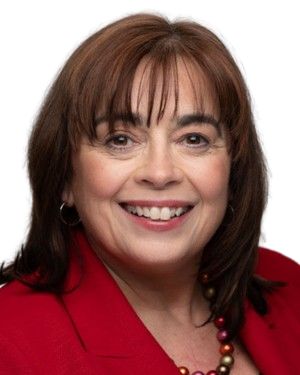
Nora LambSuncor Energy
Across the 2026 cohort, BPM invited nominations from across the country and selected 30 women whose work is being recognized for impact that spans systems, strategy, investment, and education.
Redefining retirement security and pension access
-
expanding pension coverage while addressing structural inequities in access
-
modernizing defined benefit plan design, policy, and governance
-
improving service quality and outcomes at population scale across public and private systems
Transforming systems, strategy, and organizational leadership
-
leading digital modernization of pension and benefits administration
-
driving total rewards strategy, operational change, and large-team leadership
-
strengthening governance, fiduciary oversight, and long-term plan sustainability
Advancing investment strategy and institutional influence
-
providing global investment leadership and portfolio oversight
-
shaping institutional engagement, ESG integration, and risk management
-
influencing national and international investment direction through governance roles
Innovators and educators expanding industry knowledge
-
advancing education, thought leadership, and member engagement
-
developing tools, frameworks, and content that deepen industry understanding
-
contributing through public speaking, publishing, and community leadership
Leadership defined
Cantwell frames leadership as a combination of judgment, adaptability, and a willingness to share influence. In her view, effective leaders engage directly with unresolved issues rather than working around them.
“An Elite Woman knows that this industry and healthcare and financial wellness in Canada have a lot of messy issues, and she uses empathy, DEI, and transparency to look for and implement truly new solutions,” Cantwell says.
Technology, she adds, has become a defining leadership capability. As plan design grows more layered and expectations rise, reliance on legacy approaches limits both advice quality and partnership potential.
“We need to embrace tech and how it can play a vital role in how we truly advise, bring valuable solutions to plan sponsors and their employees, and allow insurers to be real partners in these relationships, and not simply seen as an interchangeable vendor.”
Cantwell also points to mentorship and restraint as indicators of confidence, reflected in leaders who create space for others to succeed.
“An Elite Woman is a collaborative mentor who helps guide the way but is happiest when her mentees shine and lets them have their well-deserved moment,” she says.
Those traits recur across the 2026 winners’ list with many modernizing delivery models, strengthening governance, and scaling services across large and diverse member populations.
That leadership presence also carries tangible consequences for decision-making and outcomes, Corey notes.
“Gender diversity is a fundamental element when it comes to improving outcomes,” she says. “Women bring values and principles to the table in different ways, and that perspective can produce the ‘ah-hah’ moments that expand and shift strategic thinking.”
VersaFi’s findings underline how far the industry still has to go on workplace culture and progression. Fewer than half of women in wealth management feel their workplace is free from sexism, and just six percent view succession planning processes as transparent.
As regulatory expectations rise and plan design grows more demanding, Cantwell points to the measurable impact diverse leadership has on outcomes, from risk assessment to member experience.
“When it comes to pension and retirement plans, having gender diversity at the table results in more well-rounded and strategic decisions, a more holistic view of risk assessments, and a better representation of the challenges being faced by insured and covered members,” she says.
That observation is borne out in the experience of this year’s winners, many of whom sit at board and executive tables where long-term consequences are decided and where the sector’s direction is increasingly set.
What leadership looks like in practice
Across BPM’s 2026 list, influence is defined less by title and more by what strategies these leaders have implemented. Their work operates at a systems level, changing access, policy, and operational frameworks in ways that outlast individual mandates.
Success can be seen in expanded coverage, improved outcomes, and clearer pathways, shaped by policies that better reflect how people actually work and plan for the future.
Chief pension officerToronto, ON
Empathy and credibility also emerge as linked forces. These leaders do not treat understanding as a substitute for authority. Instead, it informs stronger risk assessment, more effective design, and better alignment with member and client needs. Influence grows through others, with mentorship, collaboration, and knowledge-sharing treated as part of the job.
Vice president of group benefitsSaskatoon, SK
Recognition, in this context, acts as a corrective. By making leadership visible where it has historically been underrepresented, recognition accelerates change, challenges assumptions, and makes effective leadership easier to see.
Executive directorGreater Toronto Area, ON
Grant Thornton’s research supports that picture, with many respondents citing persistent barriers tied to mentorship access and career design.
Corey says, “Let’s not be afraid of challenging traditional strategic thinking. We need to ensure current leaders and boards are receiving relevant training in this area. In terms of behaviours themselves, for current leaders, don’t be too quick to dismiss a woman’s perspective just because it may look and feel different.”
Conclusion: how leadership choices shape
long-term outcomes
-
The persistence of leadership gaps suggests the issue is not pipeline or performance, but how organizations define credibility, readiness, and authority in complex technical environments. Until those signals change, progress will remain incremental.
-
The work of the 2026 Elite Women shows that effective leadership in this sector is cumulative and systems-driven. Value is created through stewardship, judgment, and institutional memory, not visibility or short-term wins.
-
For organizations facing rising regulatory scrutiny, longevity risk, and member expectations, leadership composition is a strategic input. Diverse decision-making is directly linked to better governance, more resilient design, and fewer blind spots over time as evidenced by the success and track record of BPM’s Elite Women of 2026.
Women Leaders in the Benefits, Pensions, and Institutional Investment Industries | Elite Women
- Alice Fang
President and CEO
Northern Trust Corporation - Alison McKay
Chief Executive Officer
Saskatchewan Healthcare Employees’ Pension Plan - Andrea Hansen
President and Benefits Advisor
Sutton Benefits & Pension - Caitlin Gubbels
Senior Managing Director and Global Head of Private Equity
CPP Investments - Candace Dodson
Benefits and Insurance Broker
CDW Benefits - Carole Field
Assistant Vice President, Compensation and Pensions
CPKC - Catherine Thrasher
Chief Operations Officer
CIBC Mellon - Christine van Staden
Vice President, National Accounts
Canada Life - Denise Balch
President
Connex Health - Heather Cooke
Chief Investment Officer
The Audra Group - Janet Greenwood
Board of Trustees
CAAT Pension Plan - Joanna Lohrenz
Chief Pension Services Officer
University Pension Plan Ontario - Julie Joyal
Vice President, Pension Services
Alberta Teachers’ Retirement Fund Board - Karen Adams
President and CEO
Kii Health (Santé) Canada Inc. - Kim Maxwell
Vice President, Employee Benefits and Savings
Matheis Financial Group - Korinne Collins
Chief Executive Officer
Association of Canadian Pension Management - Laura Nashman
Chief Executive Officer
BC Pension Corporation - Lilach Frenkel, FCIA, FSA
Partner
Aon - Lilly Price
Executive Director and Head, International
CIBC Asset Management - Lyn McGaughey
Group Benefits Advisor
Atlas York Insurance - Natasha vandenHoven
Partner
Stikeman Elliott - Pavithra Ravi
Head of Pharmacy and Pharmaceutical Relationships
Manulife - Rachel Arbour
Head of Plan Benefits, Design and Policy
Healthcare of Ontario Pension Plan - Shandy McLean
President
Arcora - Shannon Patterson
Director
Co-operative Superannuation Society - Sylvia Tran
AVP, Group Benefit Sales
Co-operators Life Insurance Company - Tricia Brown
Director, Governance and Executive Secretary
Plannera Pensions & Benefits
Insights
-
 Shannan Corey
Chief Executive Officer
Corey HR Consulting Ltd. -
 Kandy Cantwell
Head of Group Benefits & Life
Summit Cover
Methodology
In October 2025, Benefits and Pensions Monitor invited professionals from across the country to nominate their most exceptional female leaders for the third annual Elite Women list. Nominees had to be working in a role that related to, interacted with, or in some way impacted the financial services industry, and to have demonstrated a clear passion for the benefits, pensions, and institutional investments industry.
Nominators were asked to provide details of their nominee’s achievements and initiatives over the past 12 months, including specific examples of their professional accomplishments and contributions to the industry as a whole.
The BPM team reviewed all nominations, examining how each individual had made a meaningful contribution to the industry, to narrow down the list to 30 Elite Women.