Website: scotiabank.com
Head office address (Canada): 40 Temperance Street, Toronto, ON M5H 0B4
Year established: 1832
Ownership structure: publicly traded, Canadian (TSX: BNS; NYSE: BNS); federally regulated by OSFI
Target market/client profile: employers, plan sponsors, advisors, institutional investors, and individuals
Number of professional staff: 79,740 employees globally (as at January 31, 2026); 41,943 full-time employees in Canada (as at November 2025)
Canadian office locations: Toronto (head office), with branches and offices across all Canadian provinces and most territories
Scotiabank is a publicly traded Canadian bank and one of Canada’s Big Five chartered banks. It serves over 11 million Canadians through banking, wealth management, and retirement and pension solutions. Its Global Wealth Management arm managed $436 billion in AUM as at January 31, 2026.
The Bank of Nova Scotia received its charter in March 1832, after Halifax merchants pushed for a public banking alternative. It became Nova Scotia’s first chartered bank and opened for business that August. From Halifax, the bank grew into a regional lender built around Atlantic Canada’s trade and commerce.
By 1874, Scotiabank opened its first branch outside Nova Scotia – in Saint John, New Brunswick. In 1889, it opened in Kingston, Jamaica and became the first Canadian bank to operate outside the US or UK.
The bank moved its head office from Halifax to Toronto in 1900 to reflect its national growth. It then absorbed three Canadian banks between 1913 and 1919, including The Bank of New Brunswick and The Bank of Ottawa, to fill out its coast-to-coast network.
Scotiabank found new room to grow when financial services deregulation opened up in the late 1980s. In 1988, it acquired McLeod Young Weir, a Toronto investment dealer that formed the basis of ScotiaMcLeod.
In 2018, the bank added Jarislowsky Fraser, a leading investment manager, and MD Financial Management, a physician-focused financial firm. The MD Financial deal later led to the Medicus Pension Plan, Canada’s first multi-employer pension plan for physicians, which launched in 2023.
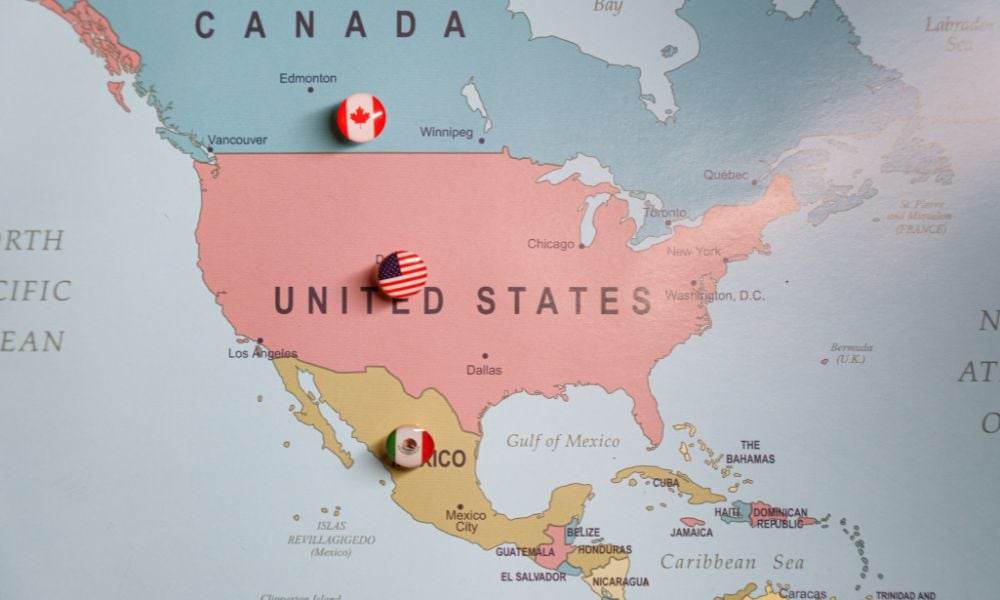
In 2023, Scotiabank (TSX:BNS) refreshed its strategy and committed to directing 90 percent of its capital toward Canada, the US, and Mexico. The following year, it invested $3.9 billion for a 14.9 percent stake in KeyCorp, a Cleveland-based US lender.
In late 2025, Scotiabank cut roughly 3,000 roles as part of a multi-month global restructuring effort. The bank disclosed a $373 million charge for those reductions and pointed to technology adoption as its path forward.
Scotiabank’s offerings for plan sponsors and institutional investors span group retirement plans, pension programs, and institutional investment management:
As a chartered bank, the firm administers group retirement plans and sponsors pension programs rather than underwriting group benefits or insurance. In September 2024, Scotiabank partnered with ZayZoon, a Canadian fintech company, to bring earned wage access to Canadian employees through employer payroll systems.
Scott Thomson became Scotiabank’s president in December 2022 and took on the CEO role in February 2023. Thomson was CEO of Finning International Inc. and CFO of Talisman Energy Inc. Thomson studied economics and political science at Queen’s University and earned his MBA from the University of Chicago.
Thomson leads Scotiabank’s executive management team:
Scotiabank’s 12-member board – with 11 independent directors – oversees strategy, risk, and executive conduct through five standing committees. The Corporate Governance Committee meets at least once a year to review governance policies, and all its members serve as independent directors.
Scotiabank’s group retirement plans serve Canadian employers and associations of all sizes through ScotiaMcLeod. The bank also works with pension funds and institutional investors through its asset management subsidiaries. Incorporated physicians in six provinces and the territories make up a third client segment through the Medicus Pension Plan.
ScotiaMcLeod advisors serve group plan members nationally, with each member assigned a dedicated advisor for account oversight. Plan sponsors select the investment options while ScotiaMcLeod handles plan administration and compliance on their behalf. The bank’s branch network covers most provinces and territories, supported by multilingual services for diverse employer groups.
Scotiabank has received recognition from several workplace and financial organizations in recent years. The bank’s executives have also contributed to economic policy discussions relevant to institutional investors and plan sponsors.
In April 2025, BPM covered remarks from CEO Scott Thomson at Scotiabank’s annual shareholder meeting in Halifax. Thomson addressed energy infrastructure, trade reform, and regulatory barriers affecting Canadian export growth. That coverage points to the bank’s engagement with economic policy issues that matter to institutional investors.
La Caisse and Hines cap a decade-long build with Canada's first park suspended above a rail line

A fund-by-fund breakdown of what was committed at the Toronto summit

ETF leaders explain why record Canadian ETF flows may say more about vehicle preference and liquidity management than directional market bets

Experts say the treaty’s built-in review process is being mistaken for a withdrawal threat
Medicus Pension Plan topped its annual benchmark and extended its inflation protection streak to four years in 2025

Canada's energy-heavy index climbed more than 40% since January

Eli Lilly commits up to US$2.3 billion to test a new option for resistant myelofibrosis patients

Loonie slips 0.1% as 130,000 new US jobs slash odds of near-term Fed cuts

The Fed's aggressive rate-cutting agenda could finally reverse months of loonie weakness that's weighed on pension portfolios

Aggressive central bank buying and rate uncertainty push gold’s appeal for institutional portfolios