Businesses brace for prolonged uncertainty as CUSMA enters annual reviews through 2036
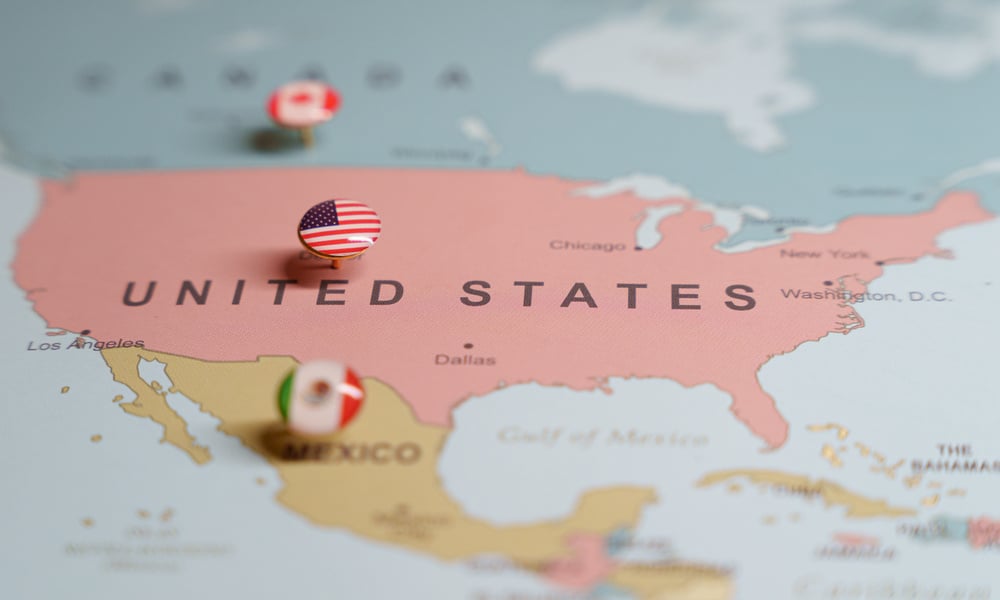
The Trump administration's refusal to renew the Canada-United States-Mexico Agreement in its current form has locked continental trade into a decade of annual reviews, prolonging the uncertainty that businesses say is already stalling investment and growth.
US Trade Representative Jamieson Greer confirmed the decision on Wednesday after a virtual meeting with Canada-US Trade Minister Dominic LeBlanc and Mexican Economy Secretary Marcelo Ebrard.
"The United States did not agree to renew the USMCA in its current form," Greer said in a statement cited by Reuters, adding that Washington would keep engaging with both neighbours over what it called the deal's shortcomings and its trade deficits.
The move does not scrap the pact, known as USMCA south of the border.
Wednesday marked the deadline, written into the agreement's sunset clause, for the three countries to declare whether they wanted to extend it to 2042 or renegotiate.
Because the US declined, the agreement stays in force under annual reviews until it would otherwise expire in 2036, and any party can withdraw with six months' notice.
The Globe and Mail reported that the unresolved trade war, now near its 18-month mark, could stifle investment decisions, and business groups have voiced the same concern.
That worry is already visible among smaller firms.
The ongoing trade uncertainty "has delayed real decisions on investment and growth," said Dan Kelly, president of the Canadian Federation of Independent Business.
According to CFIB research, 75 percent of small and medium-sized enterprises reported strained relationships with US partners or clients in April 2026, up from 49 percent in March 2025, and only 40 percent now regard the US as a reliable trading partner.
Nearly half of SMEs trading with the US have shifted to non-US suppliers or customers, the group reported, with most of those turning to the domestic market.
Kelly warned that diversification has limits, saying Canada cannot fully replace "the 340-million-person market that exists right along our border."
Canadian officials sought to play down the deadline.
Prime Minister Mark Carney told reporters in Kuujjuaq, Que., that he was not expecting to sign anything. "We prefer the status quo over a bad deal," he said, though The Globe and Mail said he added that securing a new agreement remains a priority.
For his part, LeBlanc said the three countries agreed to keep talking, and that Canada's focus includes "substantive discussions with the United States on addressing sectoral tariffs on Canadian steel, aluminum, autos and lumber."
Washington has already reshaped the relationship outside the deal, imposing tariffs of 25 percent on Canadian and Mexican autos, 50 percent on steel and aluminum, and 10 percent on lumber.
According to CNBC, a senior administration official told reporters that Trump "chose not to rubber stamp a USMCA renewal without addressing existing issues," and that his primary concern is the US goods trade deficit, which Reuters reported reached US$197bn with Mexico and US$48.3bn with Canada in 2025.
The US is negotiating chiefly with Mexico for now, leaving Canada to the side.
Greer said a bilateral round with Mexico would proceed the week of July 20, focused on tightening rules of origin for autos and industrial goods.
In earlier talks, per Reuters, the US demanded that North American-built vehicles contain 50 percent US content, a change that would push required regional content to 82 percent.
Industry groups have pressed for the trilateral deal to survive.
Matt Blunt, president of the American Automotive Policy Council, said US automakers face a disadvantage against imports from countries whose exports carry "a flat 15 percent tariff" without comparable content rules.
A quick resolution looks unlikely.
Speaking at a BMO event, Canada's former chief CUSMA negotiator Steve Verheul said he expects talks to run past the US midterm elections and possibly into next year, CTV News reported.
"We're looking at a very different kind of discussion than we had in President Trump's first term," Verheul said, noting that most of the agreement is expected to stay as it is.