Ontario's new defined benefit MPP pension plan has become the fault line in a Queen's Park power struggle
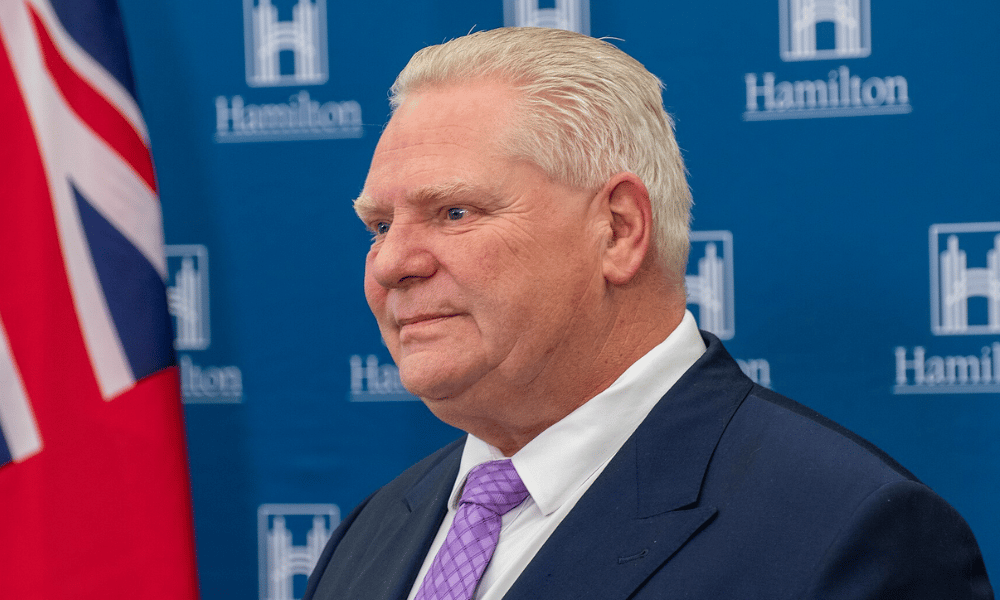
Ontario's newly introduced MPP pension plan has triggered one of the most public caucus ruptures of Doug Ford's premiership as a defined benefit plan transition that left past service costs unresolved unravels.
The breaking point came in late May 2026, when Ford fired his Progressive Conservative caucus chair after a direct confrontation at Queen's Park over the plan's rollout and his decision to purchase a $28.9 million government jet. Multiple sources told Global News that Will Bouma, the Brantford–Brant MPP who served as chair of the PC caucus, confronted Ford during a regular Tuesday caucus meeting, telling the premier that members were being negatively affected by the jet purchase and that the situation was a disappointment to the caucus.
Immediately after the meeting, sources say Bouma was summoned to a private meeting with the premier and relieved of his duties. The following day, PC MPPs received an email confirming that MPP Matthew Rae would serve as the new caucus chair.
The plan design at the centre of the storm
The conflict has its roots in the structure of Ontario's MPP pension plan, which came into force on January 1, 2026. Under Bill 34, the MPP Pension and Compensation Act, 2025, as BPM reported when the legislation passed, MPPs were enrolled in the Public Service Pension Plan (PSPP) on the same terms as other members of the Ontario public service, with those serving at least six years eligible for a supplemental defined benefit, calculated at a three per cent accrual rate based on the member's best consecutive three-year average salary. The government projected annual costs at $2.4 million for PSPP contributions and $4.4 million for the supplemental benefit, with both figures expected to rise alongside future salary increases.
What the plan did not address — and what lies at the heart of the current dispute — is past service. MPPs were not given automatic credit for years served in the legislature before the plan came into effect. Those who wanted prior tenure recognised in their pension calculation were told they would need to buy back that service at personal expense.
The numbers are significant. Under the plan's formula — a three per cent accrual rate applied to the new base salary of $157,350 — each year of credited service generates approximately $4,720 in annual pension income. For a 12-year veteran seeking to buy back a full decade of prior service, the actuarial cost of that credit, discounted to present value, could readily exceed $200,000 depending on age and years to retirement. Members were expected to fund that gap personally, with no employer contribution toward past service recognition.
It is a problem that pension administrators know well. Past service recognition is among the most contentious elements of any defined benefit transition, and the MPP plan's structure makes it especially pointed. Early retirement is available from age 55, but at a reduced accrual rate of two per cent per year and a 20 per cent reduction in total benefit — terms that make every credited year of service worth fighting for, particularly among members who have served a decade or more.
The $35 million reversal
Ford's government had been working toward a fix. The premier was prepared to settle the matter through a $35 million pension top-up fund, but reversed course after the backlash over the $28.9 million jet purchase. Sources told Global News that Ford expressed concern that approving additional pension support in that climate would be perceived as "entitlement" and "enrichment" — and that further negative coverage would pile onto an already damaging story.
The decision to announce a benefit improvement and then withdraw it is where the governance problem sharpens. In any plan — public or private — members who have been told a benefit enhancement is coming make financial decisions on that basis. Pulling it back creates a trust deficit that is difficult to quantify and harder still to repair. That tension is well documented in BPM's analysis of Ontario's pension landscape, which tracks how the PSPP — administered by the Ontario Pension Board — handles benefit stability as a core governance principle.
Political fallout and its institutional implications
Opposition parties moved quickly to capitalise. NDP Leader Marit Stiles argued that even Ford's own caucus cannot accept the jet purchase as a priority, and that the premier is listening to nobody. Interim Liberal Leader John Fraser called Bouma a well-respected three-term MPP who "paid the price" for telling the premier what he did not want to hear.
Ford denied any meaningful division, pointing to the applause that greeted him when he walked into the caucus room. Bouma, he stressed, retains his parliamentary assistant role and recently travelled to the United States with the premier.
The pension plan itself was introduced with broad support — all parties at Queen's Park backed the legislation — and was explicitly framed as correcting a 30-year inequity. Ontario scrapped the original MPP pension in 1995. Finance Minister Peter Bethlenfalvy called the 2025 changes "fair and reasonable," pointing to the alignment of MPP retirement benefits with those of comparable public service roles. That framing makes the subsequent reversal harder to defend: a government that justified the plan on fairness grounds then declined to address its most obvious unfairness — the exclusion of prior service — when doing so became politically inconvenient.
The legislature has been prorogued until October 2026. Until the fall session resumes, there is no legislative mechanism to resolve the past service question. Members who were counting on the top-up fund to offset their buy-back costs are now in a holding pattern — still accruing contributions under the new plan, still carrying the personal cost of unrecognised prior service, and with no formal indication of whether a remedy will be on the table when the legislature returns.
Photo: Joey Coleman, Public domain, via Wikimedia Commons