'We live in a world where service is almost instantaneous, and we need email to deliver,' says one benefits consultant
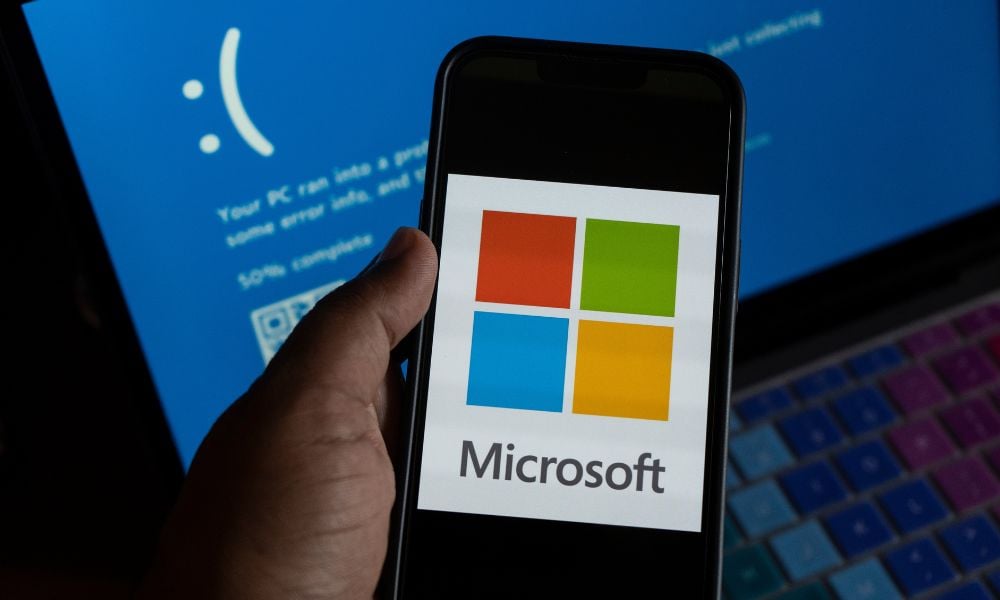
Thursday’s Microsoft global outage marked the latest stress test for business continuity plans and a pointed reminder of the concentration risk embedded in a single-vendor dependency.
Despite the outage shutting down Outlook, Teams and SharePoint and cutting off the email and collaboration tools that pension plan administrators and benefits professionals rely on to manage day-to-day operations, businesses were largely left unaffected. Yet as several benefits and institutional leaders say, the outage revaled just how much email has become integral to managing the business.
Manuelita Cherizard, chief human resources officer at the Royal Ontario Museum (ROM), said there was very little impact to the organization as the Museum has institution-wide playbooks in place to address various disruption scenarios.
“Once our technology team reviewed the situation and determined that no visitor-facing systems were impacted and that the Museum could safely remain open to visitors, the focus turned to internal communications. We have a cross-organizational emergency response team that quickly convened to manage through the communications and operational needs, as per established process and policy" she said, adding since Microsoft Teams was also out of commission, they used text and mobile phone calls to communicate internally.
Charles Loui-Ying, chief technology officer at Nicola Wealth, said the firm’s immediate focus when the outage hit was protecting client service. The team activated its incident management process and resiliency plans within minutes of detecting the disruption, ensuring all client and fund-related trades were processed despite the loss of email.
With Outlook down, the firm pivoted to its app, online client portal and public website to notify clients, and launched proactive telephone outreach to ensure no one was left without a point of contact. Teams remained largely functional throughout, allowing staff to continue hosting meetings and receiving internal updates.
“While email is an important communication tool, we have multiple systems and back-up processes in place to manage client portfolios and activities as part of our overall business continuity plan,” Loui-Ying said, adding the firm continues to monitor its Microsoft services.
“We have back-up processes in place should they go down again now, or in the future,” he added.
Michelle Moore, global head of HR advisory, said her organization was fortunate that Teams remained operational, allowing employees to stay productive, keep meetings running and reach clients by phone.
The bigger lesson, she said, was the gap that the outage revealed in how many employers communicate with staff during a crisis, particularly as large organizations tend to have backup channels such as text-message systems, but many small and mid-sized businesses had no fallback in place.
“The outage highlighted the need for organizations to have disaster recovery and business continuity plans that include secondary communication channels,” Moore said. “I would imagine that many organizations lost the ability to communicate updates about the situation and expectations regarding being at work.”
Still, Moore acknowledged how the episode was not without its lighter moments, as she looked to Reddit for humour.
"One suggested we use Reddit as a replacement to email and encouraged people to post their messages, which resulted in some very funny posts,” she said, adding it was reassuring to see people taking the disruption in stride.
Meanwhile, Paul Crossdale, founder and CEO of benefitsConnect, described the outage as “a hassle and inconvenience” for his firm, noting the inability to reach clients and insurance companies strained the firm’s service delivery.
“Not being able to contact clients and insurance companies put a strain on our ability to deliver the service our clients have come to expect,” Crossdale said.
While he acknowledged the industry’s heavy dependence on email, he argued it’s now inseparable from the speed clients demand.
“The world has changed, and we live in a world where service is almost instantaneous, and we need email to deliver.”
Benefits claims will still be processed despite Microsoft delay
Beneva spokesperson Stéphanie Duchesne emphasized while Microsoft's disruptions may cause longer-than-usual delays for some services, "all requests will still be processed," she said.
Similarly, iA Financial Group's services weren't severely impacted as plan sponsors could still reach the insurer by phone and complete their transactions online.
"We published a message on our sites yesterday to provide alternative methods of communication and reassure clients that, despite the outage, they could continue to communicate with us and access our services," said Pallavi Armoogum, senior advisor, public affairs and media relations at iA Financial Group.
HR teams go back to basics with phone calls
Kiljon Shukullari, HR advisory manager at Peninsula Canada, noted the advisory firm had to prioritize urgent matters, shifting to phone calls and the firm’s service platform, and setting clear expectations with clients to ensure nothing critical fell through the gaps.
“As an advisory team, timely communication is important, so any interruption to those systems can affect how efficiently we work,” said Shukullari.
He said the episode was a wake-up call for the broader business community about single-platform dependence.
“It’s not about moving away from email but making sure we’re not overly reliant on one system.”
Tammy Sergie, chief HR and privacy officer at EHN Canada, who works in a patient-care environment said the ability to communicate promptly among clinical and support staff is critical.
"The outage did have an impact on the organization’s ability to move quickly in our decision making,” Sergie said, adding that while the effects were not life-threatening, patient care was affected through the afternoon and into the following morning.
According to Sergie, the team pivoted to a broadcasting feature in the organisation’s HRIS system to push updates to employees, while phone calls and face-to-face conversations filled the remaining gaps.
“It brings attention to the importance of emergency preparedness plans,” Sergie said. “We will definitely be looking at enhancing our procedures to ensure we protect our employees and patient care from the impact of outages like that in the future.”
For Roxanne Seguin, owner of OPAL Corporate Connections, a recruitment firm specializing in financial services and bilingual recruitment, the experience reinforced a simple principle for her.
“It reminded me how important it is to build strong relationships with clients and have more than one way to reach them. Sometimes a good old-fashioned text or phone call saves the day," she said.
"It really makes you realize just how dependent we’ve become on technology, especially when you’re running a small business,” Seguin added.
Care to share your Outlook outage experience with BPM? Send a note to [email protected].