'The challenges in front of us are immense… and the only way to succeed is together,' says GreenShield’s chief medical officer
As the mental health crisis across the country continues to worsen, many industry leaders are looking to integrated virtual care as a meaningful part of the solution. But is it truly enough?
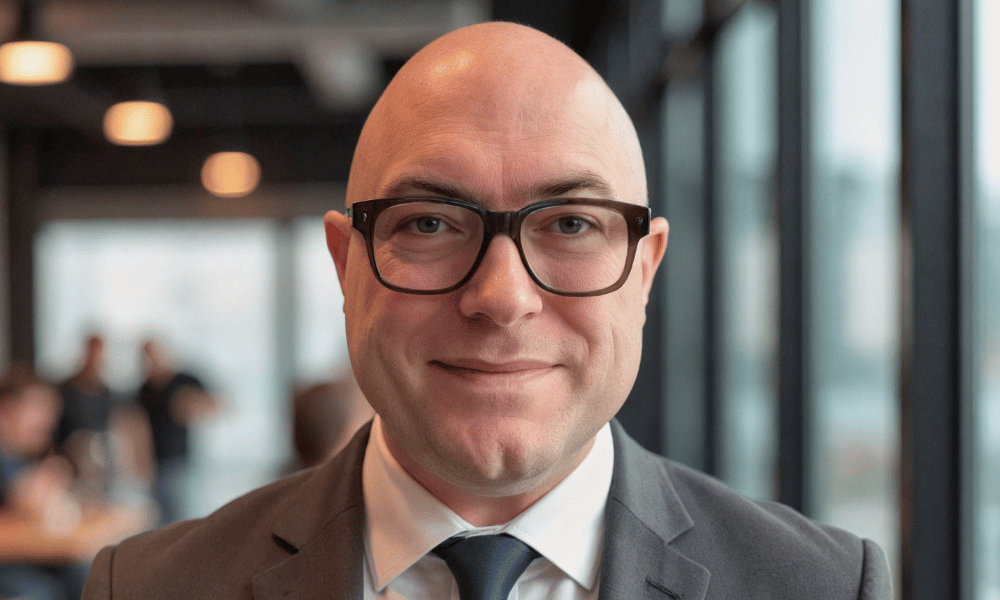
Dr. Andrew Bond, senior vice president and chief medical officer at GreenShield, doesn’t claim that virtual care is a silver bullet. In fact, he actively pushes back against the idea.
“There is a temptation, and an understandable one, to seek and or sell a specific, either silver bullet or specific solution to try to achieve really complex goals,” he said. “Rather than look for a single solution, I think what's important in integrated mental health care is that it's not one thing. It's a set of design principles for how you go about building solutions that work.”
He argued integrated virtual care should be seen as a framework, a set of evidence-based principles and tools that, when applied thoughtfully, can produce real outcomes. But its impact depends heavily on implementation quality, personalization, and timely delivery.
After all, he emphasized one of the most critical factors is timing because mental health concerns don’t wait, so care delivery can’t either.
Bond also highlighted ease of use and personalization as non-negotiables. Barriers like clunky portals or multiple sign-ons drive people away, which is why he underscored platforms need to be seamless and intuitive. Just as important is matching patients with the right provider because he emphasized that “almost 50 per cent of outcomes of therapy come from the actual quality of therapeutic alliance.”
Additionally, some situations still require in-person support. Challenges like treatment disruption during transitions between benefit stages, varying levels of care needs, and poor information sharing across providers often limit its effectiveness.
According to Bond, GreenShield views integrated mental health care as more than just a digital offering. It’s about weaving together different elements in benefits, from therapy, pharmacy, telemedicine and insurance into a unified system while also recognizing the limits of what can be delivered online.
Still, he doesn’t suggest that integrated virtual care is the endgame as he acknowledged its limits.
“We also know that that's not everything for everybody,” he said. “That means we have to work in partnership to integrate also between the work that we do and the experiences and care providers that people may need in person elsewhere. The biggest challenge and the biggest differentiator for us right now is to be able to actually design services with communities, to co-develop them with those who are the users and the plan sponsors and their needs, and to make sure that we are responsive,” he said.
Bond emphasized that one generation in particular isn’t waiting around. Gen Z - born between 1997 and 2012 - is not only prioritizing mental health in unprecedented numbers but also demanding that employers do the same.
“For the first time ever, mental health and mental health care is the very top priority for an entire generation,” he said. “Over 90 per cent are known to expect their workplace and their employers to think about and be concerned about their mental health and wellbeing.”
According to research from GreenShield, he noted roughly two-thirds of Gen Z workers would leave their jobs if their employer’s mental health support didn’t meet expectations. That kind of “skin in the game” shifts mental health from a wellness initiative to a workforce imperative.
Despite that willingness to engage, Bond said many young Canadians still feel overlooked by the system.
“They are fairly uniquely being left behind,” he said. “They need, and we know they expect services that understand their reality, their experiences, how they communicate and their social reality.”
Integrated virtual care, he argued, is uniquely positioned to act as a solution. Where Bond sees real disruption is in how integrated virtual care can reduce churn between care providers and plans. He noted that traditional employer assistance programs (EAPs) typically offer short-term services, and once progress starts to be made, benefits run out and users must start over with a new therapist through insurance and notes that “many people drop off and never re-engage.”
He believes GreenShield’s model, GreenShield+ bypasses that, allowing users to stay with the same therapist as their care transitions from EAP to insurance coverage, what he calls “one of the magic pieces of integration that you can only get as an integrated payer-provider.”
“Integrated mental health care as a principle of design isn't just about the digital part of the services… we’re integrating within the services. It’s ultimately around autonomy and self-determination for both the provider and the client,” he said.
That also means partnering with local, in-person providers when digital solutions alone aren’t enough. He stressed that decisions about whether care should be virtual or face-to-face must be made collaboratively.
That’s why GreenShield is investing in data sharing and collaboration with community organizations, including Mental Health Research Canada. Bond explained that this reflects the company’s nonprofit roots, which prioritize both individual outcomes and broader community impact. Building services this way, he argued, ensures responsiveness to real needs rather than assumptions.
He noted that the broader context makes this work urgent. Global political and economic instability is fueling higher levels of stress and anxiety, particularly among young people. He pointed to a recent Financial Times report which showed a steep increase in anxiety in just the first eight months of the year, particularly with the young generation.
With health systems under strain, he sees partnership and collaboration with organizations as the only path forward. For GreenShield, that means finding ways to support both employers and employees as they try to manage growing pressures on mental health.
“We know we have a lot of work to do, and it's right now the trajectory is not strong, and so that's where working together in partnerships is going to be critical… We know that health systems are facing strain right now, and we are really focused on how we strengthen and be there for employers and their employees at this time when they're really struggling. Ultimately, we know that the challenges in front of us are immense… and the only way to succeed is together,” he said.