Supplement deals hit US$14.6 billion through October as US regulators weigh new dietary ingredient rules
Japan’s Kirin Holdings announced in August that it will buy Canada’s Jamieson Wellness, whose US brand youtheory released a product aimed at GLP-1 users in early 2025.
Reuters reported the deal in a five-part series on weight-loss drugs, alongside Procter & Gamble’s pending acquisition of supplement maker Thorne.
Supplement makers drew US$14.6bn across 68 deals worldwide through October 6 this year, against US$16.9bn across 95 deals in 2025 and US$7.3bn across 115 deals in 2024, according to PitchBook data reported by Reuters.
Jamieson spokesperson Ruth Winker told Reuters the company sees GLP-1s as a tailwind for growth beyond combating side effects.
“As people get healthier, they tend to take more vitamins and supplements,” Winker said.
US vitamin and supplement sales passed US$74bn in 2025, Reuters citing the Nutrition Business Journal, after growth of 5 percent in 2024 and 7 percent in 2025.
TikTok Shop generated more than US$1bn in dietary supplement sales in 2025, or 5.4 percent of all e-commerce supplement sales, according to the publication.
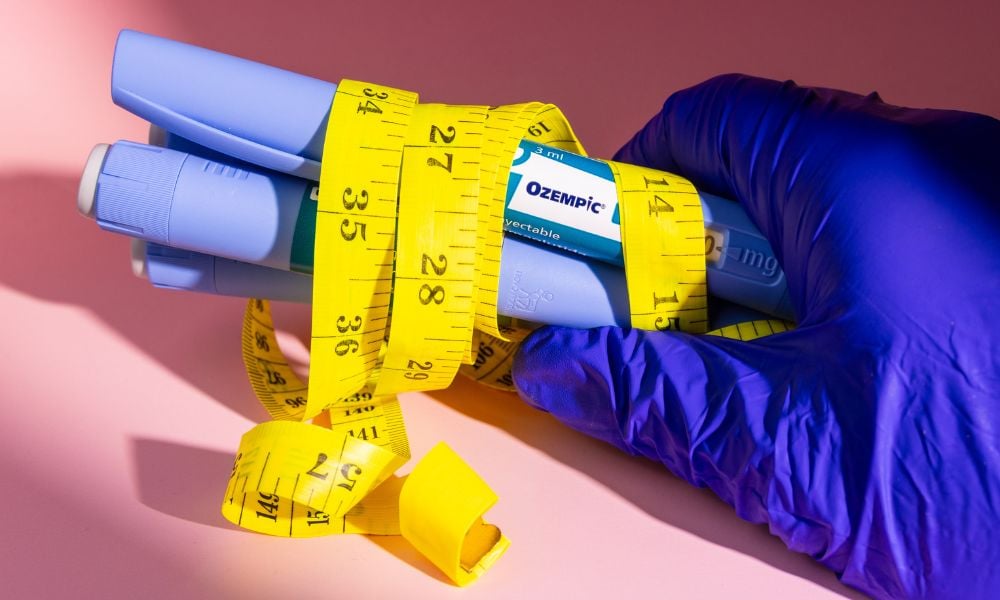
Some 10 million Americans used GLP-1 drugs in 2025, a figure JPMorgan research projects could reach 25 million by 2030.
Nearly half of GLP-1 users started taking new vitamins and supplements after beginning the drugs, a Nutrition Business Journal survey found, with probiotics, protein, and fibre particularly popular.
Boston Consulting Group’s consumer survey this year put GLP-1 user spending on protein, fibre, and collagen at roughly 20 percent above pre-drug levels.
Allison Vecchio, 42, an American emergency room nurse told Reuters she spends US$200 to US$300 a month on fibre, collagen, and electrolytes after side effects including gastrointestinal distress and weakness.
Erika Craft, a data analyst at Nutrition Business Journal, said the drugs are “bringing in new consumers and expanding existing supplement routines.”
Vitamins and supplements require no preapproval from the US Food and Drug Administration (FDA).
US Health and Human Services Secretary Robert F. Kennedy Jr has proposed tighter regulations, and Reuters reported the FDA this year issued new guidance on what submissions for review of new dietary ingredients should include.
A proposed rule would remove the pathway letting food companies declare ingredients “generally recognized as safe” without notifying the agency.
“If you can’t know what you’re taking, it’s hard to know what risks you’re undergoing,” said Jonathan Bonnet, a clinical associate professor at Stanford and chief medical officer at the Ardmore Institute of Health in Ardmore, Oklahoma, in comments to Reuters.
The Council for Responsible Nutrition told Reuters the rule would create months of backlogs as the FDA reviews thousands of ingredients.
Thorne CEO Colin Watts called it “improbable” that the agency could review new ingredients “at the speed needed to keep up with innovation.”
An HHS spokesperson told the outlet the FDA is weighing opportunities “to modernize its regulatory approach to keep pace with an evolving marketplace.”
Pfizer estimates the obesity drug market could reach US$150bn in annual sales by 2030, Reuters reported.
Revenue from clinical treatments for skin laxity and facial volume loss is projected to grow from about US$700m to US$2bn over five years, per 2025 Boston Consulting Group estimates.
Galderma, L’Oreal, and Natura are testing products on GLP-1 users.