Sobeys and Medavie Blue Cross explain how formulary strategy, pharmacy-led support, and persistence tracking can optimize GLP-1 outcomes
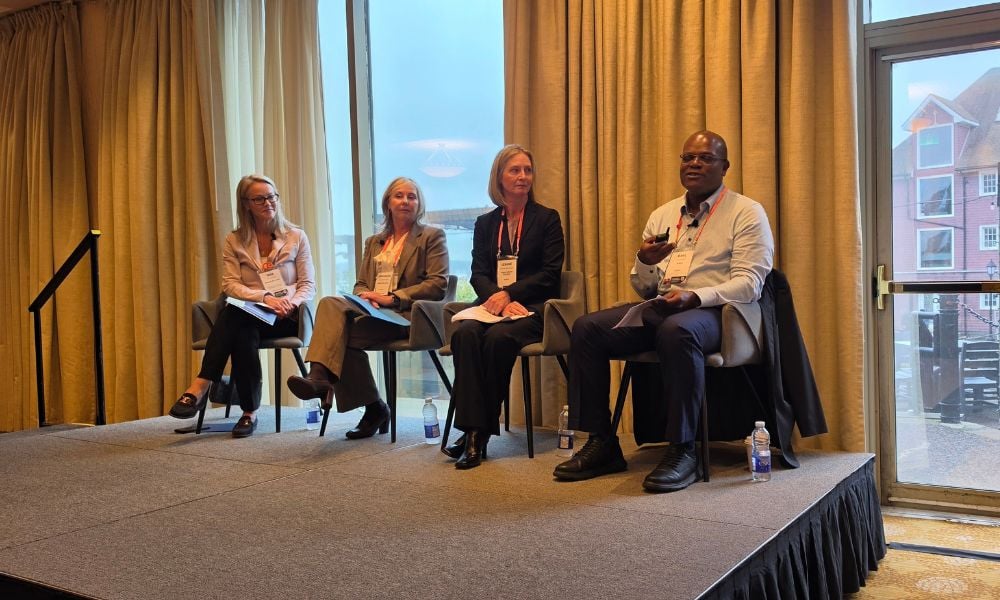
The genericization of semaglutide in Canada has forced plan sponsors to act quickly, particularly as costs are falling, but utilization is climbing all while new indications are expanding the patient pool.
As experts highlighted at the Canadian Pension and Benefits Institute (CPBI)’s Atlantic conference in Halifax on Thursday, persistence data suggests that a significant share of members approved for GLP-1 (glucagon-like peptide-1) therapy never return for reassessment.
Balancing GLP-1 access with plan sustainability
For Sobeys’ Basil Rowe, a plan sponsor with in-house pharmacy capabilities, the response has been to build a managed access model that ties plan design to clinical support and to accept that the work is far from finished.
"We really come at this from a perspective of managed access. For us, that means recognizing that this is an area that we want to invest in. Secondly, we want to make sure that utilization is appropriate. It's the right care for the right patient at the right time at the right cost," said Rowe, VP of total rewards at Sobeys in Toronto, framing the challenge as one of balance. He suggests GLP-1s are one segment within a broader benefits plan that carries competing demands.
"We look at our results and our utilization so what we're sharing is based upon how our members are using our plan and we're adjusting accordingly. There is no one-size-fits-all. You have to look at and manage it all the time. But you also have to look at the economics. It is a balancing act and it's dynamic," he added.
Meanwhile, Leanne McFarlane, director of pharmacy services at Sobeys in Nova Scotia, pushed back on the idea that prior authorization criteria can remain static. She argued that coverage requirements need regular review to ensure they reflect current clinical evidence, particularly as pharmacotherapy becomes recognized as a first-line treatment rather than a last resort.
Additionally, many patients seeking GLP-1 therapy have already cycled through diet, exercise, and other interventions before arriving at a prescription so requiring them to demonstrate further failure before approval, she suggested, delays access to treatment that could produce meaningful results.
According to Rowe, Sobeys began tightening its protocols in 2023 after utilization and costs started rising and has since revisited them as obesity-indication drugs have entered the market. The company uses prior authorization to ensure clinical appropriateness and is evaluating how its tiered formulary fits into the broader strategy. But he underscored that plan design is only one part of the puzzle.
"We want to look at this not as drug dispensing but looking at this as how do we support the member as they go through this process?" he said.
Pharmacy at the centre of the model
That’s why Sobeys is working with its carrier Medavie on adjudication and with Avanta on formulary decisions, but Rowe placed pharmacy-led support at the centre of the model, like check-ins, follow-up, and direct consultation to track whether members are persisting on therapy and achieving intended outcomes.
"We want to know that people are actually using it and that it's having the intended effects. We know that in some cases people are stopping the drug. We want to know why," said Rowe. "We want to make sure that if we're going to be dispensing this drug and supporting them, that they get the support all the way through, and that goes beyond just the dispensing. We want to know what else can we be doing to support that individual in their journey."
Anne-Marie Smith, practice lead, drug plan solutions and pharmacist consultant at Medavie Blue Cross, based in Nova Scotia, also agreed that access decisions shouldn’t hinge on weight loss alone.
"Responsible access, managing access to these drugs essentially, is not just about using these drugs for weight loss, but using these drugs in patients where excess weight is causing either a comorbidity or is putting them at risk of comorbidities," she said.
Under the current criteria her team administers, members approved for therapy must demonstrate measurable health improvements, in cholesterol, blood pressure, or cardiovascular risk, to be reapproved at the eight-month mark.
To that end, McFarlane positioned pharmacists as the logical point of contact.
"Pharmacists are the most accessible healthcare practitioners. We live and work in the communities where people live and work, and we are there for them extended hours, day and night," she said, noting Sobeys launched a formalized pharmacy-led health coaching program for weight management, structured around trust-based conversations, individualized titration support, benefit navigation, and ongoing check-ins.
McFarlane's own persistence data showed a 51 per cent two-year persistence rate among Wegovy starts within Sobeys pharmacies, a figure she attributed in part to frontline interventions like microdosing adjustments and coverage troubleshooting.
Rowe believes the member's role in the model is non-negotiable, particularly as GLP-1 therapy requires sustained commitment, and the traditional benefits structure doesn't account for that. The tension, he acknowledged, is between offering that support and respecting privacy, which is why pharmacy serves as the intermediary, he said.
"The challenge for us as a plan sponsor is I want to support you, but I also want to respect your privacy. So this is where I'm collaborating with pharmacy and with Medavie my carrier, to say, ‘How do I provide additional information? How do I provide additional support? And how do I encourage and incentivize my member to participate?'" he said.
He framed it as a two-way exchange: Sobeys is making a significant investment in its members, and in return expects active participation - seeking help when therapy isn't working rather than abandoning it.
What a ‘net health outcome’ could mean for plans
To that end, he also proposed what he called "net health outcome" - a metric that would weigh the investment in GLP-1 therapies against reductions in comorbidity-related claims across the plan. He acknowledged that results will take time to materialize but CFOs want numbers now.
McFarlane offered a formula to solve Rowe’s equation.
"I think I have your equation, Basil, which is access and persistence. I think those two features are so important, and I think that's what gets your net health outcome score," she said.
Ultimately, Rowe described the process as continuous rather than fixed, particularly as new drugs, new indications, and shifting cost dynamics means the plan is never static. He regularly works with Medavie Blue Cross to review utilization data and with pharmacy to layer in clinical insight, treating each perspective as a distinct input that shapes the next iteration. The integrated model Sobeys is building rests on essentially four pillars, Rowe noted.
"We know it starts with plan design, but it's also the adjudication piece, the experience of the pharmacy, the individual and the role that they play in this. And that's what we're looking at support," said Rowe. "How do we support the individual? Because it’s unique to them. So it takes a lot of work to go across all those pillars and to make them work in an integrated fashion but that's our vision. We're still working on it."