Merck and Moderna's melanoma win points next to lung, bladder, and kidney cancers
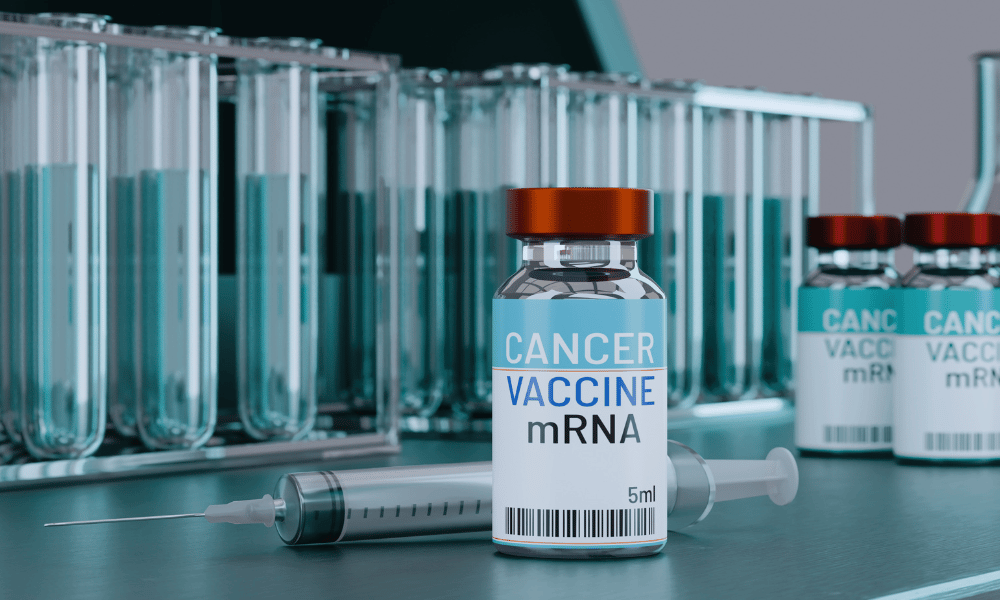
Merck and Moderna's personalized mRNA cancer vaccine met its main goals in a late-stage melanoma trial, moving an individually manufactured therapy closer to a regulatory filing.
The shot, given alongside Merck's immunotherapy Keytruda, hit key endpoints in a phase 3 trial of more than 1,100 patients with higher-risk or advanced melanoma whose detectable cancer had been completely removed through surgery, CNBC reported.
The combination significantly extended the time patients lived without their melanoma returning compared with Keytruda alone, and reduced the risk of the cancer spreading to distant parts of the body.
The INTerpath-001 trial enrolled 1,137 patients with stage 2b to 4 melanoma that had been surgically removed, according to CNN, with volunteers randomized to receive up to nine doses of Keytruda plus the personalized vaccine, or Keytruda alone, for about one year.
The study is the first of its kind to show a treatment can "reduce the risk of recurrence or death in patients" with the disease, said Georgina Long, the study's principal investigator and chair of melanoma medical oncology and translational research at the University of Sydney, in a statement carried by CBS News.
Each patient's vaccine is built from an analysis of the mutations found in that patient's own tumour, CNN reported, rather than a single formulation used across all patients.
Reuters reported the regimen, known as intismeran autogene, pairs up to nine Keytruda infusions given every six weeks with up to nine doses of the customized mRNA vaccine.
Keytruda used alone after surgery is given every three to six weeks for up to a year.
Moderna and Merck aim to file for regulatory approval within months but declined to give a specific timeline, CNN reported.
Dean Li, president of Merck Research Laboratories, told CNBC the companies will likely begin talking to regulatory agencies about the treatment and its safety in the next few months.
Moderna expects thousands of melanoma patients could benefit within the first few years of approval, Reuters reported.
Barclays analysts said last month they expect the therapy could generate about US$3bn for treating melanoma by 2035, according to CNN.
No new safety signals have emerged in the phase 3 trial, the companies said.
Earlier studies found the most common side effects were fatigue, injection-site pain, and chills, CNN reported.
Keytruda on its own can cause fatigue, diarrhea, rash, and inflammation of joints, muscles, and in some cases healthy organs, according to Reuters.
Five-year data from an earlier mid-stage trial showed the vaccine cut the risk that the cancer would return by half and reduced the risk of spread to new sites by 59 percent compared with Keytruda alone.
CNN put the reduction in risk of recurrence or death at 49 percent after five years.
Elizabeth Buchbinder, a melanoma specialist at the Mass General Brigham Cancer Institute, told Reuters that doctors treating patients whose cancer has been removed often weigh Keytruda's benefits against its side effects, particularly for patients facing only a 20 percent recurrence risk.
The added benefit of the vaccine "may change that math," she said.
Merck and Moderna are running several large trials of the combination in surgically removed non-small cell lung cancers, mid-stage trials in bladder and kidney cancers, and early-stage trials in pancreatic and stomach cancers, with results expected over the next year or two, Moderna president Stephen Hoge told Reuters.
Roche and BioNTech are testing a similar treatment in colon and pancreatic cancer patients, with colon results expected in 2027 and pancreatic results in 2031.
Moderna's shares soared about 177 percent on Wednesday, CNBC reported, while Merck's climbed more than 12 percent.
CBS News reported Moderna shares remain well below their pandemic-era peak in late 2021 and 2022.
Government support for mRNA has narrowed in the United States, CNN reported, with the Department of Health and Human Services cancelling a US$590 million deal with Moderna for a pandemic influenza vaccine and later ending mRNA research funding through the Biomedical Advanced Research and Development Authority, a move involving 22 contracts.
The US Food and Drug Administration recently approved Moderna's mRNA-based flu vaccine after initially declining to review it.