Despite AI anxiety growing among employees, plan sponsors at OTIP and BC Hydro say transparency, addressing uncertainty is the fix
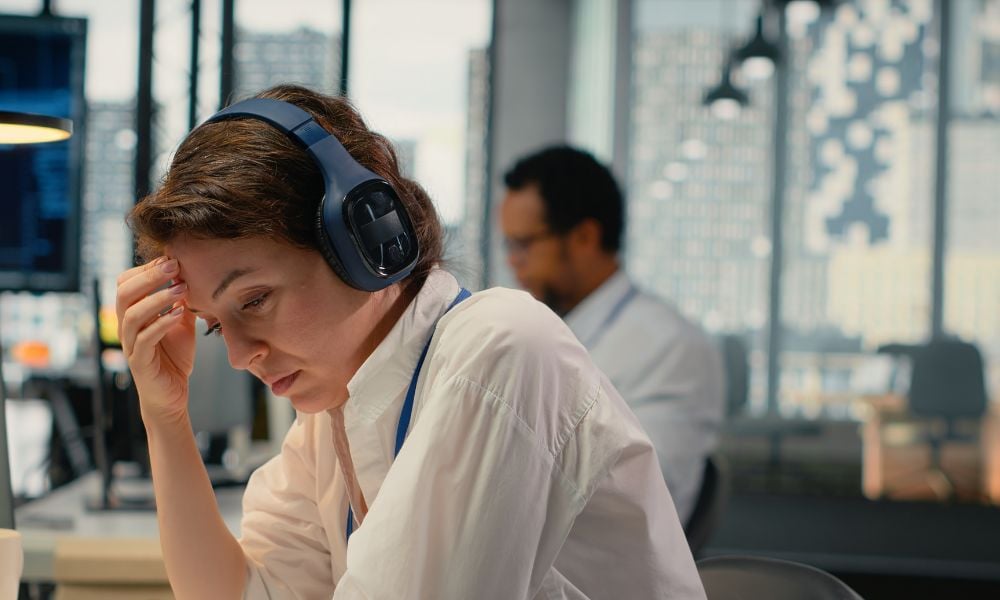
Forty-three per cent of Canadian workers feel guilty about using AI on the job – a wave of AI guilt so widespread that nearly four in 10 say it feels like cheating, while more than a third admit they hide their AI use from their employer altogether.
Those are the findings from Employment Hero's AI Paradox Report, released earlier this month, and plan sponsors believe they point to a problem that has little to do with the technology itself, particularly as workers are anxious about AI replacing them.
How plan sponsors define AI anxiety vs. AI guilt
Lisa Marko, executive vice president of employee experience at Ontario Teachers Insurance Plan (OTIP) sees the anxiety and the guilt as two distinct reactions. The anxiety, she believes, is rooted in uncertainty - the fear that jobs or skills could become obsolete, whereas the guilt is more personal, tied to a feeling that AI assistance somehow cheapens the work.
"I'm hoping we can get through and people get through the fear, get through the guilt by addressing the uncertainty," she says. “How we use AI responsibly and effectively and making it clear, I think, will help mitigate the uncertainty that people feel. We don't believe AI will replace people, but we do believe that people who know how to work effectively with AI may have an advantage over those who don't. That approach is grounded in our employee value proposition, and we have a very strong culture of care here.”
For Carolynn Ryan, CHRO at BC Hydro, the guilt showed up early within the workplace. When she asked an employee whether she had used Copilot on a piece of work, the answer was no. Not because she didn't know how, but because she thought it was crossing a line. Ryan attempted to cut through that with a simple analogy.
"When you go to turn your TV on, do you think it's cheating that you use the remote control? Because we used to have to get up and turn it on," she said. “I tried to frame it as something simple. I'm trying to encourage people [to use it].”
HR leaders encourage healthy AI use
While Marko believes any anxious feelings or fears about using AI are completely justified, she separates the emotion from the conclusions employees draw from it. Her focus stays on three pillars - governance, practical learning and change leadership - to move employees through the transition rather than around it.
Meanwhile, Ryan traces the problem back to gaps in organizational follow-through.
"It comes from a lack of transparency, a lack of guardrails around it, a lack of training and a lack of people championing it and talking about how they've used it, because that frees us all to experiment a little bit," she said.
According to Ryan, BC Hydro's culture around AI was shaped early by the company's CIO, who encouraged staff to experiment with tools like ChatGPT for low-stakes tasks - planning a vacation, building a travel itinerary - before the technology was even on a protected site. That stood in contrast to what Ryan was hearing from other utilities across the country, where IT leadership was telling employees to stay away from AI entirely over cybersecurity concerns.
“It helped that he was really encouraging at the beginning so it did take away some of that initial trepidation," she said.
Still, the automation fear - that employees might work themselves out of a job - hangs over both organizations. Ryan holds a firm line that human decisions about people stay with humans. That’s why she leads by example, talking openly about her own AI use to give employees implicit permission to do the same.
Why AI tools enhance work despite the fear
While there are guardrails - employees expected to verify outputs and check sources, for example - the overall message is one of encouragement. Ryan frames AI the same way she'd frame any tool that's come before it: something that takes the routine work off people's plates and frees them up for the parts of the job that require judgment and creativity.
Meanwhile, what matters for Marko isn't whether someone used a tool but how they applied their own expertise, judgment and context to the result. If AI helps an employee produce a better draft, pull together information faster or free up time to support colleagues and members, that's a net gain, not a shortcut.
“The line is human accountability," she said. "AI can bring speed, analytical power, but people really bring that context of background, ethics, empathy, relationship building," she said.
She suggests when employees see colleagues championing the tools and getting real value from them, the anxiety loses its grip. Ryan also pushes back on the idea that AI is just about efficiency. In her view, the real shift is that it helps people do more meaningful work and not just faster work.
Still, the bigger danger, in her view, is that the anxiety itself becomes the problem, pulling employees out of focus rather than any actual change to their role.
"The uncertainty is going to really distract people from doing their best work," said Ryan. "Our responsibility as leaders and in partnership between HR and the IT function is to really create clarity, to invest in skills and ensure that people are seeing it as a tool to enhance their potential instead of diminishing it. Decisions that impact humans have to be made by humans.”
'A deep profound responsibility' for proper AI use
Rather than trying to talk people out of their concerns, her team focuses on creating space for open dialogue and listening for what's actually driving the hesitation, whether that's job security, responsible use or something else. After all, she suggests employees are more likely to move forward when they understand how the technology will be used, where the boundaries sit and how humans remain central to the process.
Ultimately, neither leader pretends the uncertainty is settled.
“We have such a responsibility as leaders to help our employees through this and get people ready. I feel a deep, profound responsibility in this space. There are going to be a lot of people who are afraid of what this means to them. I also think there will be fatigue, just with all the discussions we have on AI but no real answers yet. I think we're starting to see the art of the possible,” said Marko.
"It’s a big change and we have to embrace it together. Not just impose it but really unleash people to experiment and to try and to be open about it. We have to be really transparent," said Ryan.