Website: otpp.com
Head office address (Canada): 160 Front Street West, Suite 3200, Toronto, ON M5J 0G4
Year established: 1990
Ownership structure: jointly sponsored by the Ontario government and OTF, Canadian
Target market/client profile: active and retired teachers in Ontario
Number of professional staff: 1,300+ worldwide
Canadian office locations: Toronto (head office)
Ontario Teachers’ Pension Plan (OTPP) is a defined benefit pension plan headquartered in Toronto. The plan provides lifetime pensions to 346,000 working members and pensioners, all active and retired teachers in Ontario. Net assets totalled $279.4 billion as at December 31, 2025.
The Ontario government kicked off a push in the 1980s to modernize how public pension assets were managed. That effort produced a new model: an independent fund with the freedom to invest more like a private institutional investor. Ontario Teachers’ Pension Plan Board launched in 1990, with $20.1 billion in net assets held mostly in government bonds.
Gerald Bouey, a former Bank of Canada governor, became OTPP’s founding chair. Claude Lamoureux, an actuary and insurance executive, became the first CEO. Lamoureux pushed Ontario Teachers’ Pension Plan to operate more like a business than a government program.
By 1991, the fund made its first direct investments in private equity and real estate. In 1994, it acquired a 49 percent stake in Maple Leaf Gardens Ltd. Net assets surpassed $50 billion by 1997, and the plan added commodity exposure in 1999 as a hedge against inflation.
The plan acquired The Cadillac Fairview Corp. Ltd. in 2000, a major commercial real estate company in North America. Two years later, Ontario Teachers’ Pension Plan made its first infrastructure investments, with stakes in Sydney Airport and an Alberta electricity transmission network.
That same year, the organization co-founded the Canadian Coalition for Good Governance to strengthen practices at Canadian public companies. Net assets crossed $100 billion in 2006, and OTPP opened its first international office in London the following year.
The fund reached $150 billion by 2014. In 2019, the plan launched Teachers’ Innovation Platform to invest in late-stage innovative companies, later renamed Teachers’ Venture Growth.
Net assets crossed $200 billion in 2020 and reached $250 billion by 2024. In 2025, the plan launched its first Indigenous Action Plan to guide long-term commitments to reconciliation. It also sold its airport portfolio that year and wrapped up more than 20 years of ownership in that asset class.
In 2025, OTPP built the Portfolio Solutions Group to sharpen how it creates value in private asset holdings. A Benefits and Pensions Monitor (BPM) report from October 2025 traced this move toward operating-level performance over financial engineering. In February 2026, CEO Jo Taylor revealed Ontario Teachers’ Pension Plan’s four-year climate strategy with a $70 billion target in climate transition-aligned private investments by 2030.
Ontario Teachers’ invests to fund a defined benefit pension for Ontario’s teachers through these programs and services:
Since inception in 1990, the plan has posted a 9.2 percent net return per year, per its performance and track record data. Ontario Teachers’ Pension Plan publishes annual reporting on its website with a full breakdown of performance by asset class.
Jo Taylor serves as president and CEO of OTPP. Taylor joined the organization in 2012 after more than 20 years at 3i Group plc in senior group management roles. He holds a BA (Honours) from London University and an MBA from Manchester Business School.
Taylor leads Ontario Teachers’ Pension Plan’s senior executive team:
The board of directors has members appointed by both the Ontario government and the Ontario Teachers’ Federation. The two sponsors jointly select the board chair, and all members serve under term limits.
Ontario Teachers’ Pension Plan covers all active and retired educators in the Ontario public school system, as well as their survivors. The plan is among Canada’s largest defined benefit pension plans, with members across every region of the province.
The plan’s 186,000 working members and 160,000 pensioners are the sole beneficiaries of its investment and pension programs. Its defined benefit structure provides guaranteed lifetime income rather than tying payouts to market performance.
Canada remains the fund’s home market and accounts for about one-third of its gross assets. Ontario Teachers’ Pension Plan invests across more than 50 countries from offices in:
The plan reported staying fully funded for 13 consecutive years, according to its 2025 annual results. Its funding ratio stood at 111 percent as at December 31, 2025. Almost 80 percent of pension funding since 1990 has come from investment returns rather than contributions, the plan reports.
Ontario Teachers’ Pension Plan earned a place on Forbes’ 2024 list of Canada’s Best Employers for Diversity. Gillian Brown, then the plan’s executive managing director of capital markets, was named to BPM’s inaugural Elite Women list in 2024. The plan also appeared as a finalist in the Women of the Future Awards that same year.
OTPP exercises voting rights and engages directly with company boards as part of its investor stewardship program. The organization says good governance helps companies deliver better long-term results.
Cathy Cranston brings 32 years of financial services experience to Canada's largest defined benefit pension fund

OMERS Ventures has had three heads in three years. Here's what the leadership churn signals for pension fund venture capital exposure

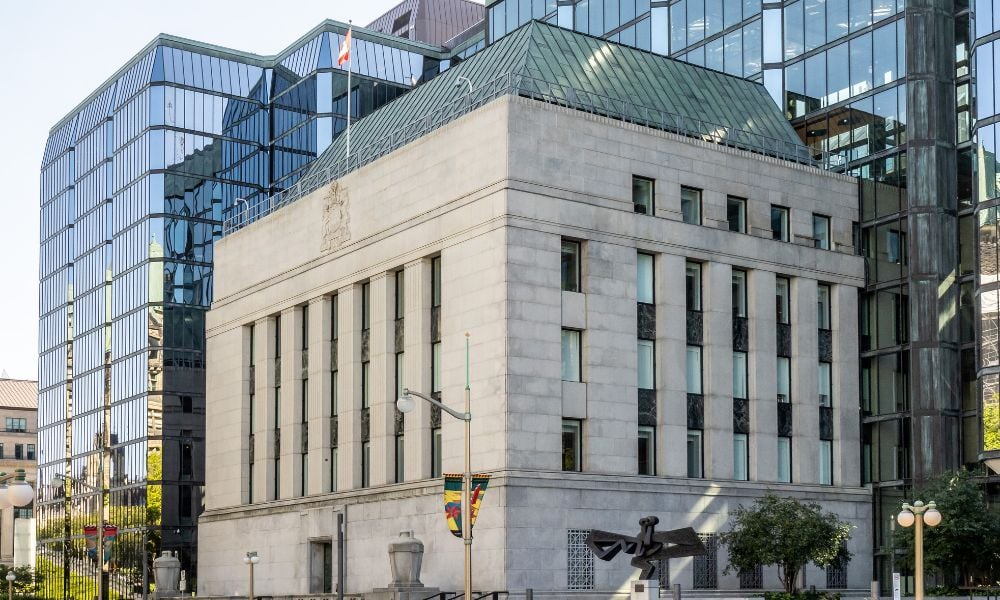
The Bank of Canada's sixth consecutive rate hold signals a stable discount-rate environment for Canadian pension funds and plan sponsors
The federal government hosts its investment summit in Toronto on September 14 and 15

Major plans say they “stand ready” as Ottawa explores alternative ownership models

‘It is actually being used to invest and attempt to profit from the violence that is happening in the United States right now,’ Stand.earth told The Canadian Press

Public markets drive big-plan returns as private bets post rare losses

Canada must build about 3.5 million additional homes by 2030 just to restore 2004 affordability levels

Opening 5% of public assets to pensions could unlock $25–$50 billion in infrastructure cash.

Retirement plans juggle weak PE results with rising stress in private credit