Major plans say they “stand ready” as Ottawa explores alternative ownership models
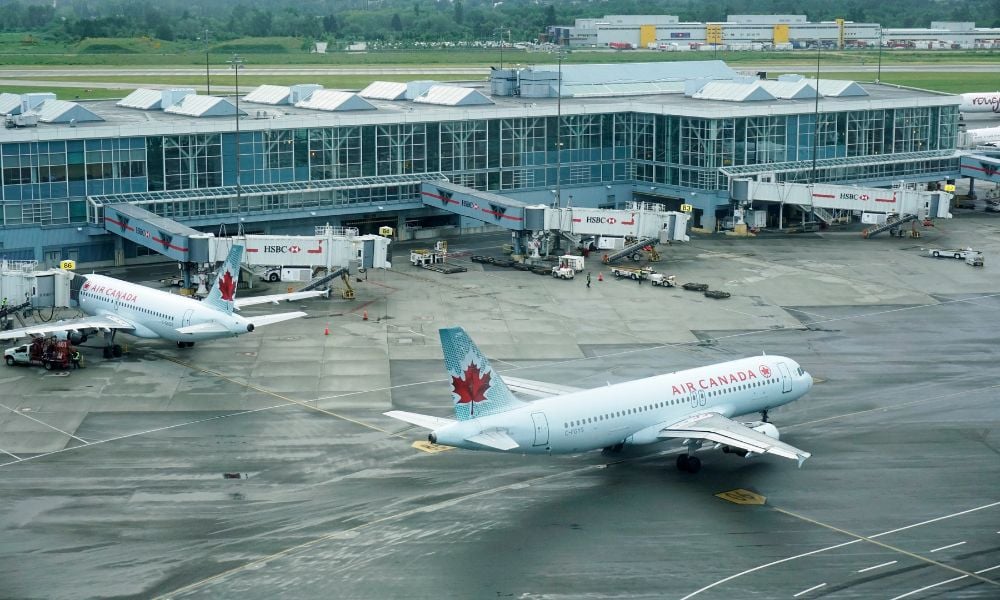
Canada’s biggest pension funds say hub airports are a “sweet spot” and they “stand ready” to invest just as Ottawa edges toward testing privatization and asset recycling for some of its most valuable infrastructure.
The Mark Carney government used its spring economic update to signal it is reviewing airport assets and alternative ownership models to support Canada’s long-term growth and “unlock the full value of airports,” according to the Financial Post.
The update also set out a $25bn sovereign wealth fund to help finance “nation‑building” projects alongside private and international investors, with “asset optimization” meant to unlock the value of existing federal assets and direct capital to higher‑return priorities.
Finance Minister François‑Philippe Champagne has given notice of a bill to implement parts of the April 28 spring economic update.
CTV News reports it would amend the Canada Transportation Act to let the transport minister require airfield operators and related parties to supply information needed to evaluate transportation policy.
According to Global News, Transport Minister Steven MacKinnon told reporters the federal government is in the “early stages” of working with airport authorities and other partners “to determine the best way forward” to improve passenger experience and the efficiency of the air transport system.
He said airports are “a public good” and that this philosophy will not change.
Institutional investors have been explicit about their interest.
Michel Leduc, senior managing director at Canada Pension Plan Investment Board, said core national infrastructure with global reach — such as a G7 hub airport — is a “sweet spot” for the nearly $732bn CPP fund, according to the Financial Post.
He said CPP looks forward to the details, valuations and growth prospects, and that pensions are looking for flexible partnerships, predictable regulation and professional fiduciary boards, adding: “We stand ready.”
The Post said Carney has “formally floated” asset recycling, an approach popular with the Maple 8 pension funds in which governments lease or sell assets such as airports to private investors and use the proceeds to invest in priority infrastructure.
Ottawa’s new fund will build on its initial $25bn through returns and “other assets that the government may allocate to it,” and airports are among the highest‑value federal assets that could be considered.
Deal structures remain open.
Andras Vlaszak, a director in global infrastructure advisory at KPMG Canada, told the Post that full airport privatization tied to the Build Canada Strong Fund is “just one option.”
He said another would be to sell to a majority investor, keep a federal stake and put the rest into the fund as a “seed investment.”
Canada’s major plans have already built airport track records overseas.
The Post reported that Ontario Teachers’ Pension Plan Board, Caisse de dépôt et placement du Québec and PSP Investments have held significant stakes in airports in the UK, Australia, and Europe.
The Caisse recently sold the rest of its London Heathrow stake first bought in 2006, while Ontario Teachers’ exited its remaining European airport holdings after “significant profits,” but neither fund has ruled out future investments.
In March, Ontario Teachers’ chief executive Jo Taylor said airports are particularly attractive to pension funds and described Pearson and Vancouver as “the two choices” to start with because of their deep links to international travel.
Last June, PSP Investments chief executive Deb Orida said the fund combines airport operating expertise with capital and would be “very well positioned” to invest in Canadian airports if an opportunity arose.
Not everyone supports full privatization.
In an opinion piece for CTV News, former federal cabinet minister James Moore argued against fully privatizing Canadian airports, saying the existing not‑for‑profit authority model “serves Canada very well” and should be modernized instead, given mixed results abroad and the threat to regional connectivity.
Global evidence is also nuanced.
Global News cited a 2022 National Bureau of Economic Research study showing that when private equity funds bought government-owned airports, traffic and passengers per flight jumped and facilities expanded, but fees rose and pressure grew to loosen regulation and avoid fee caps.