Experts say the treaty’s built-in review process is being mistaken for a withdrawal threat
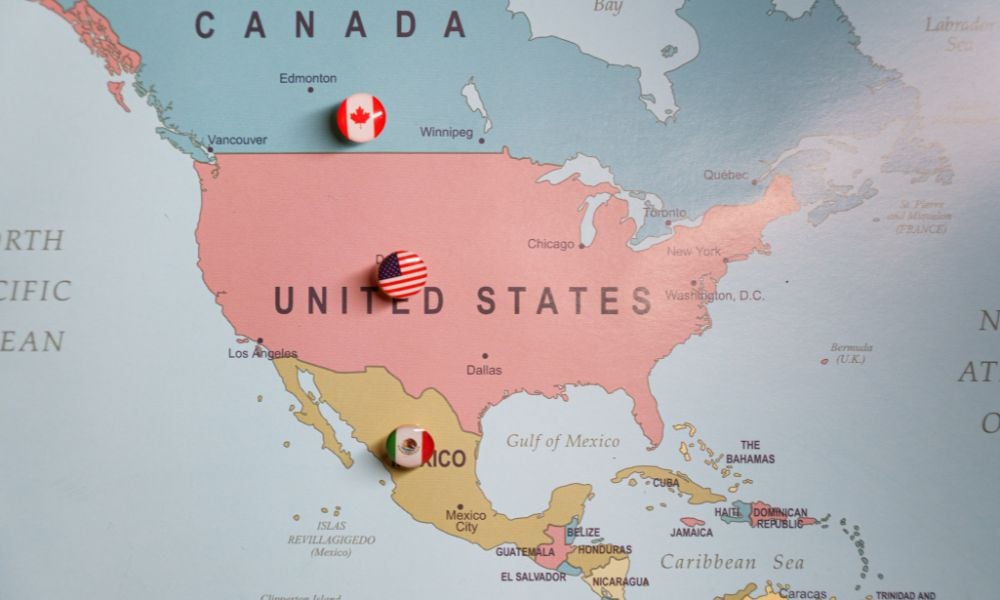
US president Donald Trump’s declaration that he is not looking to renew the Canada-United States-Mexico Agreement (CUSMA) has drawn fresh attention to North American trade ties, but analysts say his comments reflect a review process built into the deal since its inception — not an imminent collapse.
“We don’t need anything that Canada has, we don’t need anything that Mexico has, but they need everything that we have,” Trump told reporters in the Oval Office on Wednesday. “And they should have to treat us better.”
Built-in review process
CUSMA will undergo its first mandatory joint review on July 1, 2026, six years after it entered into force. While the review is not a comprehensive renegotiation, it provides the parties with an opportunity to assess how the agreement is functioning and consider potential updates.
Canada-US trade minister Dominic LeBlanc and Mexico’s secretary of economy Marcelo Ebrard sent letters to the US administration the previous week calling for a 16-year extension of the agreement.
Mark Warner, a Canadian-US international trade lawyer at MAAW Law in Toronto, also cautioned against overreacting.
“Trump likes to up the ante and get people riled as part of a negotiating tactic,” Warner told CBC News, noting that Trump had not threatened to withdraw from CUSMA outright — a step that would carry far more serious consequences.
“That’s probably all that Trump was saying today, that we’re going to end up with annual reviews, and I think that’s pretty much where everyone has thought we were going to land,” Warner said.
Michael McAdoo, partner and director of global trade and investment at Boston Consulting Group, echoed that assessment in an interview with BNN Bloomberg on Thursday.
“There was, under the original CUSMA agreement, which he signed, a renewal clause which said that unless all three parties agreed to renew the agreement on July 1 of this year, a review process would begin,” McAdoo said. “So there’s really no news in what he said yesterday.”
McAdoo cautioned, however, that tariff uncertainty is already affecting business decisions. He said deeply integrated North American supply chains — built over three decades under North American Free Trade Agreement and later CUSMA — make a rapid unwinding extremely costly.
He noted that in 2025, a 72-hour imposition of 25% US tariffs on Canadian and Mexican goods prompted American manufacturers to warn the White House they could not absorb the added input costs.
“American manufacturers were literally telling the White House, ‘If you continue with these tariffs, we’ll be sending workers home because we can’t build products with parts that cost 25% more,’” McAdoo said.
Extending the agreement with key amendments has emerged as the consensus base-case scenario among major forecasters, including the Bank of Canada and Scotiabank, both of which have based their 2026 outlooks on that assumption. Canada’s chief trade negotiator, Janice Charette, has described the July 1 deadline as “kind of a checkpoint, rather than a cliff,” CPA Ontario noted.
Push for trade diversification
McAdoo also urged Canadian businesses to use the uncertainty as a catalyst. He pointed to a Canadian trade mission to Mexico — which he described as the largest in history — as evidence that diversification efforts are advancing. He cited University of Calgary research suggesting that reducing interprovincial trade barriers could meaningfully lift Canadian GDP and help offset any market access lost to the US.
McAdoo said Canada should also pursue deeper ties with India and Europe, noting that the country has a free trade agreement with the European Union and strong cultural links with several member states.
If the July 1 deadline passes without all three parties confirming renewal, CUSMA will remain in force but become subject to annual joint reviews, with the agreement scheduled to expire in 2036 under its existing sunset clause.