The Trans Mountain pipeline is now running at full capacity as global demand climbs
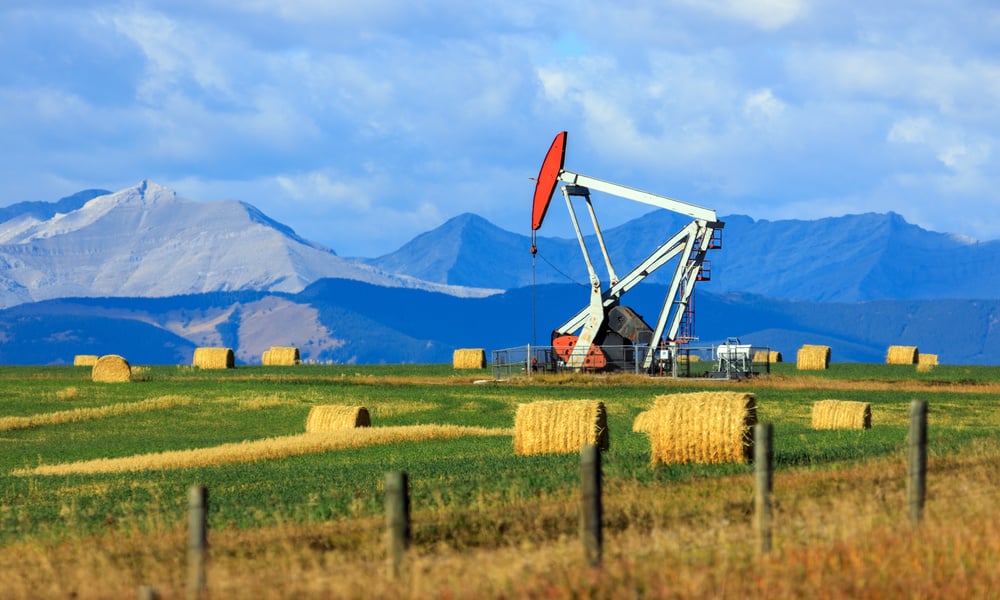
Energy accounted for more than half of Canada's economic expansion in April, deepening a recovery that economists say now leans heavily on a single sector.
Statistics Canada reported that real GDP grew 0.5 percent in April, the strongest monthly reading since July 2025.
Energy contributed "perhaps more than half" of the 0.5 percent monthly growth, said Dominique Lapointe, director of macro strategy at Manulife Investment Management.
He told BNN Bloomberg the gain spanned oil and gas extraction, pipelines and refined petroleum manufacturing.
The gain extended a trend running since the start of the year, he said, helped by rising global demand and the Trans Mountain pipeline now operating at full capacity.
Lapointe pointed to prices as evidence producers intend to push more barrels out: Western Canadian Select, the country's heavy crude benchmark, traded near US$56 a barrel, more than 30 percent above where it began the year, even as global prices slipped after mid-May.
Because energy revenues are priced in US dollars, a weaker Canadian dollar has made production more lucrative, he added.
Beyond energy, retail trade, manufacturing and transportation also strengthened, said Sébastien McMahon, chief economist at iA Financial Group.
"This is pretty much the tide that is lifting our boats right now," McMahon told BNN Bloomberg.
McMahon said the Bank of Canada is in risk management mode and needs no further hikes this year, pointing to core inflation of 1.6 percent, below the 2 percent target.
Markets had at one point priced in three hikes, a view he called "just bonkers, to be honest." Any move would more likely be a hike than a cut, he said, but "likely it's a 2027 story."
Lapointe pushed back on recession talk, attributing earlier GDP declines largely to inventory adjustments rather than broad weakness.
"We've had nearly zero growth for the last five quarters, and that's bad in itself," he said, while cautioning against reading April as a turn.
He flagged manufacturing as the economy's soft spot and said he does not expect a renewed Canada-US-Mexico Agreement soon, or the removal this year of US tariffs on steel, aluminum and copper.
Businesses have largely priced in modestly higher tariffs, he said, limiting the risk of another shock if no deal follows the review deadline.
The concentration in energy carries a diversification question that matters for long-horizon investors.
Exports to markets outside the US have risen nearly 50 percent in value since 2024, McMahon said, reducing reliance on Canada's largest trading partner.
He tied the next phase of growth to nation-building projects such as terminals, ports and pipelines, though he called it "a slow unwinding story" that depends on businesses investing again.
That diversification push is drawing outside capital.
Canadian oil and gas producers have added more than $100bn in combined market value since Prime Minister Mark Carney took office in March 2025, outpacing their US peers, according to ARC Energy Research Institute calculations cited by executive director Jackie Forrest in The Globe and Mail.
Foreign buyers are returning after years of exits, she wrote, pointing to Shell's $22bn purchase of ARC Resources in April.
International demand is firming the outlook.
After the Iran war, a security premium now drives global buying, Fatih Birol, executive director of the International Energy Agency, told a Toronto conference, per EnergyNow Media.
Canada's top "card" today "is trust," he said, with 14m barrels per day gone from the market, warning it "doesn't have the luxury to be slow."