David Sykes is reorganizing the firm around one principle: know the client better. That’s why they launched an Institutional Investment Solutions team
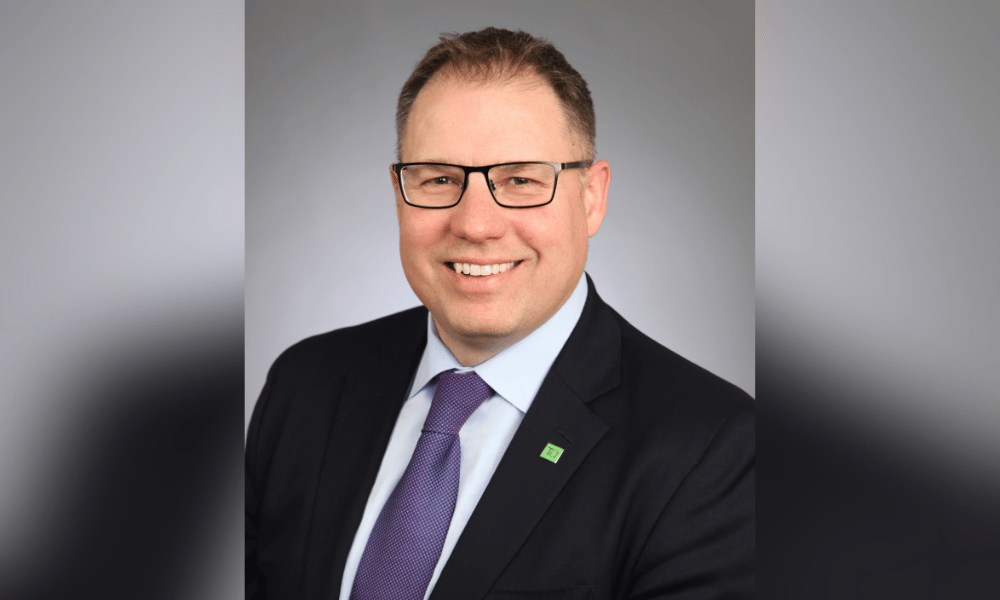
Two months into his tenure as CEO of TD Asset Management, David Sykes is pressing the firm to consolidate its institutional capabilities under a single roof and betting that a restructured distribution model will deepen relationships with pension plans, endowments, and DC sponsors across multiple geographies.
Sykes, who took over on May 1 after 29 years at the firm, says the transition has been shaped less by a desire to overhaul and more by an effort to sharpen focus.
“Markets are never boring … Clients have lots of needs that we want to service, and we want to deepen those relationships. We want to make sure that we serve our clients in a faster, simpler way and ensure that our execution on investment excellence and client servicing is very disciplined and focused,” said Sykes.
Why TDAM created an umbrella investment solutions team
According to Sykes, the most visible move so far has been the creation of an Institutional Investment Solutions team. The group brings institutional asset allocation, asset liability management, portfolio construction, target date funds, and total portfolio solutions under one roof - capabilities that previously existed elsewhere, across different parts of the organization. Sykes underscored how it was a structural problem, not a capability gap.
"We've always had the Institutional Solutions group capabilities internally. We just haven't had them aligned necessarily under one leader," he said. "This is one team who can talk to clients to say, listen, we want to understand your balance sheet, we want to understand your constraints, we want to think about your governance realities, investment objectives.”
To that end, Sykes argues the firm's existing investment lineup, which spans fixed income, equities, asset allocation, and private or alternative strategies, is already broad enough to meet institutional demand. While he doesn’t see a need for a major capability buildout, he does see room for targeted additions where and when gaps emerge. The priority, as he frames it, is deploying what TDAM already has rather than racing to add new products.
According to Sykes, TDAM has restructured its distribution model around regional proximity, placing dedicated leaders in Europe, Asia, and two in North America. This allows the firm to be in a market where leaders can read client needs earlier and anticipate problems before they escalate. Central leaders are tasked with pulling insights from those regional teams back into the organization so the full range of TDAM's capabilities can be brought to bear.
“I don't see it as a competing issue; I see it more as a cultural one where we have local leaders in market able to assess client needs very effectively at a deeper level. Because of our culture and strong collaboration, that will allow those local leaders to interact with our global leaders who bring it all together with an enterprise perspective.”
Institutional clients’ needs come first for TDAM
Moreover, he places investment performance right alongside client needs as a foundational priority. The firm relies on its portfolio oversight and risk group to monitor whether managers are staying true to their stated processes and style mandates - a guardrail he considers essential to delivering on commitments. Rather than spreading resources thin, TDAM concentrates them where conviction and talent are strongest. That focus, in his view, is what builds durable track records across asset classes.
As Canadian institutional investors are under pressure to access private markets, global credit, and alternative return streams all while competitors are expanding aggressively, Sykes acknowledges the firm has been active in these spots, pointing to a modernized Canadian real estate portfolio that now offers co-investment and secondaries access. He also highlighted the recently launched global private credit product and a commodities team that’s roughly two years old. But he frames the strategy in terms of discipline rather than ambition.
"We ask ourselves a couple of questions. Is there a client need? Can we add value in that area, and can we scale it and see that it works for the long run?" he said.
Why culture is TDAM's asset management edge
But ultimately, Sykes sees the firm's culture - one he has experienced firsthand over 29 years - as the connective tissue holding the organization together. Particularly as TDAM invests heavily in hiring practices, development, and mentoring, but he argues the real test is whether that talent operates as a unified whole rather than in silos.
In practice, culture at TDAM is reinforced through daily routines and structured touchpoints. Investment teams and partners across the firm gather each morning to discuss market developments, but Sykes says the formal agenda is secondary.
"The real magic happens when that meeting is over. People come together physically and the collision moments where people interact and want to discuss something is really important,” he said. Beyond the daily cadence, the firm runs employee appreciation weeks, team-level offsites, and an annual organization-wide gathering — each designed to reinforce a set of operating values centered on investment performance, client outcomes, and long-term career development.
“Investment excellence is everything, but we also want to do that in a manner where people come to work every day believing in what they do, believing that we're solving problems for clients and really understanding that they can grow and develop long term careers here. We need to create one team because that one team can bring unified solutions to clients," he said, adding that means bringing product, risk, distribution, operations, and investment teams together early so that clients experience a single institutional perspective rather than a fragmented one.
After all, Sykes underscored candid feedback and partnerships built on trust are central to the firm’s strategy going forward, as he emphasized, “partnerships are a two-way street.”
"We love to hear [from our clients] where are we strong? Where are we doing well? Where do you feel we're not? How can we improve? How do we act on that? It's really about that interaction model. When you build that trust, you get relevant feedback from them, and that's the standard that we want to hold ourselves to,” said Sykes.