Website: stewartmckelvey.com
Head office address (Canada): Queen’s Marque, 600-1741 Lower Water Street, Halifax, NS B3J 0J2
Year established: 1990
Ownership structure: private Canadian law firm partnership
Client profile: employers, plan sponsors, pension administrators, and public and private sector organizations across Atlantic Canada seeking legal counsel in pensions and benefits, labour and employment, and corporate law
Number of professional staff: over 250 lawyers; around 600 total staff
Canadian office locations: Halifax (head office), Charlottetown, Fredericton, Moncton, Saint John, St. John’s
Stewart McKelvey is a full-service Canadian law firm and one of the largest in Atlantic Canada. The firm advises employers, plan sponsors, and both public and private sector organizations on a range of legal matters. Its pensions and benefits group works with some of the region’s largest pension plans across multiple industries.
The firm’s story predates its 1990 founding by nearly a century. Stewart MacKeen & Covert, the oldest of the four founding firms, traced its Halifax roots back to 1892.
By the late 1980s, free trade with the US pushed Atlantic Canadian clients into a bigger and more complex marketplace. That shift became the case for building a firm with a broader regional reach.
On May 1, 1990, four leading Atlantic Canadian firms merged to form Stewart McKelvey Stirling Scales. J. William “Bill” Mingo, managing partner of Stewart MacKeen & Covert, drove the deal as a direct response to free trade and client globalization.
The new firm launched with more than 125 lawyers and became the largest in Atlantic Canada from day one. The other three founding firms were:
By its tenth anniversary in 2000, the firm had grown to 175 lawyers across multiple offices. In 2006, it dropped “Stirling Scales” from its name and has gone by Stewart McKelvey since.
As the firm grew, Lexpert listed it among Canada’s largest law firms, with more than 250 lawyers across six offices today.
The firm’s evolution also showed up in its leadership. In 2015, Lydia Bugden, K.C. became CEO and Managing Partner, a role the firm says no woman had held at an Atlantic Canadian law firm before. In 2023, its Partnership Board reached gender parity, with 50 percent of seats held by women.
Stewart McKelvey offers legal services across multiple practice areas from its six Atlantic Canadian offices.
Beyond pensions and employment, Stewart McKelvey covers corporate and commercial law, litigation, real estate, tax, privacy, and energy and environment.
Lydia Bugden, K.C. is CEO and managing partner of Stewart McKelvey, called to the Nova Scotia Bar in 1992. She spent seven years as in-house counsel before joining the firm in 1999. Bugden holds an LLB from the University of New Brunswick and a BComm from Dalhousie University.
Bugden leads Stewart McKelvey’s executive team alongside:
Deanne MacLeod, K.C., a Halifax-based partner, chairs the firm’s Partnership Board, with Jennifer MacPherson serving as vice chair. Other board members include:
The Partnership Board oversees firm strategy and governance. Each office operates under a dedicated managing partner responsible for regional leadership and client service.
Stewart McKelvey’s client work covers a broad range of industries, including:
The firm also works with local businesses, community organizations, global enterprises, and in-house legal teams. Its offices serve clients across:
Plan sponsors and administrators can find the firm’s full contact details in our Benefits and Pensions Monitor legal directory
Stewart McKelvey has received recognition from legal and business organizations across Canada. The firm also maintains memberships and sponsorships with industry groups relevant to plan sponsors and pensions professionals.
Lexpert also ranks Stewart McKelvey first among Atlantic Canada’s largest law firms by total lawyer count. With over 250 lawyers, it holds the top spot across all four Atlantic provinces.
Stewart McKelvey supports organizations focused on health and wellness, arts, and education. Partner organizations include Ronald McDonald House, Phoenix Youth Programs, and United Way Halifax.
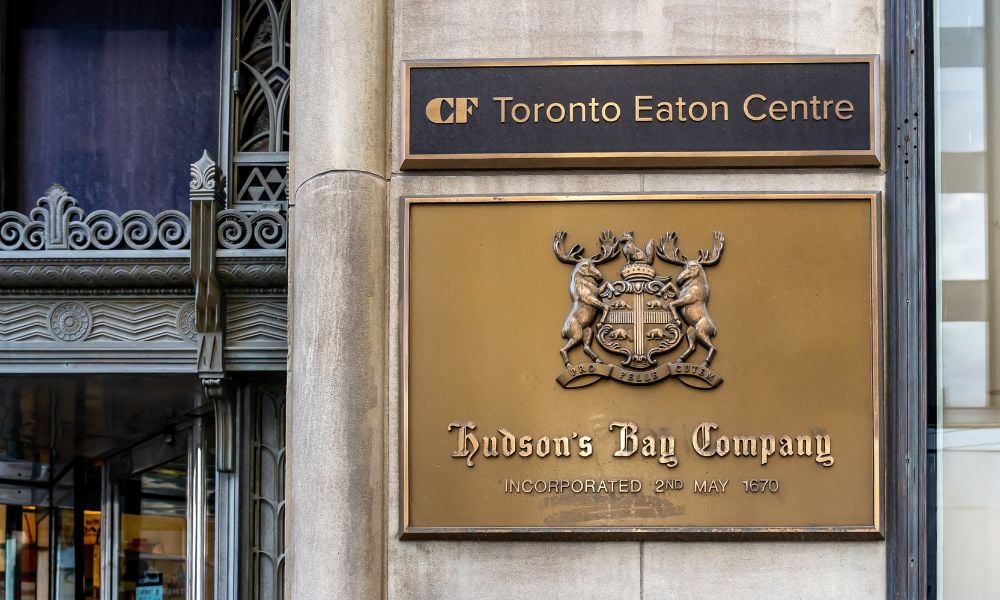
Earlier Dumai rulings may steer whether Hudson's Bay staff or creditors benefit from the surplus