CEO Caroline Tison explains how the organization balances its programs across a complex industry
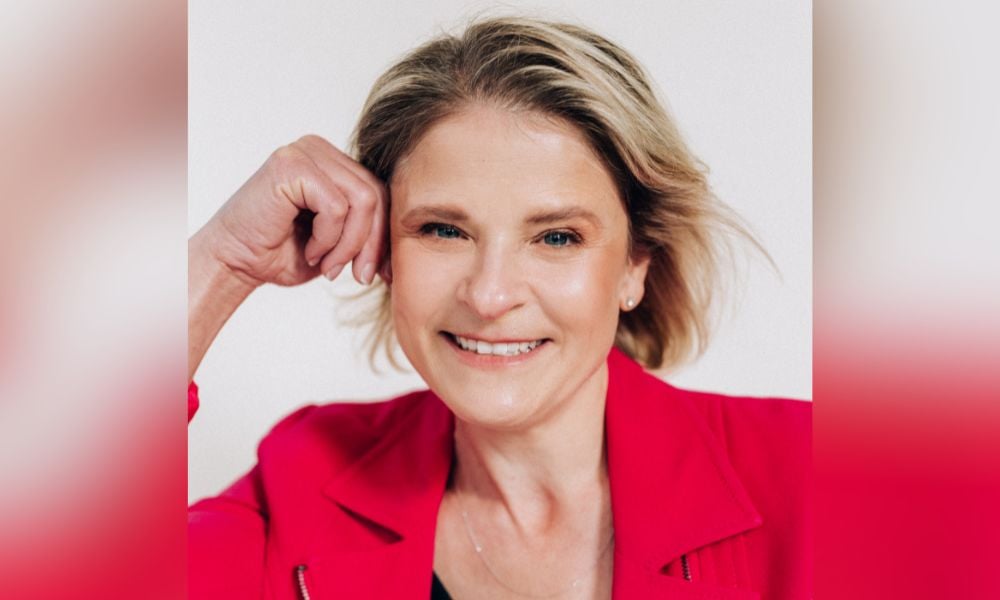
As the Canadian Pensions and Benefits Institute (CPBI)’s CEO, Caroline Tison is often navigating a programming puzzle that most association leaders would rather avoid. Yet she’s also quick to acknowledge that the organization takes a deliberate, data-driven approach to ensure its programming serves all three of its core audiences equally.
“We really try to take a portfolio approach to it,” says Tison, adding that pension, benefits, and investment content is tracked and measured to prevent any single discipline from dominating, with registration levels also gauging topic interest. The organization’s attendee base, she notes, bears that out, running roughly even between pension-and-investment professionals and those on the benefits side. “When we look at our data, it’s pretty much like split down the middle,” she says. “We really are mindful about balancing the pension, the benefits, and the investments.”
Much of that equilibrium comes from CPBI’s 125 regional volunteers, who sit across eight chapters and represent a cross-section of plan sponsors, providers, and advisors. Their composition around the table shapes the agenda, and Tison has moved to formalize that process by extending a skills matrix − once used only for the board of directors − to every regional council.
The aim, she notes, is to identify gaps in expertise and further strengthen programming decisions.
“Whoever’s at the table regionally is usually a mix from pension, investments, and benefits, but also from a plan sponsor, provider, advisor mix,” she explains. “That’s what I think is the secret sauce.”
At the national level, this year’s upcoming forum now features 27 concurrent sessions and four workshops, designed to span the full breadth of the sector. The program is shaped by national FORUM program committees by stream, led by Lena Jaoude, whose 20 years of experience help ensure balanced perspectives that reflect the diversity of their audience.
That approach seems to be working, at least by the numbers, as registrations have notably grown by 18 per cent year over year, and membership is up 20 percent over the past few years.
Additionally, CPBI’s Saskatchewan Conference sells out quickly and the Atlantic Conference sells out in five days, while the national forum sits at nearly 90 percent capacity before early-bird pricing has even closed, notes Tison, who attributes much of that momentum to a renewed appetite for in-person events.
“I can tell you that people want to experience their learning in person,” she says, adding that virtual networking has run its course. “I don’t think anybody wants to do that anymore. We were forced to do it and we did it. But those days are gone.”
To that end, CPBI surveys its plan sponsors regularly to identify what they want to hear about, and that feedback feeds directly into forum and all regional conference programming. This year, one topic has pulled ahead of everything else.
“AI is definitely coming through − it’s number one,” Tison notes.
Cyber risk tracks close behind, driven by the sophistication of threats facing an industry that manages high-value assets. Legal updates and economic forecasts, meanwhile, continue to sell out on both the benefits and pension sides, staples that show no sign of fading, she says.
Geopolitical risk has also sharpened the economic conversation in recent weeks, prompting plan sponsors to re-examine portfolio diversification and consider whether their asset allocation appropriately balances risk and opportunity within their existing policy frameworks.
Beyond the investment lens, the workforce itself is shifting. Notably, hybrid work, longer careers, chronic diseases, mental health, and cancer are all reshaping what plan sponsors need to address. Tison notes how CPBI recently co-launched the Cancer and Work Employer Charter after being approached by a cancer coalition in Quebec, building on a charter already showing results in France.
“I think we play a really important role in making that pan-Canadian and connecting everybody together to see how we can do something that’s very pragmatic, practical, and that will have an impact on the employee journey but also on the employer costs,” she adds.
According to Tison, the pension issues drawing the most sustained attention are decumulation, retirement readiness, and income adequacy, with governance and regulatory complexity also remaining high on the agenda. She believes those pressures are only intensifying as expectations on plan sponsors become more demanding and more sophisticated.
The challenge is that these are not single-issue problems because they involve multiple moving parts, which makes them harder for sponsors to navigate. Tison suggests those priorities are being reinforced consistently across both regional and national conversations.
She also highlights enterprise risk management as an area that is taking on greater weight. Rather than being treated as a routine compliance exercise, it is increasingly being approached as a serious effort to identify vulnerabilities and avoid being caught off guard.
Sustainability remains part of that discussion as well. While interest in ESG may have softened somewhat over the past 18 months to two years, Tison says sustainable investing is still very much part of provider and plan sponsor conversations. She also sees biodiversity emerging as the next major consideration, alongside growing pressure for clearer standards that would create a more level playing field across the market.
When it comes to its benefits programming, Tison notes how CPBI is pushing toward practical outcomes rather than abstract education. The test, in her view, is whether attendees walk away from a session with something concrete they can bring back to their organization. She acknowledges that practitioners are already stretched thin, so the goal is to help them move the needle incrementally, whether that means easing cost pressures or improving employee outcomes.
Additionally, personalizing the benefits offering across a workforce that now spans four generations (approaching five) is a growing challenge.
“If you ask the younger generation − do you want the cash or the benefits? − they’ll take the cash. And if you ask a different generation − do you want cash or benefits? – they’ll take the benefits,” she says. “So how do you design your plan to meet everyone’s needs and expectations?”
Looking ahead, the biggest opportunity for CPBI in breaking down the walls across sectors is framing the conversation around “total retirement well-being,” notes Tison. “By that, I mean, yes, the financial capital, but also the health capital.”
That translates to promoting financial literacy, making full use of available plan levers, and ensuring employees have access to preventive health solutions. She suggests that if we can get those pieces right, plan members will retire healthier and with adequate financial assets.
But Tison argues there is a third dimension that the industry has largely underserved: the psychological readiness of employees approaching retirement.
“It’s a huge shift,” she says, adding that she’s heard the same story from friends who’ve already gone through it. “They get the 30-minute presentation spiel on how it’s going to be a tough transition, but it’s larger than that.”