Angus Reid found most of Canadians want their province to limit large data centre growth
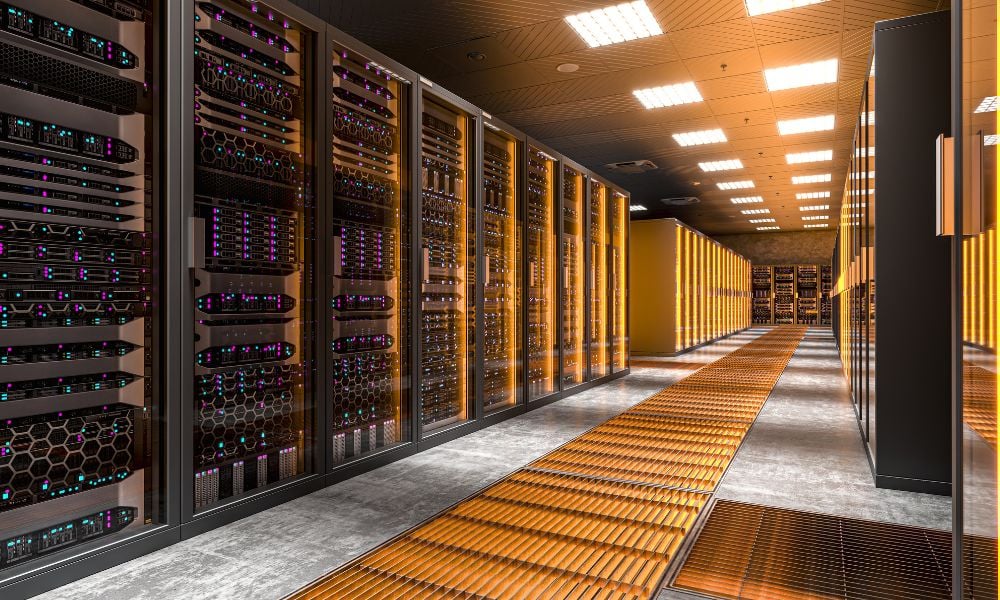
Canada’s largest pension fund manager has committed US$1.75bn to artificial intelligence infrastructure in a country where nearly two-thirds of residents want provincial limits on large data centre development.
The Angus Reid Institute reported on October 7 that 64 percent of respondents want their provincial government to limit large data centres and 18 percent want it to encourage more.
Opposition reached 72 percent in Manitoba and Atlantic Canada, 70 percent in Saskatchewan and 64 percent in Alberta. Quebec recorded the lowest level at 50 percent.
Among those favouring limits, the institute found 51 percent cited high water use, 38 percent cited higher electricity costs for households and other businesses, and 34 percent said benefits would flow mainly to large technology companies rather than local communities.
Supporters pointed to new investment and economic growth at 47 percent, Canadian competitiveness in AI at 33 percent, and job creation at 30 percent.
The Canada Pension Plan Investment Board announced on July 3 that it backed an AI infrastructure strategy led by EQT Group and its subsidiary EdgeConneX.
EdgeConneX plans to develop more than 10 gigawatts of additional capacity in the coming years.
Max Biagosch, global head of real assets at CPP Investments, said in the fund’s statement, as reported by Bloomberg Law, that the fund is increasing its exposure to a sector with “long-term demand drivers.”
Earlier commitments disclosed by the fund include a US$15bn joint venture with Equinix, US$1.3bn to a data centre development fund led by Ares Management, and a $225m loan to a development in Cambridge, Ontario.
Ottawa has offered up to $45bn in loans or equity for data centre projects on the condition that pension funds invest $2 of their own capital for every $1 of federal money and become significant shareholders, according to the Canadian Shield Institute report Worth It: How Canada’s Pensions Can Invest in Real Canadian Growth, published in September.
Seven pension funds expressed some interest, the report states.
The Office of the Superintendent of Financial Institutions released its 2026 Semi-Annual Risk Outlook on October 8, focused on how frontier AI amplifies cyber, technology, third-party and reputational risks.
The pace of AI development has “accelerated materially” since the April annual outlook, the regulator said, as reported by The Globe and Mail.
In its Financial Stability Report published in May, the Bank of Canada said a growing share of stock market capitalization is concentrated in a handful of large technology firms heavily invested in AI, and that valuations of risk assets remain elevated.
Standing Buffalo Dakota Nation wrote to Bell president and chief executive Mirko Bibic on October 2, stating that the Sherwood, Saskatchewan development sits on “unceded traditional Dakota territory.”
Chief Rodger Redman told CBC News, “As a sovereign nation and on treaty land, I believe we have the right to be consulted with.”
Bell told CBC News that “Bell AI Fabric projects are developed in accordance with all applicable regulatory and environmental requirements.”
Saskatchewan describes the project as the largest private sector investment in Canadian history, bringing $52bn in investment.
Meta has begun work on a $13bn, one-gigawatt campus north of Edmonton paired with a dedicated natural gas power plant, the Angus Reid Institute said.
Innovation, Science and Economic Development Canada said Ottawa launched Canada’s Responsible Data Centre Development Principles on September 3, setting five expectations covering local benefits, affordability, environmental responsibility, transparency and strategic value.
Forty-two organizations had signed on as of September 22.