Plans in surplus face a fresh repricing
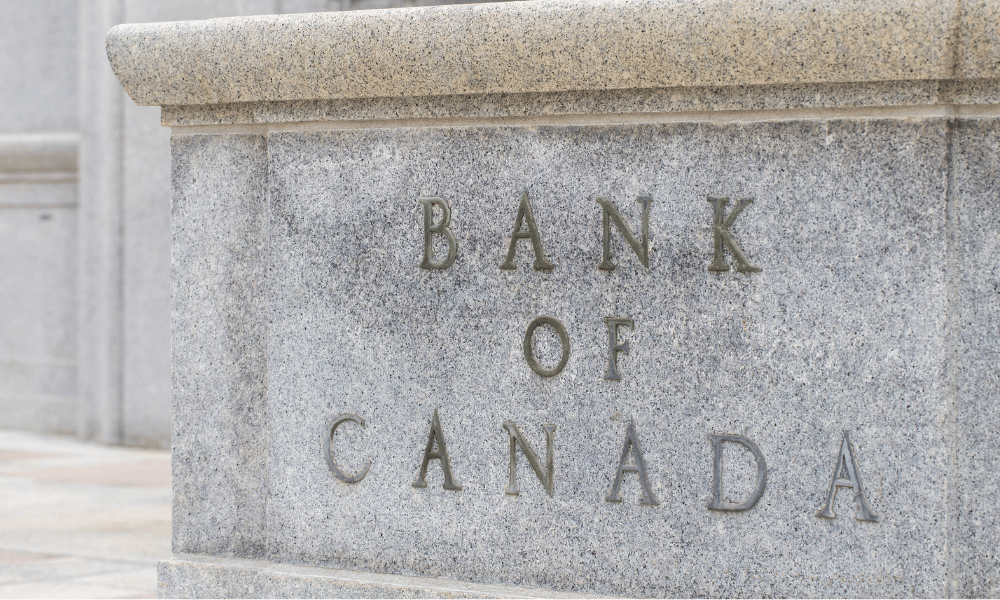
Long-term Government of Canada bond yields have climbed to multi-year highs, tracking a selloff in US Treasuries, while the Bank of Canada keeps its policy rate at 2.25% and the US Federal Reserve weighs further hikes.
For Canadian pension plans, higher long-term yields affect both the value of existing bond holdings and the discount rates used to measure liabilities.
Canada's 10-year yield rose to 3.99% on September 24, the highest since November 2023, gaining 36.3 basis points over four weeks and 75.4 basis points over 12 months.
US Treasury yields at multi-decade highs have added pressure, since Canadian yields tend to track US rates.
In the US, the 30-year Treasury yield climbed to just over 5.46% on September 24, the highest since 2004. The 10-year yield hit 5.14% after touching a 19-year high.
The Bank of Canada held its rate at 2.25% on September 2 for a seventh consecutive decision, noting that financial conditions have tightened since July, with long-term bond yields rising globally, including in Canada. At the time, economists and bond markets expected a hold for the rest of this year, with increases seen as likely next year.
Market expectations have since moved earlier. According to TD Economics, the 2-year Government of Canada yield rose more than 40 basis points in the month before the September 14 inflation release, with markets pricing in Bank of Canada hikes this year.
The Fed, by contrast, raised its overnight rate on September 16 by 25 basis points to between 3.75% and 4%, its first hike in three years. Its new projections point to another 25 basis points before the end of 2026.
How far US rates could run
Traders have since raised the odds of an October hike and see a third increase late this year or early in 2027. RSM chief economist Joseph Brusuelas said his firm's modelling found that a 5.5% US 10-year yield would slow growth to 1.5% and lift unemployment to 4.7%, while core inflation remained at 2.4%.
Brusuelas said the Fed is underestimating what will be needed to restore price stability.
"We're talking five or six," he said of the number of hikes.
Other strategists disagree. Evercore ISI's Krishna Guha called market expectations "too aggressive," and Citigroup economist Andrew Hollenhorst said "the rise has been in real yields as investors priced-in the Fed setting higher policy rates."
Fed Chair Kevin Warsh has given markets a larger role in guiding policy, a departure from the forward guidance the Fed has used since the 2008 financial crisis.
Warsh has previously spoken about his dislike of forward guidance, and the statement from his first meeting as chair in June was notably shorter than those issued under Jerome Powell.
What rising yields mean for plans
According to Reuters, a fast rise in yields erodes the market value of long-dated bonds held by pension funds, and institutions forced to sell before maturity can lock in losses. When the US 30-year yield reached 5.3% in mid-August, comparable Canadian bonds traded at their highest yields in at least a decade, The New York Times reported.
On the liability side, higher yields reduce the value of pension promises. In the quarter ended June 30, before the latest selloff, Aon reported that long-term Government of Canada yields rose 33 basis points, lifting the discount rate 24 basis points to 4.67% and the aggregate funded ratio of S&P/TSX-linked plans to 116.7% from 111.4%.
Sun Life expects Canadian pension risk transfer volume in 2026 to be broadly in line with 2025 and below the record $11 billion reached in 2024. The insurer estimates a 4% improvement in annuity prices relative to corporate bonds since January 2020.
Inflation on both sides of the border
Canada's consumer price index rose 3.0% year over year in August, matching July, Statistics Canada reported. Excluding gasoline, prices rose 2.4%.
In the US, Treasury yields have been rising on inflation still well above the Fed's 2% goal, higher energy prices tied to the Iran war, and a global hyperscaler financial arms race with its accompanying debt issuance.
Borrowing costs also affect employees' household budgets. Bank of Canada staff estimated that five-year fixed-rate mortgage holders renewing in 2025 or 2026 could face average payment increases of around 15% to 20% compared with December 2024.
Germany expects record federal borrowing of €525.5 billion (US$598 billion) in 2026, and its 10-year Bund yield briefly topped 3.6% this month, a 17-year high. Japan's 10-year yield hit its highest level since 1996, and US 30-year mortgage rates stand at 7%, one percentage point above levels before the Iran war.
"Treasuries are competing with the rest of the market to be purchased and so you know, the question is, how much higher could it go?" said Hank Calenti, global markets strategist at SMBC EMEA.