
The position is the largest against the loonie since December 2024
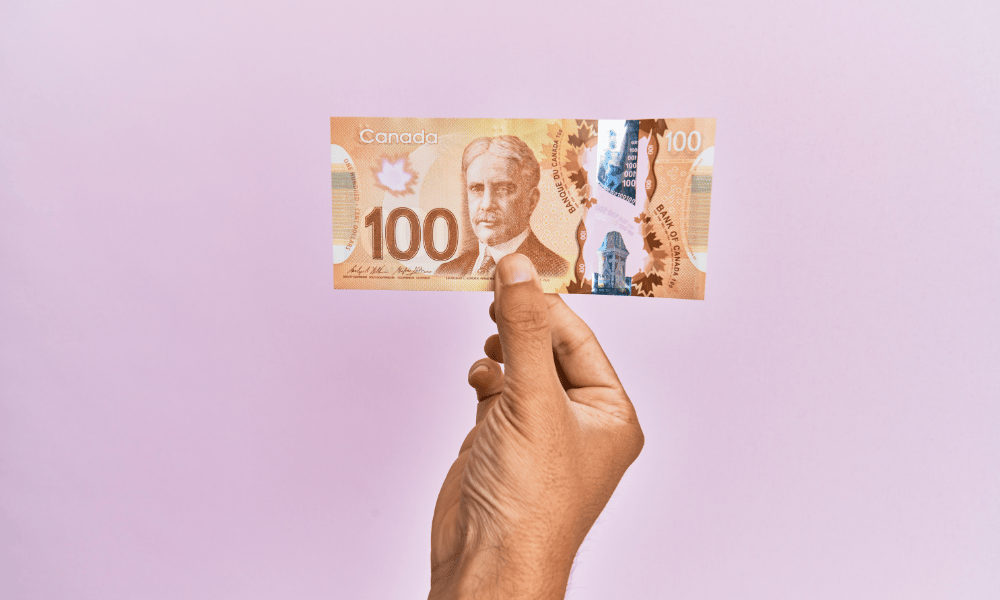
Currency speculators have built their largest bearish position against the Canadian dollar of any major currency, driving the loonie to a 14-month low ahead of Washington's confirmation of steep new tariffs on Canadian goods.
Net short positions held by non-commercial accounts hit US$12.5bn in the latest weekly data from the US Commodity Futures Trading Commission, Reuters reported, released Friday.
For a second straight week, that was the highest reading among currencies traded on the Chicago Mercantile Exchange, and the biggest wager against the loonie since December 2024.
Leveraged money managers held 99,823 contracts tied to a weaker currency in the week ending July 21, according to Bloomberg's read of the same data, the most since August 2024.
A softer loonie tends to help exporters while lifting inflation and slowing capital investment, Reuters noted, a trade-off that matters for Prime Minister Mark Carney, who is counting on stronger investment to raise Canada's productivity.
The positioning built before US President Donald Trump confirmed that 50 percent tariffs on a wide range of goods would take effect on August 19.
The Trump administration tied the measure to what it described as unfair treatment of American alcohol, cars, and dairy, according to Bloomberg.
Trump also declined to extend the Canada-US-Mexico Agreement, Reuters said, starting a decade-long wind-down and pressing Ottawa and Mexico City toward bilateral deals with Washington.
US Trade Representative Jamieson Greer said on Wednesday that he hopes to reach interim arrangements with both countries this year while leaving harder changes to the pact until 2027.
For institutional investors, the rate backdrop is the sharper story.
Investors expect the Bank of Canada to hold its benchmark rate at 2.25 percent in the coming months even as they raise bets on tighter Federal Reserve policy, Reuters reported.
The gap between Canada's two-year yield and its US equivalent has widened to 144 basis points in favour of the US note, the widest since May 2025.
The European Central Bank, the Reserve Bank of Australia, the Reserve Bank of New Zealand, and the Bank of Japan have all raised rates this year, as per Reuters, with the Bank of Japan intervening in currency markets to support the yen.
Foreign pension funds and insurance companies are buying Canadian federal bonds in record amounts, Reuters reported, though such investors often hedge their currency exposure and can prove less sensitive than speculators to short-term swings in the loonie.
Speculators "have been betting on Trump taking aim at Canada," Button, chief currency analyst at investingLive, told Reuters.
The bearish positioning was unlikely to ease before August 19, he said, given Trump's "penchant for brinksmanship."
Trump "will take it as far as he can go," Button added, perhaps into a few days of implementation.
Others see little on the other side of the trade.
Marc Chandler, chief market strategist at Bannockburn Global Forex LLC, told Reuters that Canadian dollar bulls have "not a lot to hang your hat on," with weak productivity growth and economic growth "soft even if it's recovering."
The Canadian dollar "feels relatively safer to short," said Erik Bregar, director of FX and precious metals risk management at Silver Gold Bull, who is bearish on the loonie and cited the same rate divergence.
A short seller is "not fighting upstream with central bank policy that could potentially run you over," he added.
The loonie touched 1.4248 per US dollar, or 70.19 US cents, last month, its weakest since April 2025, Reuters reported, before steadying near 1.41 as higher oil prices offset trade uncertainty.
It slipped 0.1 percent to 1.4095 per US dollar, or 70.95 US cents, on Friday and lost 0.5 percent over the week, its worst weekly showing in five after the United States threatened the 50 percent duties.
Washington also imposed fresh tariffs of 10 percent and 12.5 percent on goods from 60 trading partners on Friday, including the European Union and China.
Oil, a major Canadian export, fell 3.8 percent to US$88.72 a barrel but held a weekly gain on worsening disruptions to Red Sea energy flows and fears of further escalation in the US-Israeli war with Iran, Reuters said.
Higher energy prices have darkened the global inflation outlook and fed expectations that the Fed could raise rates as soon as Wednesday.
"The loonie should continue to trade off crude, risk conditions, and trade headlines ahead of next week's Fed decision and May GDP," strategists at Monex Europe wrote in a note, according to Reuters.
Preliminary data showed Canadian wholesale trade rose 2.7 percent in June from May on stronger machinery, equipment, and supplies sales, while factory sales edged down 0.1 percent.
Analysts expect May GDP data, due Friday, to show the economy growing 0.1 percent.
Canadian government bond yields eased across the curve, with the 10-year down 3.8 basis points at 3.605 percent after touching a two-month high on Thursday.
The Bank of Canada has trimmed its 2026 growth forecast to 0.7 percent from 1.2 percent, citing uncertainty over US trade policy and the war in the Middle East.


