US funding freeze strains WHO capacity, heightens pandemic exposure for Canadian portfolios
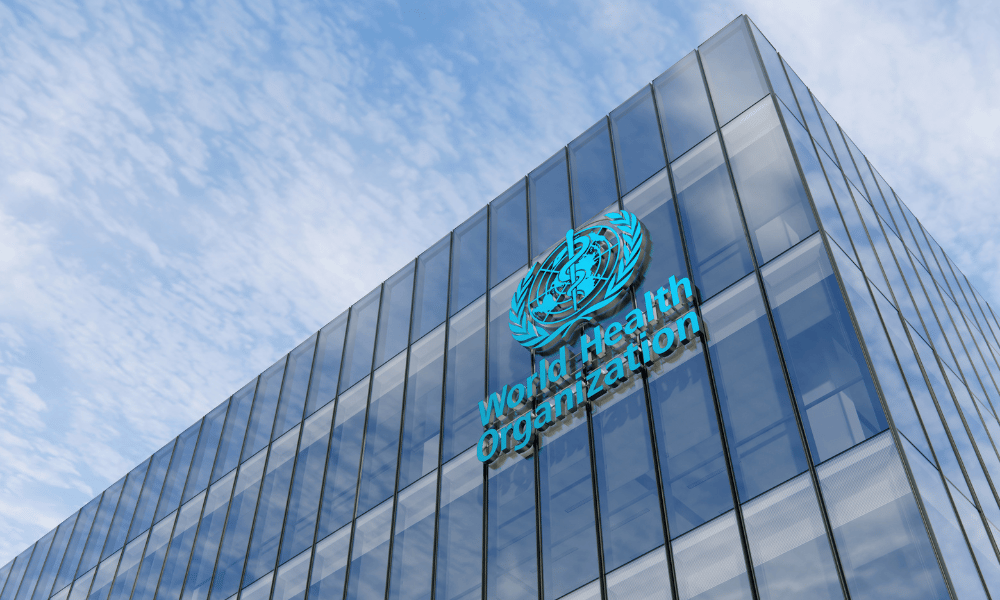
The world’s largest funder just walked away from the health body that helps decide which vaccines everyone buys.
The United States has completed its withdrawal from the World Health Organization (WHO), halted all funding and pulled out of the agency’s governance and technical work, according to the US Department of Health and Human Services (HHS) and multiple news reports.
Reuters said the move follows an executive order issued by US President Donald Trump on the first day of his second term in 2025, which triggered the one‑year exit process.
What Washington has done
HHS said the US has terminated all government funding to the WHO, recalled personnel and contractors embedded with the agency, and stopped participating in WHO committees, leadership bodies and technical working groups, as reported by CNN.
A senior administration official called the move “A promise made and a promise kept” and argued that the WHO “has acted contrary to the US interest in protecting the American public.”
Instead of working through the WHO, US officials said they will pursue infectious disease surveillance and data sharing through agreements with individual countries, non‑governmental organisations and religious groups, led by the US Centers for Disease Control and Prevention’s Global Health Center.
Officials said they had “done analysis” and “have plans in place,” but, as per NBC News, they did not provide detail on whether those alternative partners have the necessary laboratory and surveillance capacity.
Legal and financial fault lines
The withdrawal comes despite a statutory requirement that the US give one‑year notice and pay all outstanding fees before leaving.
Reuters reported that US law ties formal withdrawal to payment of arrears, which stand at about US$260m for 2024 and 2025.
A US State Department official disputed that the law makes payment a condition for exit and said “The American people have paid more than enough.”
HHS also said Trump used his authority to pause any future transfers of US government resources to the WHO on the basis that the agency had cost the US “trillions of dollars.”
Global health law specialist Lawrence Gostin called the move “a clear violation of US law” and said Trump is “highly likely to get away with it.”
He told CNN that the WHO has no power to force payment and that, in legal terms, the US cannot officially withdraw without settling its obligations, but experts do not expect Washington to pay and noted the WHO’s limited recourse.
Hit to WHO capacity
The funding loss lands on an organisation already operating with tight resources.
Reuters said the US has historically been by far the WHO’s largest financial backer, contributing roughly 18 percent of its total budget.
The US departure has triggered a financial crisis that forced the WHO to cut its management team in half, scale back work and trim budgets across the agency.
Reuters also reported that the WHO plans to shed around a quarter of its staff by mid‑year.
Member states will address the US exit at the WHO executive board meeting in February.
Witnesses told Reuters that the US flag has already been removed from outside WHO headquarters in Geneva, underlining the change in status.
Surveillance, pandemics and flu risk
For global health and risk managers, the concern is less about formal membership than about information flows and coordination.
Kelly Henning of Bloomberg Philanthropies warned that the US withdrawal “could weaken the systems and collaborations the world relies on to detect, prevent, and respond to health threats.”
A former US CDC official told CNN that managing global health strictly through bilateral agreements creates a patchwork that “doesn’t allow the same level of partnership and surveillance as working with WHO,” and noted that CDC staff operate in about 60 countries, not all of them.
NBC News reported that the break comes just before the WHO’s annual meeting to recommend which flu strains manufacturers should include in next season’s vaccines, a process where the US has traditionally played a major role.
HHS officials declined to say whether the US will join the February 27 session.
At the same time, the US is experiencing a severe flu season, with the CDC estimating 18 million cases and nearly 10,000 deaths so far, including 32 children.
Global reactions
WHO Director‑General Tedros Adhanom Ghebreyesus has called the move a “lose‑lose” step, saying “The US loses, and the rest of the world, we know for sure, loses,” according to CNN.
He later told reporters the withdrawal would make both the US and the rest of the world less safe and said, “It’s not really the right decision. I want to say it bluntly,” as reported by NBC News.
Bill Gates, chair of the Gates Foundation, told Reuters at Davos that he does not expect the US to reconsider in the near term but said he will continue to push for a return, arguing, “The world needs the World Health Organization.”