New MFS data shows Canadian DC members value human advice over digital tools as retirement approaches, with retirees leading demand
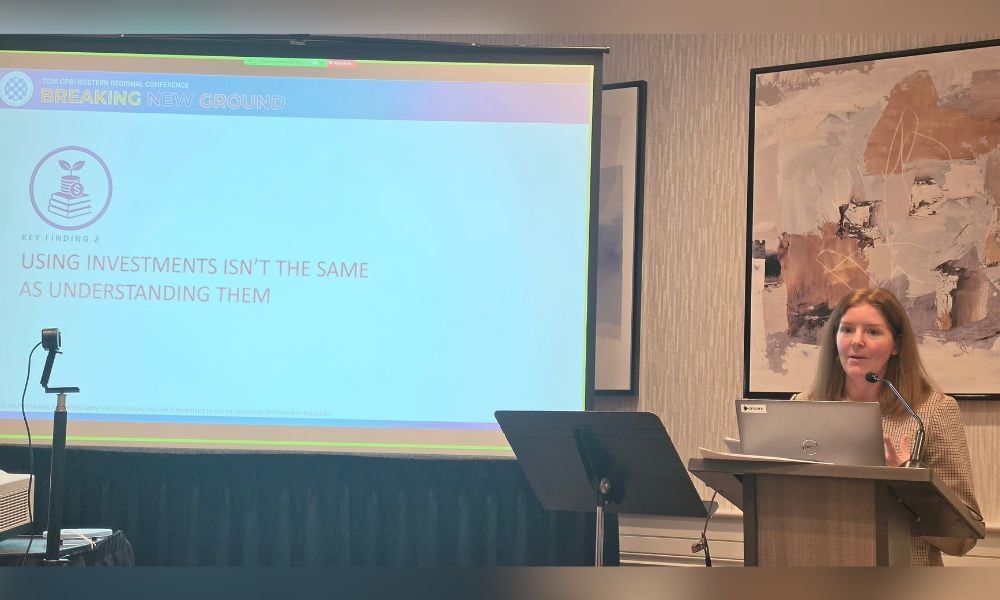
New findings from MFS Investment Management’s 2026 Retirement Trend Report have reinforced the need for personalized advice in the workplace, particularly among Canadian defined contribution (DC) plan members.
While presenting at the Canadian Pensions and Benefits Institute (CPBI)’s western regional conference in Kelowna on Wednesday, Jeri Savage highlighted how the findings point towards a retirement program that combines sound plan design with timely, personalized advice.
"Financial pressures compete with retirement savings," said Savage, lead retirement strategist at MFS Investment Management’s Connecticut office, pointing to housing, inflation, emergency savings and family responsibilities. "It’s not simply whether members know that retirement saving matters. Of course they do. It's whether the plan and supporting resources make it easier to continue saving when other priorities compete for attention."
DC members want guidance, not more products
According to the findings, 73 per cent of members say access to personalized advice is very or extremely important. When asked whether they prefer that advice in person or online, Savage acknowledged the generational split that emerges where younger members lean digital, but the preference for human interaction climbs sharply from Gen X onward.
Among retirees, 60 per cent want in-person advice, up from 47 per cent among working members.
"As we get closer to retirement, there's still a clear preference for there to be an in-person element," she said.
"Retirement is personal because advice is becoming more valuable. Members use different sources and channels. Their needs change with age and circumstance. They're not necessarily asking for more products, they're asking for help in making decisions," added Savage. "The opportunity is to help members identify their next best action, not simply giving them more general financial information."
The retiree data from the report adds another layer as members tend to envision a gradual transition out of work, but retirees report experiencing a hard stop, often earlier than expected and driven by health or family concerns rather than financial readiness, noted Savage.
"A strong plan prepares members not only for the retirement that they hope to have, but also for the potential transition shaped by circumstances outside of their control," she said.
The issue, Savage believes, isn’t a gap in the tools or investments on offer, it's that members want more than tools. They want guidance and she suggests the industry is only now catching up to that expectation.
She framed it less as a shortcoming and more as a shift in what members are asking for, one that sponsors need to acknowledge and build around.
AI tools draw mixed reactions
Meanwhile, AI-driven tools drew mixed reactions. While six in 10 members say they are at least somewhat comfortable using an AI tool for retirement decisions, only 24 per cent are very or extremely comfortable. That comfort drops even more to 14 per cent among boomers.
Savage underscores that AI may play a more effective role handling scale and generalized guidance for younger cohorts, freeing up human advisors for the complex conversations that older members demand.
When it comes to advice delivery, she foresees a natural division of labour between technology and human advisors. Digital tools and generalized advice can handle much of what younger or mid-career members need. But as retirement draws closer, the data shows members want to speak to a person.
Members want trust, she added, and that trust is built through human interaction. Whether that means the industry needs more financial advisors is an open question, but she conceded the answer is likely a yes.
Retirement confidence lags among DC members
The survey also found that members lack confidence in their retirement readiness. While 35 per cent of Canadian members now say they are very or extremely confident they can retire when they want, an eight-point jump from 2025’s survey, Savage noted, there’s still two-thirds of plan members who aren’t confident in their ability to retire.
Gen X remains the least confident cohort in the workforce, with only 26 per cent expressing confidence, a finding that held across the MFS global dataset.
"These are members that are approaching retirement while managing peak career responsibilities, probably have family obligations, and most importantly from a retirement construct, have a limited time to address a potential shortfall," Savage said, noting women trail men by 10 percentage points on the confidence measure, a gap that persists even after both groups improved year over year.
Earlier guidance leads to better retirement outcomes
To that end, Savage distilled the survey into five implications for plan sponsors and advisors. The first is a shift from general education to actionable guidance that helps members prioritize competing financial goals.
Second, she suggests plan sponsors should design plans around actual behavior, using defaults and automatic features while ensuring the core menu serves members who opt out of target date funds. Third, segment communication by life stage.
Fourth, expand access to advice through the channels members actually use and finally, concentrate support around career interruptions, investment changes, and the transition to retirement, particularly the moments where timely intervention carries the most weight.
"Sponsors and advisors can help improve outcomes by making the desirable action easier, the available help clearer, and the retirement journey more adaptable," she said.
Asked when plan sponsors should start connecting members to guidance, she was quick to say: "Every moment possible. As early as they're willing to receive it."
"What our survey data shows is that people have financial concerns through their entire retirement journey. Our number one goal should be to help improve outcomes for members. The best way to do that is to help them stay and be on track for as long as they can," said Savage.