There is a growing awareness among Canadians that how much you pay for your investments matters just as much as what you invest in
This article is sponsored by BMO Global Asset Management
There is a growing awareness among Canadians that how much you pay for your investments matters just as much as what you invest in. The ETF boom reflects this reckoning. In 2025, Canadian ETFs attracted over $122 billion new assets1—and in the first quarter of this year flows have already topped $40 billion, more than double the same period last year.2 For plan sponsors, that trend is hard to ignore.
In our previous article ,3 we outlined the problem: traditional group retirement plans often carry hidden fees and active management costs typically bundled inside the investment funds themselves, making them invisible on statements.
A conventional group plan usually carries three layers of cost:
- Management expense ratios (MERs): The annual fee charged by the fund manager, expressed as a percentage of assets—often 1-3%4
- Advisor or distribution fees: Commissions paid to the plan advisor, sometimes up to 1% annually, typically embedded into the fund’s MER5
- Plan administration fees: The cost of running the plan, often bundled into the MER but sometimes charged separately
In total, a typical traditional group plan can cost employees 2–3% annual per year or more—a challenge the BMO|LINK Workplace Savings Platform was designed to solve for plan sponsors and their employees.
How ETF-based plans price differently
Index ETFs are designed to track the returns of major fixed-income and equity market indices—not to beat them. That focus on efficient market exposure, rather than active stock-picking, is what keeps costs low. Even more active ETFs—such as those that aim for a particular investing style/factor, or which leverage complex strategies with options contracts—use disciplined rules to manage allocation of the funds, thus keeping their expense ratios competitive.
In an ETF-based group plan, the fee structure is fundamentally different:
- ETF MERs are typically a fraction of actively managed mutual funds, with many broad-market ETFs priced below 0.40%
- There are no embedded advisor commissions
- Plan administration fees are explicit and visible, not hidden inside fund returns
- Employees know exactly what they’re paying and why
Importantly, lower fees do not inherently mean lower quality. With ETFs as the primary investment vehicle, more of whatever the market delivers stays with the employee. Over a 20- or 30-year career, that difference in fees compounds into a meaningfully better retirement outcome—one that can translate into years of additional retirement income.
Here’s what you would have to pay in fees over 20 years on a $250,000 investment
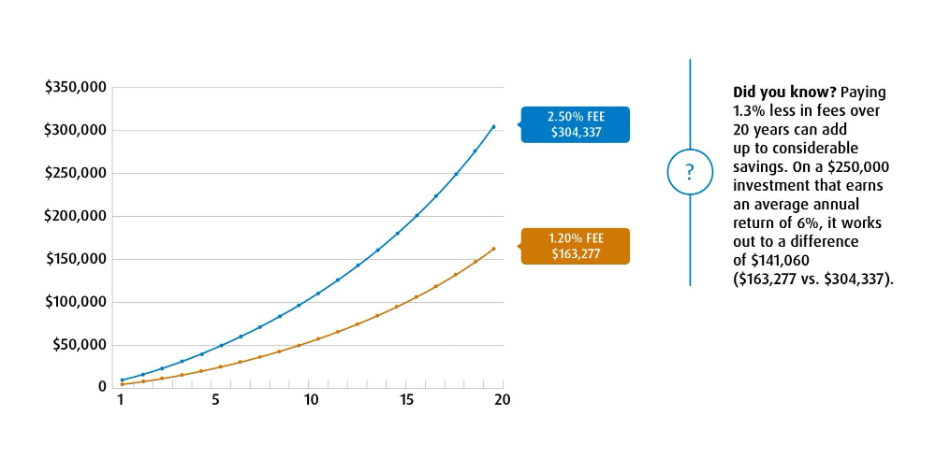
For illustrative purposes only.
The BMO|LINK platform: Built for transparency
The BMO|LINK Workplace Savings Platform was built on exactly these principles: explicit, visible fees and no commissions—putting the cost savings of ETF investing directly in the hands of employees. It achieves this by bringing four registered account types into a single digital experience. Employees can view and manage all their accounts in one place—through an intuitive interface that presents their complete savings picture, investment options, and progress toward retirement goals. This level of transparency and simplicity helps drives stronger employee engagement with the plan—and better engagement leads to better savings outcomes.
|
Account type |
Tax on contributions |
Tax on growth |
Ideal for |
|---|---|---|---|
|
Group Registered Retirement Savings Plan (RRSP) |
Pre-tax (immediate savings) |
Deferred until withdrawal |
Employees wanting upfront tax relief |
|
Group Tax-Free Savings Account (TFSA) |
After-tax |
No tax on investment growth or withdrawals |
Employees wanting tax-free withdrawals |
|
Deferred Profit-Sharing Plan (DPSP) |
Employer contributions only; deferred |
Deferred until withdrawal |
Employers sharing profits with staff |
|
Multi-Employer DC Pension Plan (MEPP) |
Pooled employer/employee contributions |
Deferred until withdrawal |
Companies wanting a pension without the administrative burden |
With each account, plan members gain access to a curated suite of ETFs managed by BMO Asset Management Inc.—each portfolio built as a core investment solution designed to deliver diversification, liquidity,6 and strong risk-adjusted returns7 based on the employee’s risk profile.8 LINK Plan Management Inc. applies leading-edge quantitative and qualitative techniques to carefully manage the risk of each portfolio—offering participation when markets are moving higher and providing downside protection when markets are in decline.
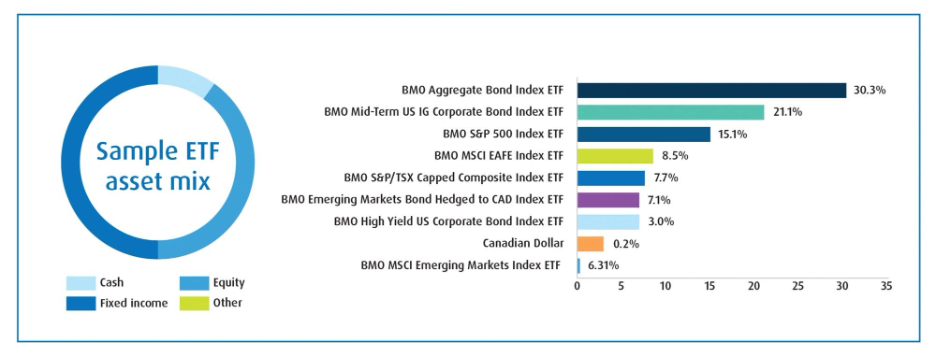
For illustrative purposes only.
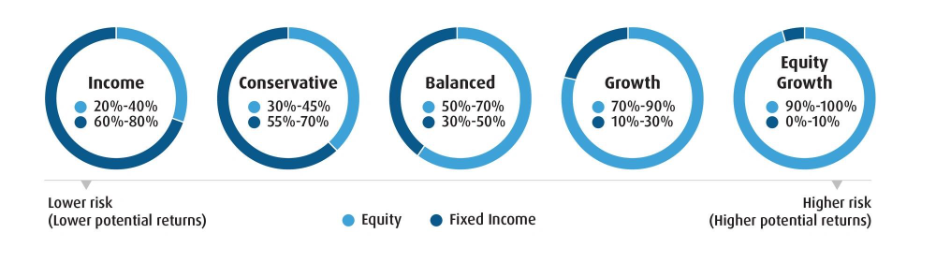
The platform offers five ETF portfolios spanning a range of risk/return objectives—ranging from income-focused and conservative options to growth-oriented portfolios. Employees complete a short questionnaire and are matched to the portfolio best suited to their stage of life and savings goals.
Employees also benefit from the expertise of a highly experienced BMO team of investment professionals that has been providing ETF solutions to Canadians since 2009—one of the longest track records in the Canadian ETF market.9
The bottom line
Fee transparency isn’t just a nice-to-have—it’s what sound plan governance requires. The BMO|LINK platform’s visibility into costs supports that responsibility—and as a practical benefit, it also builds employee trust, reduces plan disengagement, and helps workers make better savings decisions. Ultimately, when plan sponsors can see exactly what their employees are paying, and when those fees are low by design, the result is a plan that genuinely serves the people it’s supposed to help.
The BMO|LINK Workplace Savings Platform represents a meaningful step forward for group retirement in Canada: an ETF-based, digitally integrated solution that combines institutional-quality investment management with a transparent, low-cost fee structure built for the long term.
Sources
1 Andres Rincon and Casey Yang, “Canada's 2025 ETF Recap: The Year of Asset Allocation ETFs,” TD Securities, January 19, 2026.
2 Valerie Grimba, “ETF Trends from the RBC Capital Markets Trading Floor – February 2026,” RBC Direct Investing, March 12, 2026.
3 BMO Financial Group, “From cost drag to cost smart: How ETFs are reshaping group retirement,” April 15, 2026.
4 Autorité des marchés financiers, Mutual Fund Fees.
5 Depending on series and purchase options used in the associated group plan.
6 Liquidity: The degree to which an asset or security can be quickly bought or sold in the market without affecting the asset’s price. Cash is considered to be the most liquid asset, while things like fine art or rare books would be relatively illiquid.
7 Return (risk-adjusted): A measure of investment performance taking into consideration how much risk/volatility was assumed to generate it. Consider two investments, both of which return 10% over a given time period. The investment with the greater risk-adjusted return would be the one that experienced less price fluctuation. Two of the most commonly used measures of risk adjusted returns are Sharpe and Sortino ratios.
8 Risk profile: One's risk profile is comprised of risk tolerance (i.e., willingness to accept risk) and risk capacity (i.e., ability to endure potential financial loss).
9 National Bank Report, February 28, 2026.
Disclaimers:
This content is sponsored by BMO Global Asset Management (BMO GAM). Benefits and Pensions Monitor was compensated by BMO GAM for this article. Benefits and Pensions Monitor is an independent organization and is not affiliated with BMO GAM.
This article is for information purposes only. The information contained herein is not, and should not be construed as investment, tax or legal advice to any party. Particular investments and/or trading strategies should be evaluated and professional advice should be obtained with respect to any circumstance.
The viewpoints expressed in the material represent the assessment of the markets at the time of publication. Those views are subject to change without notice at any time. The information provided herein does not constitute a solicitation of an offer to buy, or an offer to sell securities nor should the information be relied upon as investment advice. Past performance is no guarantee of future results. This communication is intended for informational purposes only.
This article may contain links to other sites that BMO Global Asset Management (BMO GAM) does not own or operate. Any content from or links to a third-party website are not reviewed or endorsed by BMO GAM. Investors use any external websites or third-party content at their own risk. Accordingly, BMO GAM disclaims any responsibility for them.
BMO Global Asset Management is a brand name under which BMO Asset Management Inc. and BMO Investments Inc. operate.
“BMO (M-bar roundel symbol)” is a registered trademark of Bank of Montreal, used under licence.