Former diplomat Gitane De Silva tells plan sponsors to ‘expect the unexpected’, suggests no return to normal in trade relations
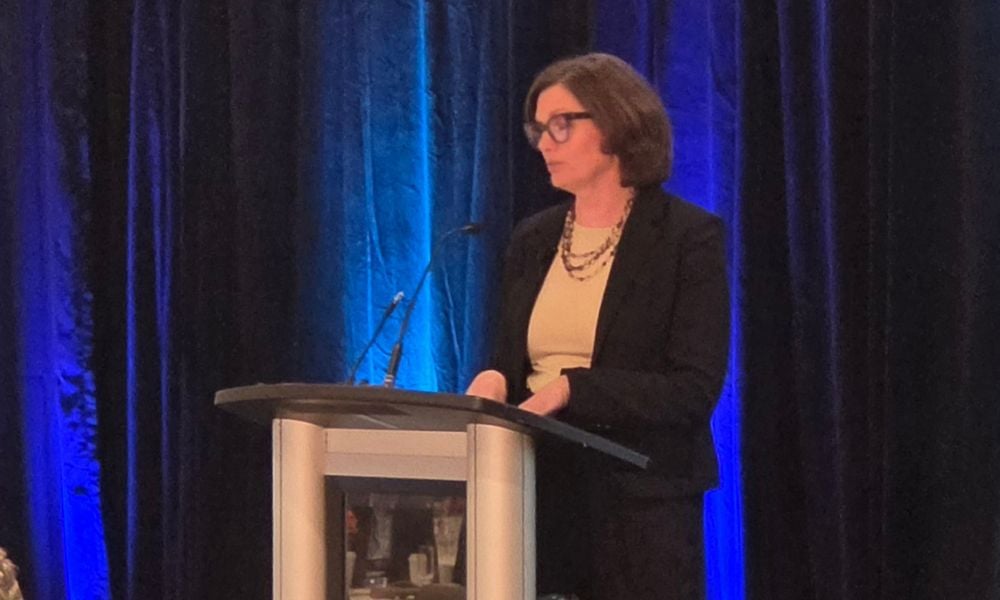
The era of unchallenged American dominance is over, and Canadian institutional investors need to reckon with what comes next. That was the key message from Gitane De Silva, founder and principal of GDStrategic and former CEO of the Canada Energy Regulator, speaking at the Canadian Pensions and Benefits Institute (CPBI)’s western regional conference in Kelowna, British Columbia on Tuesday.
"The world has changed and continues to change at a very rapid pace. Thanks in part, to President Donald Trump and his approach to everything. And while his approach is brutal, I think in a weird way he's forcing Canada to innovate because we need to adjust to this new reality whether we want to or not. And I never would have wished for much of what is going on, but I do believe that, to use some diplomatic language, this highly unconventional approach to foreign affairs will ultimately inspire growth," she said in her opening remarks.
"We're at the end of the era where the US is the world's only global superpower, and we're heading back into more of a bipolar or multipolar world where China is directly challenging the US's supremacy," she added.
Why US trade policy has permanently shifted
De Silva, who’s also a former Canadian diplomat and specialist in Canada-US relations, traced the shift to a fundamental change in how the United States conducts foreign policy, noting Washington has moved from multilateralism to mercantilism. Trump's fixation on tariffs is notably central to this pivot, she said.
To that end, De Silva laid out three drivers: a belief that the global trading system has been unfair to the United States, a push to onshore manufacturing and investment, and the need to raise revenue to cover an estimated US$4.5 trillion cost of making first-term tax cuts permanent. When the US Supreme Court struck down the Liberation Day tariffs, Trump pivoted immediately to other legislative tools.
Whether these shifts represent a break from the past or a temporary disruption, De Silva was quick to acknowledge Canada has navigated trade disputes before – the first Canada-US Free Trade Agreement nearly collapsed in 1988 over dispute resolution – but the tone from this administration is different, highlighting a detail often overlooked in Canada.
"Joe Biden did not undo a single protectionist measure that Trump put in. The tone has changed, but I think that this is now US economic policy, and so we're going to have to learn to adapt to that," she said.
Pension funds caught between returns and geopolitics
That has direct consequences for Canadian pension funds, which hold significant allocations to US assets. The Canada Pension Plan Investment Board had 47 per cent of its capital allocated to the United States as of early 2026, with just 13 per cent invested domestically. De Silva said pension professionals need to examine their US exposure and track executive orders that could restrict inputs or impose new conditions on cross-border investment.
"Canadians want a good return on their pension plan, but they also are increasingly less keen to have that money invested in the United States," she said.
The war in Iran has added another layer of pressure. De Silva noted it has achieved what US foreign policy spent decades trying to prevent – the creation of an oil hegemon controlling 20 per cent of global oil supply through the Strait of Hormuz. That disruption is forcing pension investors to stress-test country exposure through an energy lens, with Canada's resource potential offering both opportunity and complication.
Building an energy superpower while managing risk
Additionally, Canada still sends more than 70 per cent of its exports and over 90 per cent of its energy exports to the United States. De Silva acknowledged that Ottawa has positioned pension capital as leverage in trade talks but she warned that infrastructure is hardwired north-south and cannot be redirected quickly.
"I don't think there's any divorcing the United States. I think that's just our reality," she said.
Still, she outlined the scale of Canada's response since the trade war began in 2025. Ottawa has signed an investment agreement with the UAE, launched a strategic energy partnership with India, struck a 20-year LNG export deal with Germany, and deepened ties with Japan, Australia, and the EU. The Toronto investment summit set a target of attracting $1 trillion in new capital over five years. The final investment decision on LNG Canada 2 and a G7 statement calling for more Canadian oil and gas exports reinforced the country's energy ambitions. She also underscored Canada recently shot up the global ranking of places to invest for building infrastructure.
"It’s an opportunity for Canada to capitalize on the fact that boring is so hot right now, and Canada is so good at boring. It is, in fact, our international brand. We have a functioning democracy. We’re far away from conflict zones. There's no choke points off our east or west coast, and this potentially makes us a very attractive investment location. Now we just need to demonstrate that we can turn all these announcements and policy and regulatory changes into actual action by building something and building it quickly."
But she cautioned that none of this is simple, particularly as many of these new partners come with their own risks, from Indian government interference in Canadian affairs to the constraints of the CUSMA non-market economy provision, which De Silva suggests effectively blocks a free trade agreement with China without jeopardising North American market access.
She believes the balancing act is precise as Canada needs to reduce its dependence on the United States without severing ties to its largest trading partner, and it needs to do so while navigating a CUSMA review where the outcome remains uncertain.
Why plan sponsors should stop expecting normal
As for what pension plans and institutional investors should be doing right now, De Silva urged industry professionals to challenge anyone in their organisation who suggests things will return to normal.
"Geopolitical risk and political risk are a much bigger factor now than they were 4 or 5 years ago," she said. "Expect the unexpected and just question the fundamentals and don't expect that the way it was is the way it's going to be. I'm hopeful that we're on the right path to building a better Canada because we're finally talking about that, and we know that the first step in solving any problem is naming it. So now we're seeing this willingness across Canada to work together to solve big problems, to build big things and potentially become an energy superpower. We're finally working to break down barriers to internal trade and grow our own economy."