Canadian funds face “largest energy crisis in modern history” while Trump revives a Keystone‑style pipeline
When a Canadian portfolio manager shifts his fund to 100 percent oil and calls this “the largest energy crisis that anybody alive is experiencing,” just as Washington moves to revive a Keystone‑style pipeline, long‑term Canadian investors have to pay attention.
According to BNN Bloomberg, Eric Nuttall of Ninepoint Partners says the world is “heading toward what could become the largest energy crisis in modern history,” with shortages severe enough to force demand rationing “in the next couple of weeks.”
He argues crude may need to rise to about US$150 a barrel because “we simply can’t deplete inventories at a constant rate.”
The outlets reports he estimates the effective shutdown of the Strait of Hormuz since February 28 has removed about 14m barrels per day of supply and could push global inventories to “all time lows in history” by the end of May, even if the strait reopens now.
Exxon Mobil CEO Darren Woods told CNBC the market has not yet seen “the full impact” of the unprecedented disruption from the Iran war and the Strait closure.
The article reports Exxon warns its Middle East output would fall by 750,000 barrels per day if the strait stays closed through the second quarter, cutting throughput to refiners by 3 percent versus late 2025 and affecting about 15 percent of its total production.
Price action reflects the strain.
The Toronto Star reports West Texas Intermediate crude jumped from US$67 a barrel on February 27, the day before US and Israeli strikes on Iran killing Ayatollah Ali Khamenei, to almost US$113 on April 7, before easing to US$105 — a 57 percent gain since the war began.
CBC News says Brent crude briefly surged above US$126, the highest since March 2022, then settled near US$111 for June delivery after trading around US$70 before the conflict.
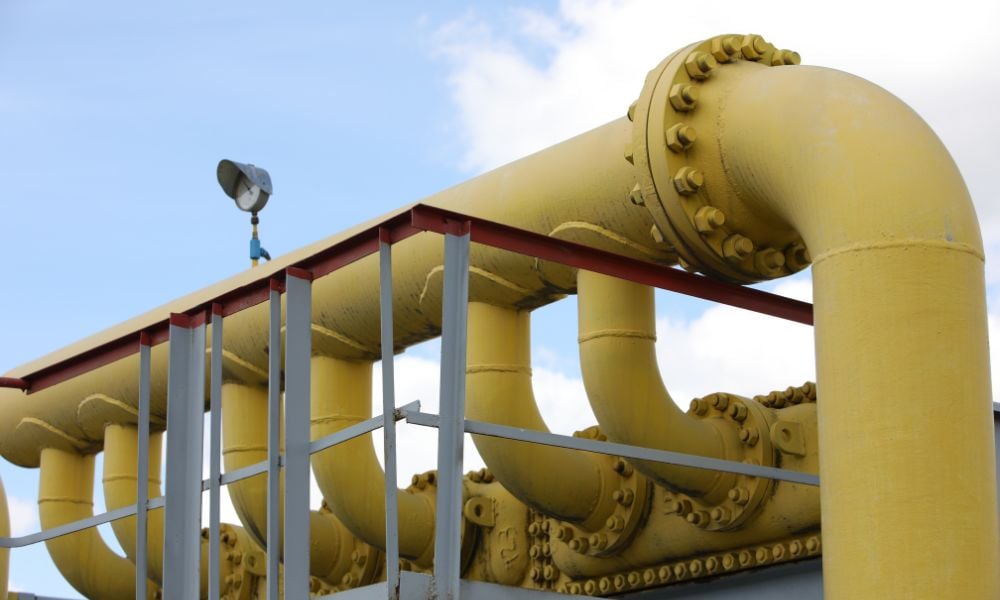
Against this backdrop, US President Donald Trump has signed a cross‑border permit that effectively revives parts of Keystone XL.
Reuters reports he approved an order allowing a project from Canadian pipeline firm South Bow and US partner Bridger Pipeline to move Canadian crude from the border to Guernsey, Wyoming, potentially lifting Canada’s exports to the US by more than 12 percent if it proceeds.
At a White House event, Reuters says Trump contrasted his stance with the previous administration, remarking, “They wouldn’t sign a pipeline deal, and we have pipelines going up.”
CBC News reports South Bow — spun off from TC Energy in 2024 — is considering reusing already built Keystone XL pipe in Alberta and Saskatchewan through its Prairie Connector project, while Bridger is pursuing a 1,038‑kilometre line from Phillips County, Montana, to Guernsey.
Bloomberg says Bridger seeks to construct a 36‑inch pipeline carrying about 550,000 barrels per day, originating near Keystone XL’s planned border crossing and using pre‑existing infrastructure and a shut‑off valve and pumping station near the border.
The Fraser Institute describes this as a de facto “KXL 2.0,” noting the original Keystone XL was designed to move about 830,000 barrels per day from Hardisty, Alberta, to Nebraska and was cancelled in 2021 after former US president Joe Biden revoked its permit.
The think‑tank says roughly 70 percent of Bridger’s route would follow rights‑of‑way acquired for Keystone XL and that about 150 kilometres of pipe were installed in Canada and left idle.
According to Reuters, Strathcona Resources executive chair Adam Waterous calls oil Canada’s “economic hard power” and argues this should allow Canada to negotiate “the most favorable trade arrangements with the US in the world.”
On the macro side, the Toronto Star reports Canada’s average gasoline price hit $1.824 per litre in April, while CBC News says it recently reached $1.830 per litre, up 4.5 cents in a day and nearly 48 cents in a year, with British Columbia just over $2 per litre and Greater Toronto Area prices expected to touch $1.899.
The Star says March’s Consumer Price Index rose 2.4 percent year‑over‑year, with gasoline up 21.2 percent month‑over‑month — the largest recorded monthly jump — while CPI excluding gasoline was 2.2 percent.
Grocery inflation reached 4.4 percent, and fresh vegetable prices climbed 7.8 percent, the biggest increase since August 2023.
According to the Star, the International Monetary Fund finds a 10 percent increase in global oil prices typically lifts domestic inflation by about 0.4 percentage points and has raised its global inflation forecast for 2026 to 4.4 percent.
The Bank of Canada expects domestic inflation to peak near 3 percent in April and, if the conflict persists, to stay around that level for much of 2027.
Desjardins chief economist Jimmy Jean told the Star he forecasts real GDP growth of 1.4 percent in 2026 and expects the current 6.7 percent unemployment rate to remain elevated, warning that rate hikes on top of renewals for about 1.3m mortgages risk “engineering a recession.”
For households, the pressure is already visible.
The Star profiles Hamilton‑area worker Ryan Harris, who says he spent more than $600 on fuel last month, worries about higher food prices for his three children and is considering an electric vehicle because “everything just feels out of our control.”
Corporate margins are also in play.
Reuters reports Procter & Gamble has warned of about a US$1bn hit to its fiscal 2027 profit if Brent crude stays around US$100, with packaging, plastics and logistics costs rising.
A Reuters review finds 24 companies have withdrawn or cut guidance, 35 have flagged price increases and 36 have warned of financial hits since the war began.
AP News adds that US gasoline has risen from US$2.98 to US$4.30 a gallon since the February 28 attacks, diesel has climbed from US$3.76 to nearly US$5.50, and both the US Postal Service and Amazon have added fuel‑related surcharges, while airlines increase fares and fees and cut capacity.
For asset allocation, some managers see opportunity in Canadian producers.
BNN Bloomberg reports Nuttall’s fund moved to a 100 percent oil‑weighted portfolio in January and holds Suncor and Cenovus, which he says use US$80 as a planning benchmark and trade at about six times cash flow with roughly 12 percent forward free cash flow yields.
He also holds Strathcona Resources, which he says can lift output 45 percent in four years, return about 9 percent a year in special dividends and then sustain production for decades.
He owns Athabasca Oil too, saying its move from $0.18 to $12 could extend to $20 as markets prize “security of supply.”
According to the outlet, he argues that countries such as India “could no longer exclusively rely on the Strait” and are now signalling clear demand for more Canadian energy.