Weight management grew 61% in 2025 to rank 11th among Canadian private drug plan categories
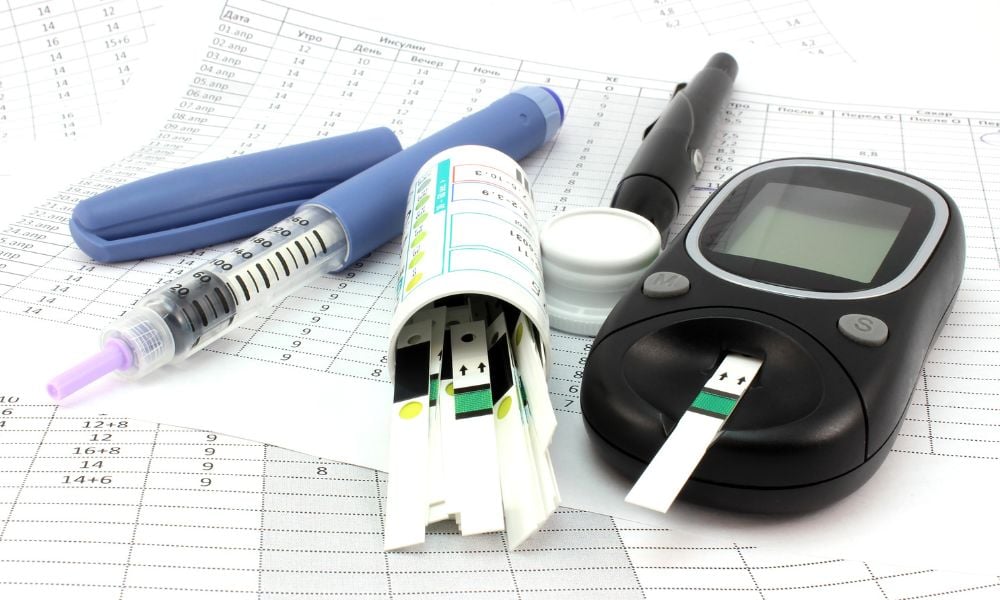
GLP-1 medications outperformed metformin on blood sugar control, progression to type 2 diabetes and cardiovascular outcomes in a matched analysis of 256,492 adults with prediabetes and obesity.
The American Heart Association released the findings on November 2, ahead of its Scientific Sessions 2026, held November 6 to 9 in Chicago.
Weight management climbed six positions to rank 11th among Canadian private drug plan categories, growing 61.0 percent in 2025 after 104.0 percent growth in 2024 and accounting for 2.5 percent of total eligible drug spend, TELUS Health said in its 2026 Drug Data Trends and National Benchmarks Report.
Diabetes drugs remain the top private-plan category at 13.2 percent of spend.
Over the three-year study period, patients taking GLP-1s had a 50 percent higher chance of reversing high blood sugar to normal levels, a 31 percent lower risk of developing full-blown type 2 diabetes, and a 41 percent lower risk of death from any cause compared with patients taking metformin, Reuters reported.
Citing the study abstract, the publication also recorded 15 percent fewer heart attacks, 20 percent fewer strokes, 25 percent fewer cases of heart failure and 8 percent fewer cases of atrial fibrillation.
About half the cohort took semaglutide, tirzepatide, liraglutide or dulaglutide.
Vinicius de Sousa Barzon Serra, a research fellow in cardiovascular medicine at the Mayo Clinic in Scottsdale, Arizona, led the study.
“This research may add to the case for considering GLP-1 medications earlier for certain patients, rather than waiting until they develop type 2 diabetes,” Serra said in a statement carried by Reuters.
Metformin remains a first-line choice that is safe, inexpensive and backed by a long track record, Serra told the outlet.
The American Heart Association research announcement catalogues the work as abstract MDP1524 and states that abstracts presented at its meetings are not peer-reviewed, with findings preliminary until published in a peer-reviewed journal.
An International Foundation of Employee Benefit Plans survey put employer coverage of GLP-1 drugs for weight loss at 37 percent in 2026, against 17 percent in 2024.
According to a previous report by Benefits and Pensions Monitor, diabetes-only coverage dropped to 51 percent from 66 percent.
Generic Ozempic is expected in Canada in late 2026 at roughly 35 percent of list price, cutting annual costs from a range of $1,500 to $6,100 down to $500 to $2,100, according to TELUS Health, whose report draws on claims data covering more than 15m insured people and puts private drug plans at roughly 38 percent of all prescribed drug spending in Canada.
Modern hormone replacement regimens showed no association with increased risk of heart attack, stroke, blood clots or death in a study of 52,330 women aged 45 to 59 followed for an average of 12 years, Reuters reported.
The combined rate of heart attack, stroke or other heart disease was 4.4 percent in the hormone replacement therapy group and 4.6 percent in a closely matched control group, and blood clots occurred in 0.33 percent of women in both groups.
Ronen Arbel of Clalit Health Services in Tel Aviv, who led the study, said concerns about hormone replacement therapy affecting the heart rank among the most common reasons women decline it for menopause symptoms.
Arbel said those concerns also explain why some healthcare professionals hesitate to offer it.
A GreenShield survey of 1,000 Canadian women aged 35 to 60 found only 13 percent say their employer provides adequate hormonal health or menopause benefits, while 64 percent say menopause symptoms affect their job performance.